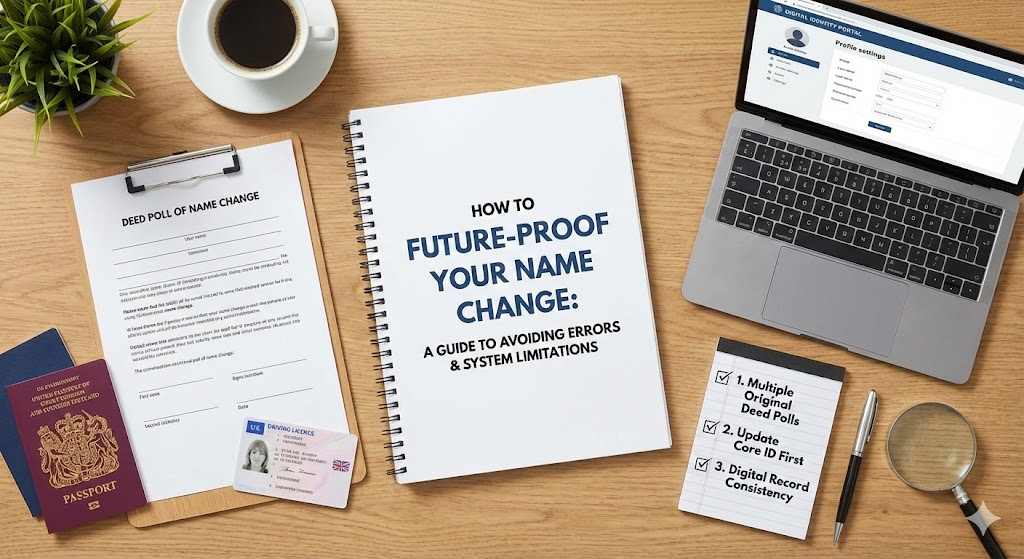
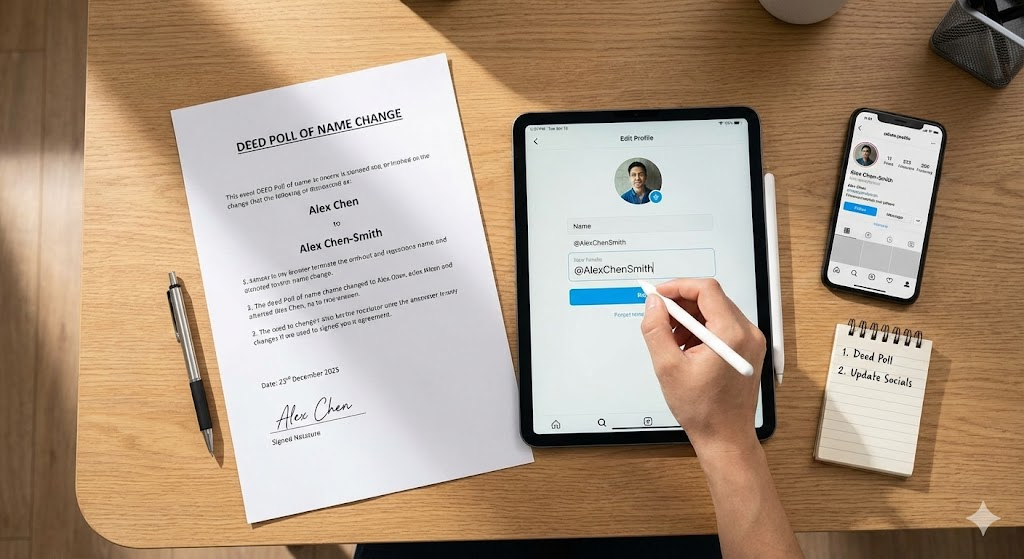
As an adult in the UK, changing your name is entirely your decision-you do not need your family’s permission, approval or blessing. Anyone aged 16 or over can change their own name and sign their own deed poll, full stop. A parent, spouse, sibling or grandparent objecting has no legal power to stop you, reverse it or veto it. The harder part is rarely the law; it is the emotion. This guide covers exactly what your rights are when family disapproves, and how to hold firm without setting fire to relationships you want to keep.
The law is clear: no one’s consent is required
In England, Wales and Northern Ireland, you have a long-established legal freedom to call yourself whatever you like, provided it is not for fraudulent purposes. From the age of 16 you can change your own name and sign your own deed poll independently. There is no form for a relative to countersign, no objection period and no authority that asks your family how they feel about it.
This matters because objecting relatives often speak as though they hold a casting vote. They do not. A deed poll is a declaration that you make about your own name. Once you have signed it in front of two independent witnesses, every UK organisation that matters-HM Passport Office, the DVLA, HMRC, your bank, the NHS, your employer-will update your records on your say-so alone. Your mother’s disapproval simply is not a field on any of those forms.
(The one exception is for children: under-16s need the consent of everyone with parental responsibility. But if you are reading this as an adult, that is not your situation-the choice is yours and yours only.)
Common things families say-and why they carry no legal weight
It helps to recognise the usual objections for what they are: feelings dressed up as facts. A few you may hear:
- “You can’t do this without our blessing.” Legally, you can. Their blessing is something you may want, but it is not something you need.
- “You’ll be written out of the will.” Changing your name has no effect on inheritance. You remain the same person in law, identified by your date of birth and history, not your name. A bequest left to you does not evaporate simply because you now go by a different name.
- “It’s an insult to the family name.” This is an emotional position, not a legal one. Plenty of people change their name precisely because of their heritage, marriage, faith or identity-not against it.
- “We’ll never recognise it.” They are free to feel that way. The state, your passport and your employer will recognise it regardless.
Why family objects (and why understanding it helps you stay calm)
Objections rarely come from malice. More often they come from surprise, fear of loss, or feeling that the family identity is being rejected. A parent may hear “I am changing my surname” as “I am rejecting you.” A spouse may feel destabilised. Older relatives may simply not understand that this is normal and routine.
Understanding the root of the objection is not about caving in-it is about choosing the right response. If you grasp why someone is upset, you can reassure them on that specific point rather than getting drawn into an argument about your rights. If you want a fuller picture of the many valid, ordinary reasons people change their names-marriage, divorce, gender, faith, distancing from an estranged parent, or simply preference-our overview of the most common motivations for changing your name in the UK can give you helpful framing and language.
How to stay firm while keeping relationships intact
Holding your ground and being kind are not opposites. The goal is to be unshakeable on the decision while staying warm with the people. A few principles:
Separate the decision from the discussion
You can listen to your family’s feelings without reopening the decision. Try: “I hear that this is hard for you, and I love you. The name change itself is done-that part isn’t up for debate-but I’m happy to talk about how you’re feeling.” This validates the emotion while quietly closing the door on negotiation.
Don’t over-justify
The more reasons you give, the more there is to argue with. You are allowed a short, calm sentence: “This is the right decision for me.” You do not owe anyone a dissertation. Over-explaining can accidentally signal that you are looking for their approval-and you are not required to.
Use a broken-record response
When pushed repeatedly, repeat the same calm line rather than escalating. Consistency signals certainty. People stop pushing on a door that does not move.
Give them time, not control
Initial upset often softens. Acceptance can take weeks or months, especially with older relatives. Letting someone come round at their own pace is very different from letting them decide. You can hold the line and still be patient.
Plan how you actually tell people
A lot of friction is about how and when people find out, not the change itself. Telling the most sensitive relatives privately and early-rather than letting them discover it on social media-can defuse a great deal. We have a dedicated, practical guide to explaining your name change to family, friends and colleagues that walks through wording, timing and tricky conversations.
Privacy: keeping the change low-profile if you wish
If you would rather not make your change public-perhaps to avoid drama or because you are distancing yourself from someone-you are in luck. A standard unenrolled deed poll is completely private. It is legally valid, accepted everywhere that counts, and there is no public record of it. Around 98% of UK name changes are done this way.
The alternative, enrolment at the Royal Courts of Justice (£53.05), does the opposite: it publishes your old and new name in The London Gazette for anyone to find, takes 2-3 weeks, and adds no extra legal validity. For most people-and especially anyone wanting privacy from objecting relatives-enrolment is unnecessary and counter-productive. An unenrolled deed poll quietly gets the job done.
You can have a professionally printed, ready-to-sign adult deed poll from £14.49, with same-day dispatch if you order before 3pm and free Royal Mail Tracked delivery. There is no need to involve family in the paperwork at all-just remember that your witnesses must each be an independent adult aged 18 or over, not a relative, partner or anyone living at your address.
Frequently Asked Questions
Can my parents stop me from changing my name as an adult?
No. Once you are 16 or over you can change your own name and sign your own deed poll without anyone’s permission. Your parents have no legal authority to prevent it, reverse it or refuse it on your behalf. The decision is entirely yours.
Do I have to tell my family I’ve changed my name?
No. There is no legal obligation to inform anyone. An unenrolled deed poll is private, with no public record, so your change need only be shared with the organisations you choose to update-your bank, passport office, employer and so on. Whether and how you tell relatives is entirely up to you.
Will changing my name affect my inheritance or family will?
No. Changing your name does not change your legal identity or your status as a beneficiary. You are the same person, identified by your date of birth and personal history. A gift left to you in a will remains valid regardless of the name you go by.
My spouse objects to me reverting my maiden name-can I still do it?
Yes. Reverting to a former name is your right and does not require your spouse’s agreement. You can use an unenrolled deed poll to update your records at any time, whether you are married, separated or divorced.
Is an unenrolled deed poll really accepted everywhere if my family says it isn’t?
Yes. An unenrolled deed poll is legally valid and accepted by HM Passport Office, the DVLA, HMRC, banks, the NHS, employers and schools. Just provide the original wet-ink signed document (not a photocopy), as those organisations require the original.
Your name, your choice-we’ll handle the paperwork
You do not need anyone’s permission to be who you are. When you are ready, order a professionally printed, legally valid adult deed poll from £14.49-trusted by over 160,000 customers, dispatched same day if you order before 3pm, with free tracked delivery. Take the step that is yours alone to take.