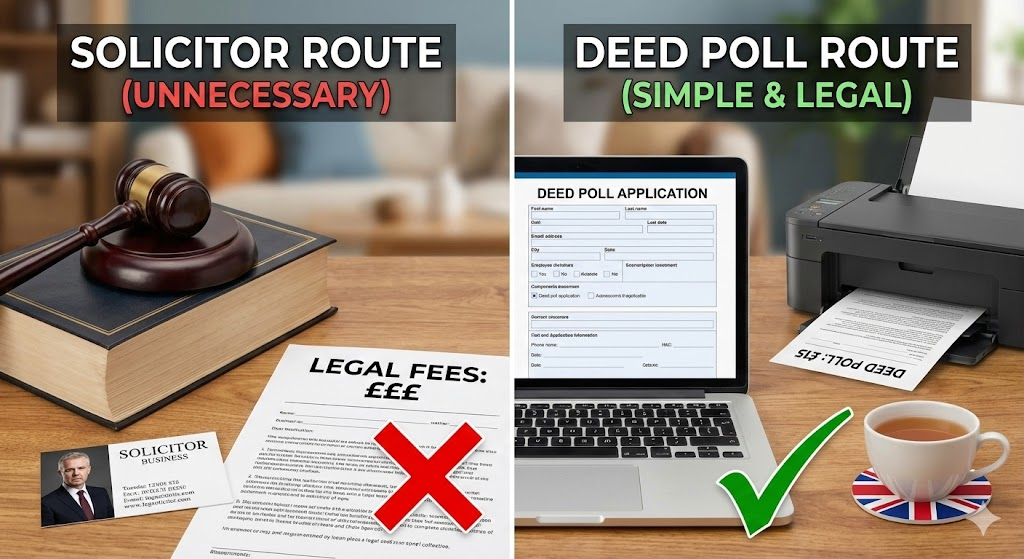
There is nothing more frustrating than presenting a perfectly valid, solicitor-approved deed poll only to be told by a clerk, "We don't accept this," or "We need an enrolled version." In the UK, common law and data protection statutes are on your side, but individual staff members at banks, utility companies, or even government agencies can sometimes be misinformed about the legal requirements.
At UK Name Change, we don't just provide the documents; we provide the legal leverage to ensure they are respected. If you are facing a wall of bureaucracy in 2026, this guide explains exactly how to challenge an organisation and win your right to a recognised identity.
1. Know Your Legal "Trifecta"
When an organisation rejects your name change, they aren't just being difficult; they are likely breaching one of three key legal frameworks. Quoting these specifically in your correspondence often resolves the issue instantly.
The UK GDPR "Right to Rectification"
Under Article 16 of the UK GDPR, you have a statutory "Right to Rectification." This law requires any organisation holding your personal data to ensure it is accurate. By presenting a deed poll, you are informing them that your old name is now inaccurate. If they refuse to update it, they are in breach of data protection law. Organisations can face heavy fines from the ICO (Information Commissioner’s Office) for failing to uphold this right.
The Equality Act 2010
If your name change is related to gender reassignment, you are protected under the Equality Act 2010. Refusing to recognise a new name in this context can be classified as direct discrimination or harassment. Reminding an organisation of their duties under the Act usually prompts a very quick apology from their legal or compliance department.
Common Law Rights
In England and Wales, there is no "official" government name. You are legally known by the name you use. A deed poll is simply evidence of that fact. No private company has the legal authority to tell you what your name is, provided you aren't using it for fraud.
2. The Step-by-Step Challenge Process
Step 1: Ask for the Policy in Writing
If a staff member refuses your document, ask them to show you the written internal policy that justifies the rejection. Often, they will find that no such policy exists, or that it specifically states they should accept unenrolled deed polls.
Step 2: Submit a Formal Complaint
Don't keep arguing at the front desk. Go home and write a formal letter or email to their Complaints Department.
- State clearly that you have provided a valid legal deed poll.
- Cite Article 16 of the UK GDPR (Right to Rectification).
- Give them a deadline (usually 14 days) to update your records.
Step 3: Escalate to the Ombudsman or ICO
If the internal complaint fails:
- For Banks: Contact the Financial Ombudsman Service (FOS). They take a very dim view of banks that create unnecessary hurdles for customers.
- For Data Issues: Report the organisation to the Information Commissioner’s Office (ICO). A formal data protection complaint is a serious matter for any UK business.
Legal Grounds for Challenges
| Organisational Excuse | Your Legal Rebuttal |
|---|---|
| "We only accept Enrolled Deed Polls." | Unenrolled deeds are 100% valid for all UK institutions (Passport Office, DVLA, etc.). |
| "We need a solicitor's stamp." | UK law requires a witness, not a solicitor, for a deed poll to be valid. |
| "It’s not in our system yet." | Article 16 GDPR requires "rectification without undue delay." |
How UK Name Change Supports You
We don't leave you to fight these battles alone. Every UK Name Change document is backed by our 100% Acceptance Guarantee. If an organisation rejects our deed poll, our London-based support team will:
- Review the reason for the rejection.
- Provide you with a formal legal rebuttal letter tailored to that specific organisation.
- Liaise directly with the organisation's compliance department if necessary to clarify the law.
Our documents are drafted to the highest solicitor-approved standards, which significantly reduces the chance of rejection in the first place. We give you the "legal look and feel" that commands immediate recognition from bank managers and government officials alike.
Conclusion
A rejection is usually a sign of a training gap, not a legal barrier. By standing your ground and citing your rights under the GDPR and Equality Act, you can overcome these hurdles quickly. Your name is your identity—don't let an outdated computer system or a misinformed clerk tell you otherwise.
Faced a rejection and need help? Get your 100% guaranteed deed poll today or contact our support team for a free legal rebuttal template. We are here to ensure your new name is respected everywhere, every time.