Yes, a child can take a step-parent’s surname - but only with the written consent of everyone who holds parental responsibility for the child, which usually means both birth parents. A step-parent has no automatic parental responsibility and cannot consent to, or sign, the child’s deed poll. So even though the new surname is the step-parent’s, the people who must agree are the child’s birth mother and birth father (where the father has parental responsibility). Get that consent in writing first, and a child deed poll changes the surname legally for passports, schools, the NHS and the GP.
Why a step-parent cannot consent to the name change
This is the single most misunderstood point in step-family name changes, so it is worth being precise. Parental responsibility (PR) is the legal authority to make major decisions for a child - including changing their surname. Marrying or living with a child’s parent does not give you parental responsibility, and it does not give you any right to change the child’s name.
In practice that means the consent you need is from the people who already hold PR, not from you as the step-parent. Typically the holders of parental responsibility are:
- The birth mother - she has PR automatically from birth.
- The birth father - if he was married to the mother, or is named on the birth certificate for a child born in England or Wales since 1 December 2003, or has a PR agreement or court order.
- Anyone else with PR - for example a guardian, or an adopter named on an adoption order.
So if your partner’s child is going to take your surname, the consent that legally matters is your partner’s and the other birth parent’s (assuming that parent has PR). Your willingness as the step-parent is the reason for the change, but it carries no legal weight on the consent form.
Whose consent is required - the other birth parent
If the other birth parent holds parental responsibility, their written consent is required - full stop. A surname is treated by UK law as a significant matter, and one PR holder cannot lawfully override another. A reputable deed poll provider will ask for the signed consent of every PR holder before issuing a child deed poll, precisely because the document is only valid if those consents exist.
What if the other parent will not agree, or you cannot find them? That is a genuinely common situation, and it has its own route - the Family Court. Because it is a separate process with its own evidence and timelines, we cover it in detail in our guide to changing a child’s surname without the other parent’s consent in 2026 rather than repeating it here. The short version: if a PR holder refuses, you apply for a Specific Issue Order and a judge decides what is in the child’s best interests.
One nuance worth flagging for step-families: if the other birth parent does not have parental responsibility - for instance, an unmarried father born before December 2003 who is not on the birth certificate - their consent is not legally required, although a careful provider may still ask you to notify them. Check who actually holds PR before assuming you are stuck.
How a step-parent surname change actually works
Once you have written consent from every parental responsibility holder, the mechanics are simple and inexpensive. You do not adopt the child, and you do not need a solicitor. You change the child’s surname by deed poll.
- Confirm who holds PR. List every person with parental responsibility for the child. These are the people who must sign.
- Get written consent. Each PR holder signs to confirm they agree to the new surname. The step-parent does not sign as a consenting party.
- Order the child deed poll. A parent with PR signs the deed poll on the child’s behalf (a child aged 16 or 17 can usually sign their own). Our child deed poll service produces the professionally printed, witnessed document that institutions accept.
- Update records. Use the deed poll to update the child’s passport, school, GP, NHS records and bank account - the DVLA, banks, HMRC and the NHS update names for free.
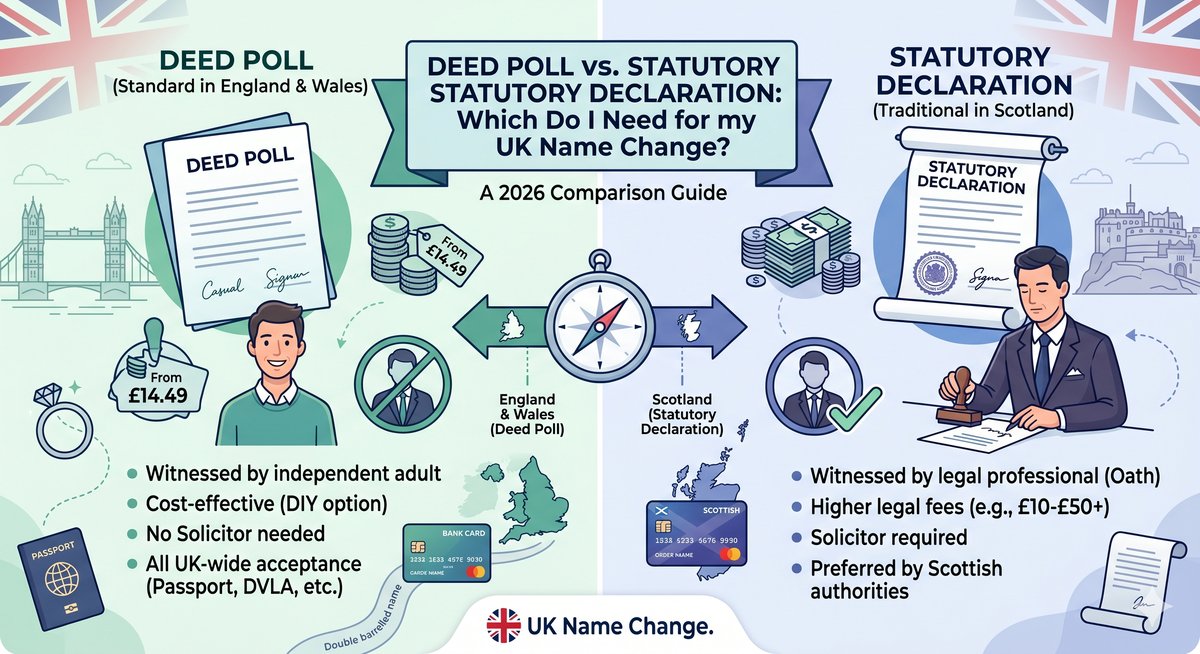
A child deed poll from UK Name Change starts at £14.49, with same-day dispatch if you order before 3pm and free Royal Mail Tracked delivery. By contrast, a solicitor would typically charge £150-£300+ for exactly the same wording - an unnecessary expense for a document you can order online today. (If you are also changing your own surname when you marry, you can do that with an adult deed poll at the same time.)
You don’t have to give up your child’s name entirely
Step-families often want to reflect the new family without erasing a birth parent. Double-barrelling is the usual compromise - combining the existing surname with the step-parent’s, for example Smith-Jones. It still requires the same consent from all PR holders, but it is frequently easier to agree on, and courts tend to view it favourably because it preserves the child’s link to both parents. A deed poll handles a double-barrelled surname exactly the same way as a full change.
Do you need to enrol the deed poll? No
An unenrolled deed poll is fully legal and is accepted by HM Passport Office, the DVLA, the NHS, banks and schools - around 98% of UK name changes are unenrolled. Enrolment at the Royal Courts of Justice is optional, costs £53.05, takes 2-3 weeks and publishes the change in the London Gazette; it adds no legal validity. For a child’s name change, the standard unenrolled deed poll is all you need.
Step-parent name change vs. the wider rules
This article focuses on the step-parent angle. If you want the full A-Z of the legal process, evidence and forms for any child name change, see our pillar guide on how to change a child’s surname legally in the UK. It covers the general rules that sit underneath every step-parent case, so it is the natural next read.
Fostering rather than step-parenting? The rules differ — see name changes for foster children in the UK.
Frequently Asked Questions
Does my husband or wife get parental responsibility for my child automatically?
No. Marrying a child’s parent does not give a step-parent parental responsibility. You can acquire PR through a step-parent parental responsibility agreement (which needs the consent of everyone who already has PR) or through a court order, but neither happens automatically on marriage.
Can a step-parent sign the child’s deed poll?
No. Only someone with parental responsibility can sign a child deed poll on the child’s behalf, or the child themselves if they are 16 or 17. A step-parent without PR cannot sign and cannot consent, even though the child is taking their surname.
Can a child take a step-parent’s surname without the other birth parent’s permission?
Not if that parent has parental responsibility - their written consent is required. If they refuse or cannot be found, you apply to the Family Court for a Specific Issue Order. See our guide to changing a surname without the other parent for the full process.
Do we have to adopt the child to change the surname?
No. Adoption is a major legal step that changes parentage permanently; it is not required simply to change a surname. With the consent of all PR holders, a child deed poll changes the surname without affecting who the child’s legal parents are.
How long does a step-child’s name change take?
Once you have everyone’s written consent, the deed poll itself is fast - order before 3pm for same-day dispatch with free tracked delivery. The slower part is usually agreeing the change and updating records afterwards (passport, school, GP), which you do at your own pace.
Will the new surname appear on the child’s birth certificate?
No. A deed poll does not alter the birth certificate, which is a historical record of birth. The deed poll is the legal proof of the new name and is what schools, the passport office and the NHS rely on going forward.
Ready to change your step-child’s surname?
With written consent from everyone who holds parental responsibility, you can make it official today. Order a professionally printed, fully accepted child deed poll from £14.49 - same-day dispatch before 3pm, free Royal Mail Tracked delivery, and trusted by more than 160,000 customers. No solicitor required.