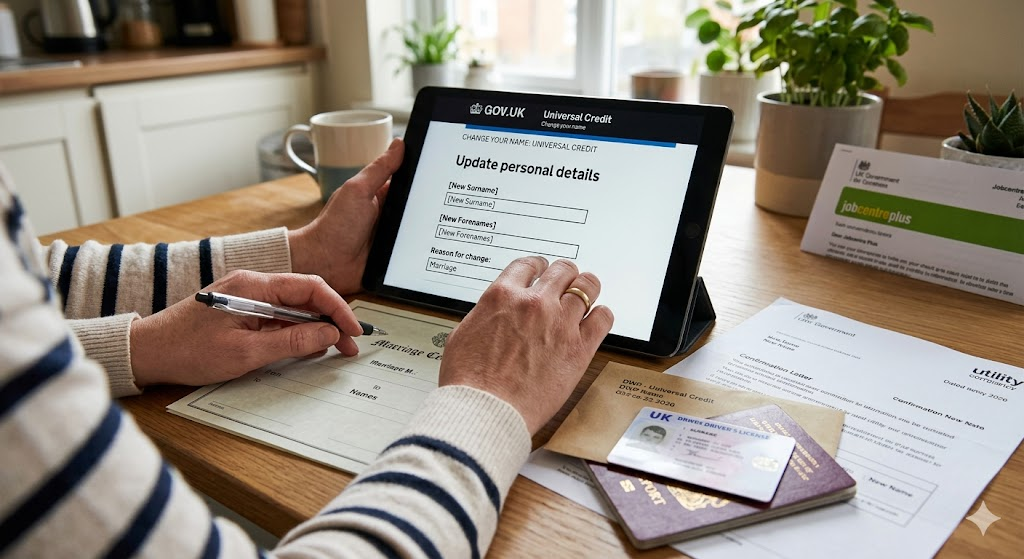
Changing your name is a fresh start — but it also means updating the paperwork that runs your daily life, and your tenancy agreement is one of the most important documents on that list. Whether you've changed your name by deed poll, after marriage or following a divorce, your rental contract should reflect your new legal name so there are no problems with rent, your deposit or future references.
This guide walks UK renters through exactly how to update a tenancy agreement after a name change, what to tell your landlord, and the other records you shouldn't forget.
Why your tenancy agreement matters after a name change
Your tenancy agreement is a legally binding contract between you and your landlord. If the name on it no longer matches your official identity documents, it can cause friction at the worst possible moments — when your deposit is returned, when you apply for a new tenancy and need a reference, or if there's ever a dispute. Keeping the name consistent across your tenancy, bank account and ID simply removes that risk.
When you'll need to update your tenancy
You should update your rental paperwork whenever your legal name changes, including:
- Marriage or civil partnership — taking a spouse's surname or double-barrelling.
- Divorce or dissolution — reverting to a previous name.
- Deed poll — any other change, such as a new first name, surname or spelling.
In each case the principle is the same: your landlord needs official evidence of the change before they amend the agreement.
How to update your tenancy agreement after a name change
1. Get proof of your new name
Landlords and letting agents will ask for documentary evidence. A deed poll is the standard, widely accepted proof of a name change across the UK, and it's the document banks, the DVLA and HM Passport Office expect too. If you haven't changed your name officially yet, UK Name Change can prepare your deed poll quickly so you have one document that updates everything.
2. Notify your landlord or letting agent in writing
Tell your landlord or agent as soon as your name change is official. Put it in writing (email is fine), attach a copy of your deed poll or marriage certificate, and ask them to update their records and the tenancy agreement. Keep a copy of everything you send.
3. Ask for the agreement to be amended or reissued
Your landlord can either issue a short written amendment noting your old and new name, or reissue the tenancy agreement in your new name. Both are acceptable — what matters is that the change is documented and signed. Always read the updated version before signing to make sure nothing else has changed.
4. Update your deposit, guarantor and related records
Don't stop at the agreement itself. Make sure your name is updated with the tenancy deposit protection scheme holding your deposit — it's worth understanding how deposit protection works in England so your money comes back without a hitch — as well as any guarantor paperwork and the standing order or direct debit used to pay your rent. A mismatch here is the most common cause of delays when your deposit is returned.
An amendment or a brand-new tenancy?
A name change on its own does not end your tenancy or require a completely new agreement — you're the same tenant, simply under a new name. A signed amendment is usually enough. A fresh agreement is only needed if other terms are changing at the same time, such as the rent or the people named on the tenancy.
What your updated tenancy agreement should contain
It's worth knowing what a compliant tenancy agreement should include so you can check the reissued version is correct — especially as the rules in England changed under the Renters' Rights Act 2025. Tenancy Pilot's plain-English explainer on how tenancy agreements work in England is a clear, up-to-date reference if you want to be sure the new version covers everything it should.
Other documents to update after changing your name
While you're updating your tenancy, it's the perfect time to update everything else. Most people in the UK need to change their name on:
- Passport and driving licence (HM Passport Office and the DVLA)
- Bank accounts, credit cards and mortgage
- HMRC, your employer and pension provider
- Utility bills, council tax and the electoral roll
- GP, dentist and insurance policies
Almost every one of these organisations will accept a single deed poll as proof, which is why getting that document right first makes the whole process far smoother.
Get your name change sorted the easy way
Updating your tenancy is simple once you have official proof of your new name. As a London-based specialist, UK Name Change prepares legally recognised UK deed polls fast, so you can update your tenancy, ID and accounts without the stress. Get in touch with our team today to start your name change.