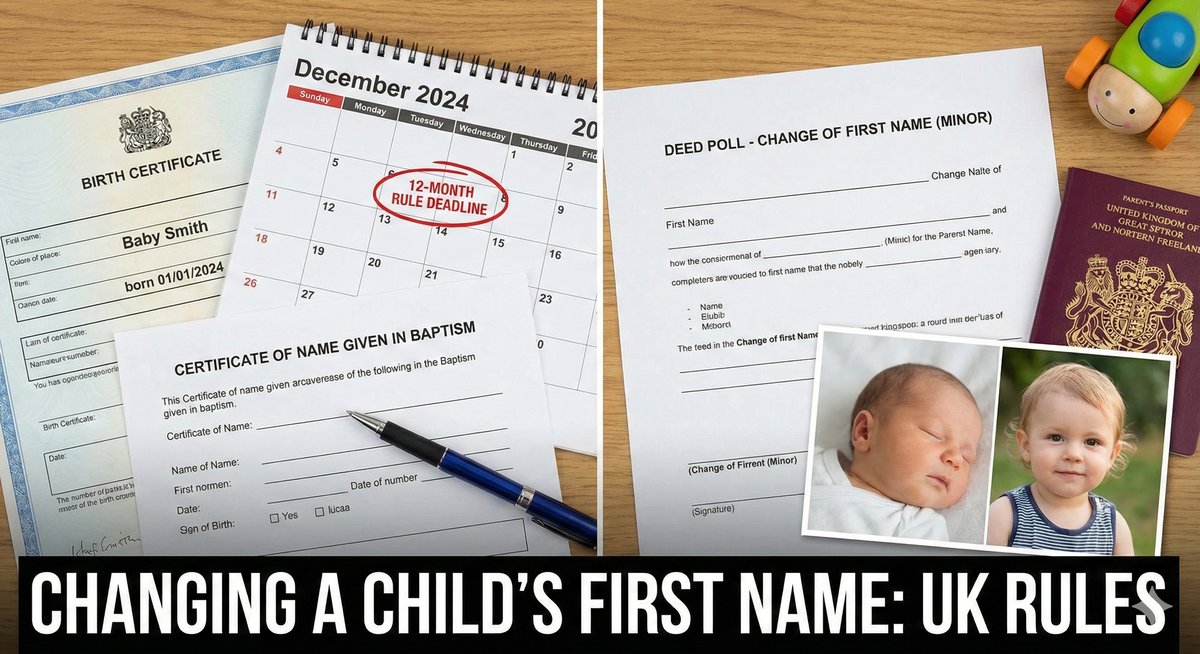
We often focus on surnames—double-barrelling after marriage or reclaiming a name after divorce. But what happens if you simply regret the first name you chose for your baby?
It is more common than you think. Sleep deprivation and family pressure can lead to decisions that, six months later, just don't feel right. Perhaps "Archie" has started to look more like a "Leo," or you realised too late that the middle name creates an unfortunate set of initials.
If you want to change your child's forenames (first or middle names), the process is slightly different from changing a surname. Depending on how much time has passed since the birth registration, you might be able to update their birth certificate directly.
Here is the breakdown of the "12-Month Rule" vs. the Deed Poll route.
Option 1: The "12-Month Rule" (Amending the Birth Certificate)
In England and Wales, there is a special legal provision that allows you to change your child's forenames on their birth certificate, provided you act quickly.
The Deadline:
You must make the change within 12 months of the date you originally registered the birth.
The Restriction:
This rule applies only to forenames. You cannot use this method to change, add, or drop a surname.
How to do it
You do not need a Deed Poll for this. Instead, you need to obtain a specific form from your local Register Office. There are two types:
- Certificate of Name Given in Baptism: Use this if you have had your child baptised in a Christian church with the new name. The vicar or minister must sign this form.
- Certificate of Name Given not in Baptism: Use this if your child has not been baptised, or if you simply changed your mind about the name. You (the parents) complete this form yourselves.
Once you return the completed form to the Register Office (and pay the statutory fee of around £40), the registrar will add the new name to the birth register.
Note: The original name is not erased. The new name is usually added in "Space 17" at the bottom of the certificate, effectively overriding the original entry.
Option 2: The Deed Poll Route (After 12 Months)
If your child is over 12 months old, or if you have already used the "12-Month Rule" once (you can only use it once), the birth certificate usually cannot be touched. It becomes a closed historical record.
To change the name now, you must use a Child Deed Poll.
How it works
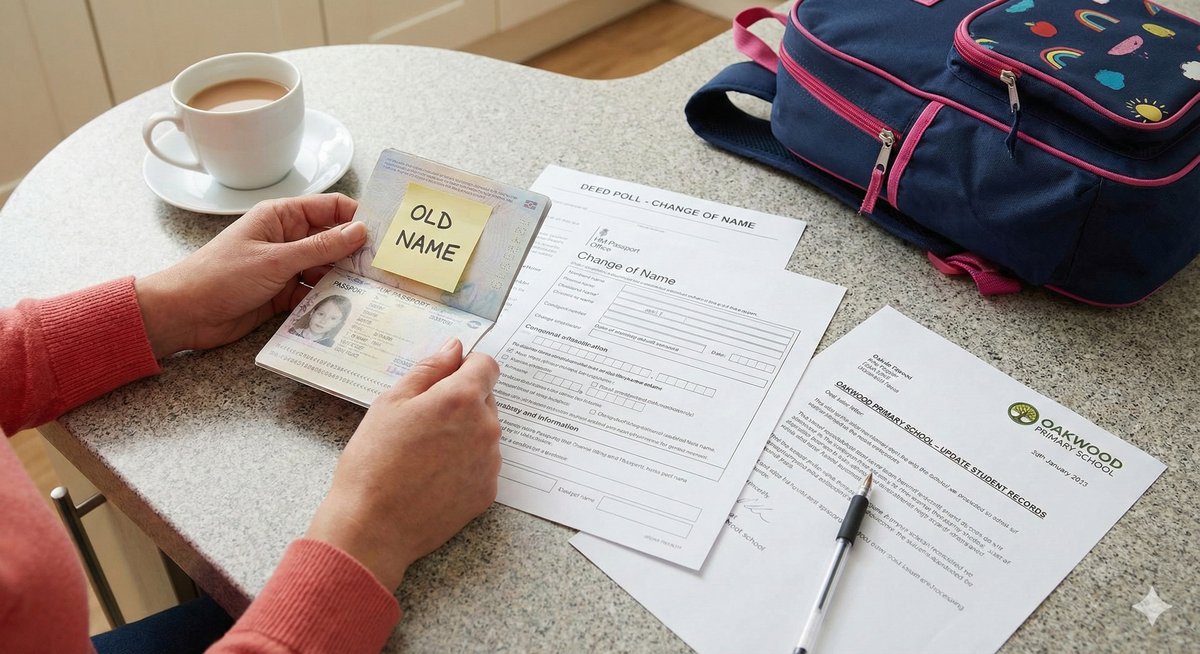
A Deed Poll does not alter the birth certificate. Instead, it acts as a permanent side-car to it. When you apply for a passport or register for school, you show two documents:
- The original Birth Certificate (showing the old name).
- The Child Deed Poll (showing that the old name has been abandoned and the new name adopted).
This is the standard way to change a name in the UK for anyone over one year old. It is legally binding and accepted by all government bodies, including HM Passport Office.
Consent Still Applies
Whether you are using the 12-Month Rule or a Deed Poll, the "Golden Rule" of parenting still applies: You generally need the consent of everyone with Parental Responsibility.
- For the 12-Month Rule: The registrar will usually require both parents (if both are on the birth certificate) to sign the application.
- For a Deed Poll: You must have the written consent of everyone with Parental Responsibility. If a father is absent or refuses, you may need a court order to proceed (see our guide on Parental Responsibility).
Summary Checklist
| Child's Age | Desired Change | Correct Method |
|---|---|---|
| Under 12 Months | First/Middle Names | "Certificate of Name Given" (Register Office) |
| Under 12 Months | Surname | Child Deed Poll |
| Over 12 Months | Any Name | Child Deed Poll |
If you have missed the 12-month window, don't worry. A Deed Poll is a fast, simple, and completely legal way to fix a name you regret. It allows your child to grow up with the name that truly suits them.
Ready to update your child's forenames? Contact our team today to draft your Child Deed Poll.

![[UK passport and birth certificate on a desk for name change verification]](/media/blog/images/2.jpg)