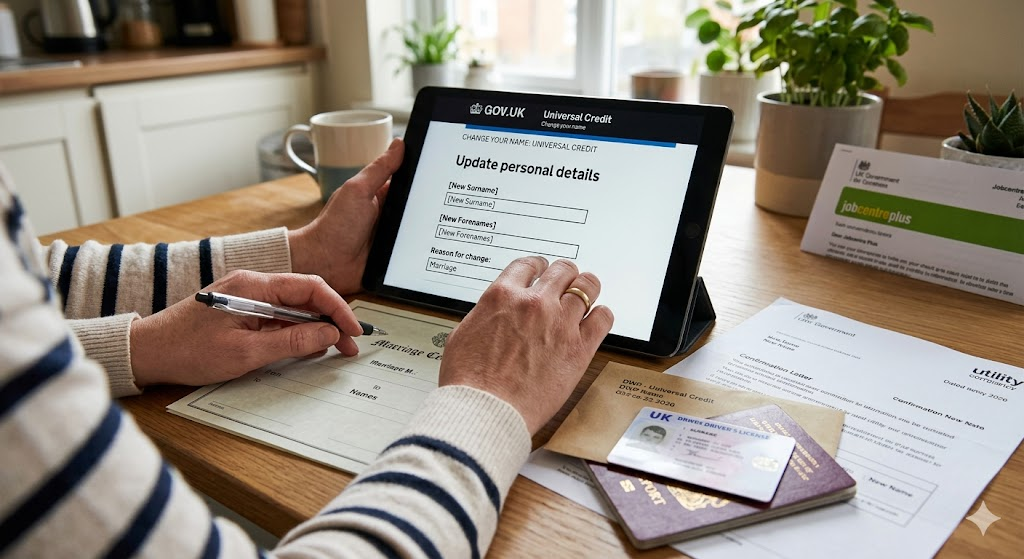
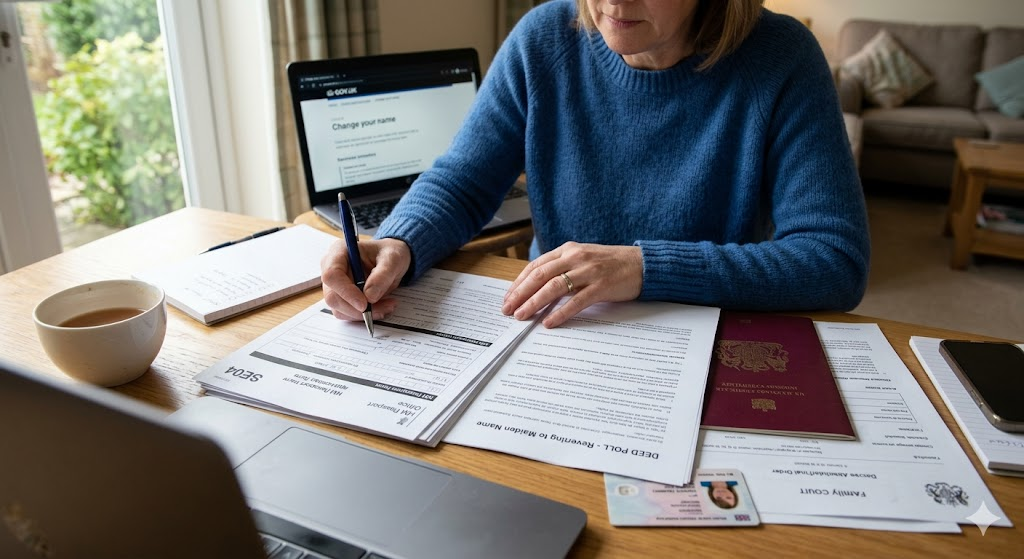
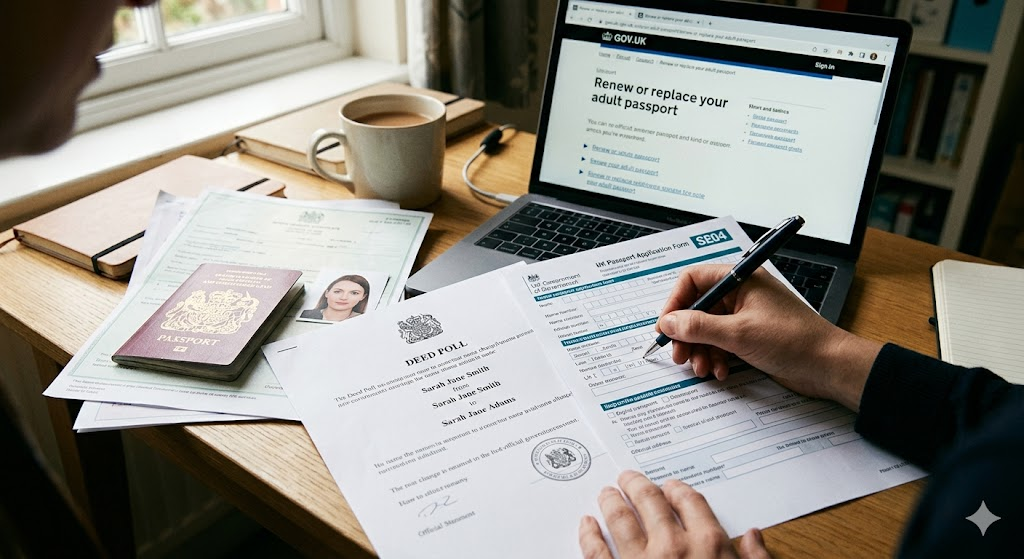
To officially remove a hyphen, apostrophe or other special character from your name - turning Smith-Jones into Smith Jones, or O’Brien into OBrien - you sign a deed poll declaring the exact new spelling, then update your passport, driving licence, bank and other records to match. An unenrolled deed poll is legally valid for this and is accepted by HM Passport Office, the DVLA, HMRC, banks, the NHS and employers. Around 98% of UK name changes are done this way, and you don’t need a solicitor.
Why people remove hyphens, apostrophes and special characters
Punctuation in a name looks small, but it causes a surprising amount of friction in everyday life. The reasons people decide to drop it usually fall into two groups: how their name behaves in computer systems, and how it appears on forms and official documents.
Computer systems strip or reject the character anyway
Plenty of older databases - banks, airlines, government portals, payroll, insurers - simply cannot store an apostrophe or hyphen. They either reject it outright or quietly delete it. So O’Brien becomes OBrien on your bank card, Smith-Jones becomes SmithJones or Smith Jones on a boarding pass, and suddenly your records disagree with each other. Some systems even mangle an apostrophe into a string of symbols. If different organisations hold different versions of your name, the cleanest fix is to choose one consistent spelling and make it your legal name.
Forms, signatures and the daily hassle
Some people are simply tired of explaining the punctuation. You spell your name out on every phone call, correct it on every delivery label, and watch it get entered wrongly regardless. Removing the special character gives you a name that every form, font and field can handle identically. For frequent travellers in particular, a name that matches across your passport, tickets and watchlists removes a genuine source of stress at borders.
Is removing a special character a legal name change?
Yes. This is the part most people get wrong. Changing O’Brien to OBrien, or Smith-Jones to Smith Jones, alters the spelling of your legal name - even though it feels like a tiny tweak. If you only change it informally (say, asking your bank to drop the apostrophe), you create a mismatch between that record and your birth certificate or passport. That mismatch can trip up identity checks, mortgage and tenancy applications, background screening and DBS checks, because the names no longer match exactly.
A deed poll solves this. It is a formal legal document in which you renounce your old spelling and adopt the new one, providing the paper evidence that ties the two versions together. With it, every organisation can update your name to the new spelling confident that the change is genuine and documented.
Choosing your exact new spelling
Before you sign anything, decide precisely how the name should read - because the deed poll records it character for character. With hyphens you have two common options:
- The space option: Smith-Jones becomes Smith Jones (two words, a true double-barrelled surname without the hyphen).
- The merge option: Smith-Jones becomes SmithJones or Smithjones (one solid word). Think carefully here - a merged surname can look unusual and is harder to undo later.
With apostrophes, the standard route is to simply delete the character: O’Brien to OBrien, or D’Arcy to DArcy. Some people prefer to insert a space (O Brien) or merge fully (Obrien) - all are valid; it’s your choice. Whatever you pick, write it down exactly as you want it to appear on every future document, capitalisation included, and use that identical spelling everywhere.
One related point: if your name also carries an accent or diacritic - a Zoë or a François - that’s handled slightly differently for passports and travel. We cover it fully in our guide to removing accents and diacritics for international travel. And if you’re reshaping your name more broadly while you’re at it, see how adding or removing middle names by deed poll works.
How to remove the character by deed poll
The process is straightforward and you can complete it without a solicitor (who would typically charge £150-£300+ for the same document).
- Confirm the exact new spelling - old name in full, new name in full, down to the last character.
- Order your deed poll. A professionally printed adult deed poll from UK Name Change starts at £14.49, with same-day dispatch if you order before 3pm and free Royal Mail Tracked delivery.
- Sign it in wet ink in front of two independent adult witnesses (18 or over), neither of whom is a relative, partner or anyone living at your address.
- Keep the original. HM Passport Office, the DVLA and banks need the original wet-ink signed deed poll, not a photocopy - so order extra originals if several organisations want to see it at once.
Anyone aged 16 or over can change their own name and sign their own deed poll. For under-16s, everyone with parental responsibility must consent.
Making sure every record matches afterwards
The deed poll is only the first step - the real goal is consistency across all your records. Update each organisation with the identical new spelling:
- Passport: £102 online or £115.50 by post (Fast Track £192; Premium 1-day £239.50).
- Driving licence (DVLA): free to update.
- Banks, HMRC, NHS, employer, utilities and pensions: all free to update.
Send the new spelling everywhere - including the small accounts that are easy to forget, like loyalty schemes, subscriptions and the electoral roll - so there’s no lingering version of your old, punctuated name to cause a mismatch later.
Do you need to enrol the deed poll?
No. Enrolment at the Royal Courts of Justice (£53.05) is entirely optional. It publishes your name change publicly in the London Gazette and takes 2-3 weeks, but it adds no legal validity - an unenrolled deed poll is just as binding. For removing a special character, the standard unenrolled deed poll is all you need.
Frequently Asked Questions
Is removing an apostrophe from my surname a legal name change?
Yes. Changing O’Brien to OBrien alters the spelling of your legal name, so a deed poll is the correct way to document it. Doing it only informally creates a mismatch between records that can fail identity and background checks.
Can I change Smith-Jones to Smith Jones without a hyphen?
Absolutely. You can drop the hyphen and keep both names as a two-word surname (Smith Jones), or merge them into one word (SmithJones). A deed poll records whichever exact spelling you choose, character for character.
Will the passport office accept a deed poll for this?
Yes. HM Passport Office accepts an unenrolled deed poll as evidence to issue a passport in your new spelling. Send the original wet-ink document, not a photocopy. A standard adult passport costs £102 online or £115.50 by post.
How much does it cost to remove a special character from my name?
The deed poll itself starts at £14.49. Updating your driving licence, bank, HMRC, NHS and employer records is free. A passport renewal, if you want one, is £102 online. You do not need a solicitor.
Do I have to tell everyone, or can I just change it on one account?
For your records to stay consistent, update every organisation with the identical new spelling. Changing it on a single account leaves you with two versions of your name, which is exactly the problem you’re trying to solve.
Can I undo it later if I miss the punctuation?
Yes. A name change by deed poll can be reversed with another deed poll - you simply adopt your previous spelling again and update your records. That said, choosing carefully the first time saves the repeat admin.
Ready to drop the hyphen or apostrophe?
Make your new spelling official with a professionally printed deed poll - trusted by over 160,000 customers. Get started with your adult deed poll from £14.49, dispatched the same day when you order before 3pm with free tracked delivery, and finally have a name that every form and computer system can handle.