People change their names in the UK for six main reasons: marriage or civil partnership, divorce or separation, gender transition, distancing from an estranged or abusive family, a clean ‘fresh start’ after a difficult chapter, and professional or personal preference. Every one of these is a perfectly valid motivation, and UK law treats them all the same. You don’t need to give a reason, prove anything, or justify your choice to anyone. Whatever sits behind your decision, the legal route is identical-a deed poll that declares your old name abandoned and your new name adopted.
This is a thoughtful, non-judgemental overview of why people change their names. If you’re wondering whether your own reason “counts”, the short answer is yes. Below we walk through the common motivations one by one, then explain how the document works regardless of which reason is yours.
Marriage and civil partnership
The most familiar reason of all. When people marry or form a civil partnership, one or both partners often take a shared surname-and there are far more options than the traditional ‘wife takes the husband’s name’.
- Taking your spouse’s surname-the classic choice. For a simple post-marriage name change, your marriage certificate is usually enough; you don’t always need a deed poll.
- Double-barrelling-combining both surnames (e.g. Smith-Jones). A deed poll is the cleanest way to make this official for both partners.
- Meshing-blending two surnames into a brand-new one (Cole + Bennett becoming ‘Colett’). Because this is an invented name, a deed poll is the right tool.
- A neutral shared name-some couples pick an entirely new family surname together. A deed poll covers it.
One quick clarification: changing a title from ‘Miss’ to ‘Mrs’ or ‘Mx’ needs no paperwork at all. A title is not a legal part of your name, so no deed poll is required just to switch it.
Divorce and separation
After a relationship ends, reverting to your maiden or birth name is one of the most common-and most cathartic-name changes there is. You don’t need your former spouse’s permission, and you don’t need to wait for the divorce to be finalised.
If you’re going back to a name that already appears on your birth certificate, that document plus your decree absolute can sometimes be enough for banks and the passport office. But if you want a single, universally accepted piece of paper that every organisation recognises without question-or you’re moving to a name that isn’t on your birth certificate-a deed poll for adults removes all ambiguity in one step.
Gender transition and affirmation
For transgender, non-binary and gender-diverse people, changing your name is often one of the first and most meaningful steps in living as your true self. A deed poll lets you update your name on your passport, driving licence, bank accounts, medical records and employment paperwork-and it does not require a Gender Recognition Certificate, medical evidence, or any explanation of your gender identity.
This matters: your name change and your legal gender are two separate processes. You can change your name by deed poll at any time, entirely on your own terms, and update your title to Mx (or Mr/Ms) at no cost because, as above, a title isn’t part of your legal name. Many people find this step carries real emotional weight; if that resonates, our piece on the psychological benefits of changing your name explores that experience in depth.
Distancing from an estranged or abusive family
Some people change their name to cut ties with a family they’ve become estranged from, or to escape the legacy of an abusive parent or relative. Shedding a surname that carries painful associations can be a genuine act of self-protection and self-definition-not a small thing, and not something anyone should have to defend.
If safety is a factor, it’s worth knowing that an unenrolled deed poll keeps your change private. Enrolment at the Royal Courts of Justice (the optional route) publishes your old and new names publicly in The London Gazette-which is exactly what most people in this situation want to avoid. An unenrolled deed poll is fully legally valid and is the right choice for around 98% of UK name changes, so privacy and validity are not a trade-off.
A fresh start
After bereavement, recovery, leaving a faith or community, finishing a prison sentence, or simply closing a difficult chapter, many people change their name to mark a new beginning. There’s no requirement to have endured something dramatic-a name change can be a quiet, deliberate way of drawing a line and moving forward on your own terms.
Professional branding and personal preference
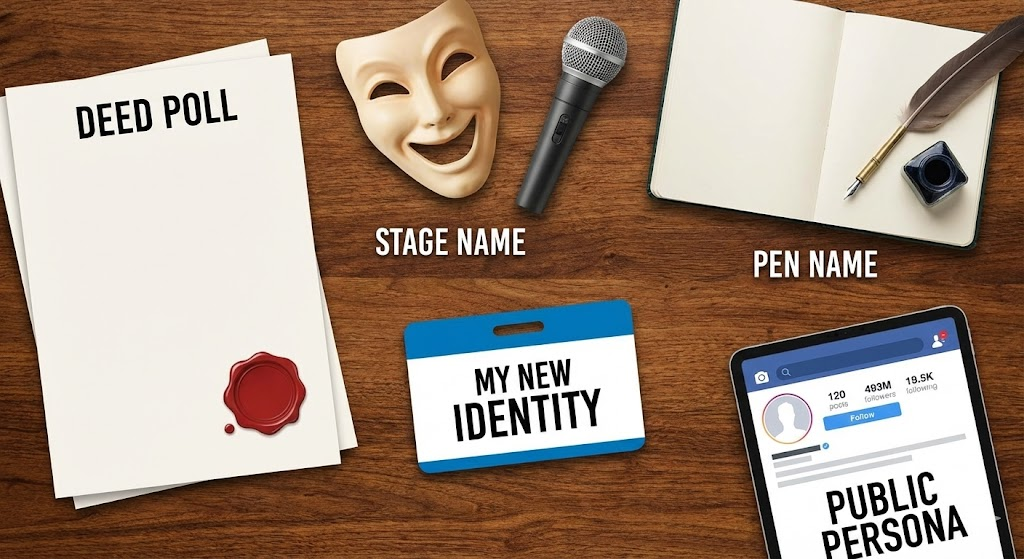
Plenty of name changes are driven by career or simple taste. Writers, performers, founders and freelancers adopt names that are easier to spell, easier to pronounce, more memorable, or better aligned with their brand. Others change a name they’ve simply never liked, anglicise a name that’s constantly mangled, or reclaim a heritage spelling an earlier generation dropped.
And here’s the most underrated motivation of all: you just want to. “Because I prefer it” is a complete and legitimate reason in the eyes of UK law. If that’s you, we’ve written a dedicated guide on changing your name simply because you want to, with no other justification needed.
Your reason doesn’t change the process-or the document
Whichever motivation is yours, the mechanics are the same. Anyone aged 16 or over can change their own name and sign their own deed poll (under-16s need the consent of everyone with parental responsibility). The document must be signed in wet ink and witnessed by two independent adults aged 18+-not a relative, partner, or anyone living at your address.
A professionally printed unenrolled deed poll from UK Name Change starts at £14.49, with same-day dispatch on orders placed before 3pm and free Royal Mail Tracked delivery. It’s the same legally valid document a solicitor would charge £150-£300+ to produce, accepted by HM Passport Office, the DVLA, HMRC, banks, the NHS, employers and schools. Updating your driving licence, bank, HMRC and NHS records is free; only the passport carries its own separate fee (£102 online). Whatever brought you here, you can order your adult deed poll today and start using your new name straight away.
Hate Your Name? How to Change It Simply Because You Want To
Yes - in the UK you can legally change your name simply because you don’t like it. You don’t need a serious reason, a court’s permission, marriage, divorce, or anyone’s blessing. “I just hate my name” is a completely valid reason, and the legal route is a single document called a deed poll. You can have a professionally printed one in your hands within days, from £14.49.
If a name has followed you around for years and never once felt like you - if you wince when a barista calls it out, or you’ve been quietly going by a different name for so long that your real one feels like a stranger’s - this guide is for you. Let’s clear up the biggest myth first, then walk through exactly how to make the switch.
Changing Your Name for Aesthetic Reasons: Flow, Initials & Symmetry
Yes-you can legally change your name in the UK purely for aesthetic reasons, and you never have to justify it to anyone. If you simply love how a name flows, dislike your initials, or want a signature that feels right, that is a completely valid reason. UK law does not ask why you are changing your name-only that you do it properly. A professionally drafted deed poll makes your chosen name official, and you can have one from £14.49.
People change their names every day for reasons that feel deeply practical: marriage, divorce, gender, faith, family. But there is another reason that is just as legitimate and far more common than people admit-they simply do not like how their name works. Maybe it trips off the tongue awkwardly. Maybe the syllables clash. Maybe your initials spell something unfortunate, or your signature has always felt clumsy.
Cultural Identity & Personal Branding: Navigating Your Name Change
In the digital age, your name is more than just a label - it is a global brand and a cultural signifier. Whether you are an entrepreneur in London, a creative freelancer, or a corporate professional, your name carries weight in every search engine result and social introduction. Choosing to change your name in 2026 often involves a delicate balance: honoring your heritage while building a professional brand that resonates with your future goals.
At UK Name Change, we understand that this decision isn't just about paperwork; it's about the intersection of who you were and who you are becoming. This guide explores the key considerations for cultural identity and personal branding during a name change.
Changing Your Name to Build a Personal Brand: A UK Legal Guide
If you want your legal name to match the brand you trade under, you can make it official with an unenrolled deed poll for £14.49, and it will be accepted by HM Passport Office, banks, HMRC and Companies House just like any other name change. But before you sign anything, a smart rebrand involves more than a document: you need to check the name is free to use, decide whether you actually need a legal change at all, and plan how you’ll roll it out consistently across every platform. This guide walks through the branding-specific decisions, then the exact legal steps.
You can trade under almost any name you like without changing your legal identity. A sole trader can invoice and market as “Studio Marlowe” while remaining legally John Smith; a limited company name is separate from your personal name entirely. If your brand is a business identity rather than you, a trading name is usually all you need - and it’s free.
When to Change Your Name: Key Timing Considerations for 2026
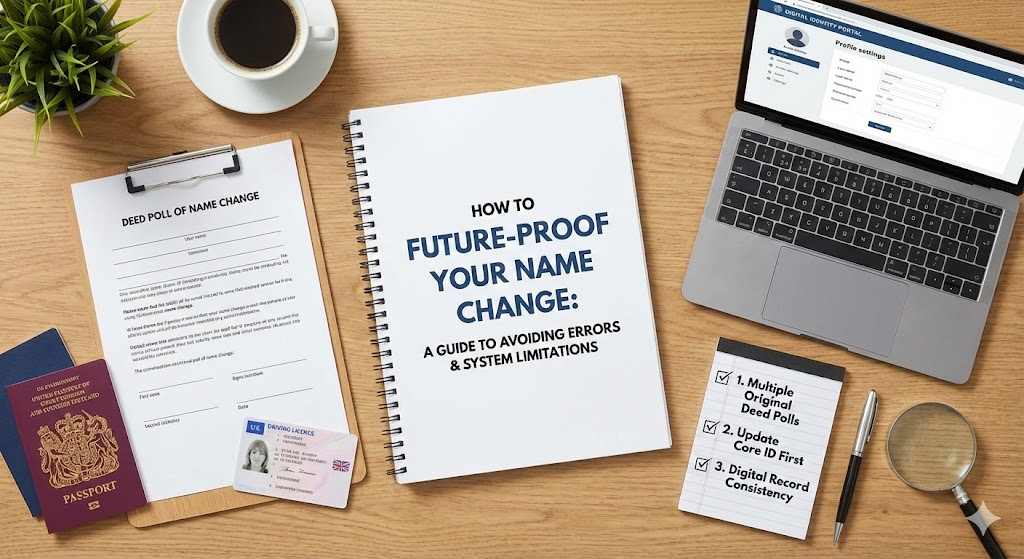
The best time to change your name by deed poll is during a quiet period when you have at least 4-6 weeks before any deadline that depends on your new name-such as a holiday, wedding, new job or the printing of a certificate. Timing matters because your deed poll itself is instant (you can sign it the day it arrives), but the organisations that follow-passport office, DVLA, banks, employers-each take their own time. Plan around those downstream steps and a name change is smooth; ignore them and you can end up with a flight booked in the wrong name or a passport stuck in processing when you need to travel.
This guide covers when to make your move: the ideal moments to change, what to line up first, and the timing traps that catch people out. If you mainly want to know how long each step takes, see our companion guide on how long a UK name change takes. If you are already up against a hard deadline, jump to emergency and urgent name changes.
One of the most common reasons of all is a surname that no longer fits — too long, constantly misspelled, or simply dated. See shortening and modernising an outdated surname.
Frequently Asked Questions
How far in advance should I change my name before a holiday?
Allow enough time to receive a new passport before you travel-up to 10 weeks for a standard application at peak times. If you cannot leave that long, either travel under your current name and change afterwards, or use a paid Fast Track (£192) or Premium (£239.50) passport service.
Can I change my name while my passport is being renewed?
No. Wait until the new passport is issued. Changing your name mid-application can invalidate it, cause delays, or force you to reapply and lose the fee.
Do I have to wait for my divorce to finalise to change my name?
No. You can sign a deed poll at any time without a decree absolute or court permission. Anyone aged 16 or over can change their own name whenever they choose.
When is the worst time for a student to change their name?
During exam season or just before certificates are printed. Aim to change at least three months before a certificate is issued, or wait until after graduation and then update your documents.
Do I need to legally change my name to use a brand name?
No. You can trade under a business or brand name without touching your legal identity - sole traders and limited companies do this routinely. You only need a deed poll if you want your legal name (on your passport, bank account and contracts) to match the brand.
Will a deed poll protect my brand name from being copied?
No. A deed poll changes your legal name but grants no trademark or commercial rights. To protect a brand name you would register a trade mark with the Intellectual Property Office, which is a separate process. Always search the register before adopting a name.
Can social media platforms verify an account in my new name?
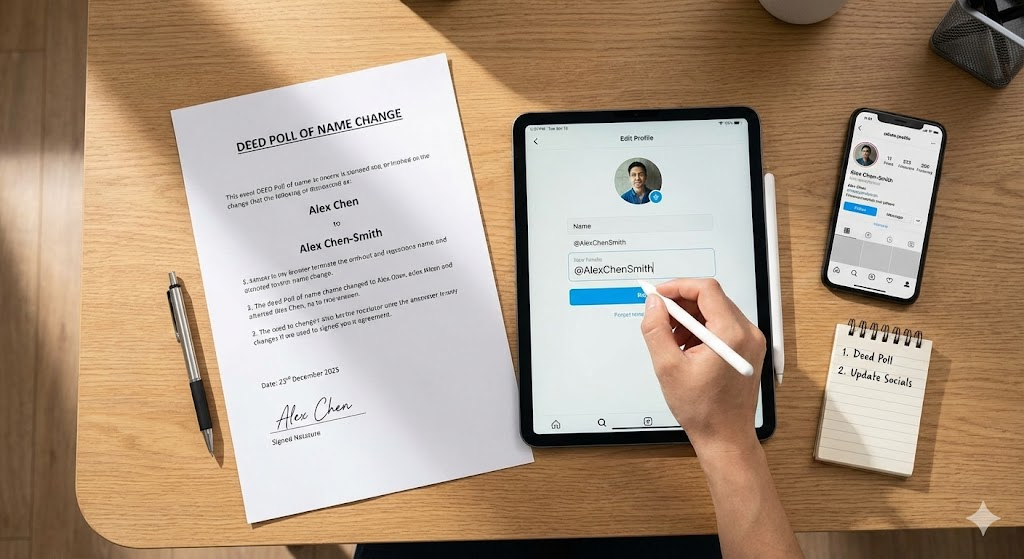
Yes. Platforms that verify identity check government-issued ID. Once you’ve used your deed poll to update your passport or driving licence, that ID matches your new name, so verification under the new name is straightforward. See our guide on deed polls and digital identities for the details.
How quickly can I have the document?
Order before 3pm and your professionally printed deed poll is dispatched the same day with free Royal Mail Tracked delivery, so most customers receive it within a couple of days - ideal if you’re timing a brand launch.
Is ‘I just like how it sounds’ a valid reason to change my name?
Yes. UK law does not require any reason at all on a deed poll. Liking how a name flows, sounds or looks-or disliking your current one-is entirely sufficient. No one assesses or approves your motivation.
Can I change only my middle name to improve the flow?
Absolutely. You can add, remove, swap or reorder middle names while keeping your first name and surname. A single deed poll can record any combination of changes to your forename(s) and surname.
Will an aesthetic name change be accepted by the passport office and banks?
Yes, provided the name itself is allowed (no numbers, symbols, offensive words or implied titles). An unenrolled deed poll is accepted by HM Passport Office, the DVLA, HMRC, banks and the NHS, regardless of why you changed your name.
Do I need to enrol my deed poll for the change to count?
No. Enrolment at the Royal Courts of Justice (£53.05) is optional and adds no legal validity-it only publishes your name in the London Gazette. An unenrolled deed poll is fully legal on its own.
Can I really change my name just because I don’t like it?
Yes. “I don’t like my name” is a completely valid reason in the UK. No authority reviews or approves your motive, and you never have to explain it. The only restriction is that you can’t change your name for fraudulent or criminal purposes.
Do I need a solicitor or a court?
No. You don’t need a solicitor, and no court is involved for a standard change. An unenrolled deed poll - signed by you and one independent witness - is all that’s legally required, and it’s accepted everywhere from passports to bank accounts.
How long does the whole process take?
The order itself takes minutes. If you order before 3pm your deed poll is dispatched the same day with free tracked delivery. Once it arrives and you’ve signed it in front of two witnesses, your name change is legally complete - often within a few days of ordering.
Will I have to tell people why I changed my name?
Not legally. When you update official records you only show the deed poll, not your reasons. How much you share with friends and family is entirely up to you - “I just prefer my new name” is a perfectly good answer.
Do I have to give a reason to change my name in the UK?
No. You never have to state, prove or justify why you’re changing your name. A deed poll simply records that you’ve abandoned one name and adopted another. The only restriction is that you can’t change your name to defraud, deceive or escape an obligation.
What’s the most common reason people change their name?
Marriage and civil partnership account for the largest share of UK name changes, followed by divorce and reverting to a maiden name. But gender transition, family estrangement, fresh starts and personal preference are all common and equally valid motivations.
Can I change my name just because I don’t like it?
Yes. Personal preference is a perfectly legitimate reason and needs no further explanation. Anyone aged 16 or over can change their name by deed poll for any lawful reason-including simply preferring something else.
Do I need a deed poll after getting married or divorced?
Not always. To take your spouse’s surname, your marriage certificate is often enough; to revert to your maiden name after divorce, your birth certificate plus decree absolute can suffice. A deed poll is useful when you’re double-barrelling, meshing, creating a new shared name, or adopting a name that isn’t on your birth or marriage certificate.
Will changing my name for privacy or safety reasons be made public?
Only if you choose to enrol it. An unenrolled deed poll is private and never published. Enrolment at the Royal Courts of Justice (£53.05, optional) publishes your name change in The London Gazette and adds no legal validity, so most people who change their name for privacy choose the unenrolled route.
Whatever your reason, make it official today
There’s no ‘right’ motivation for changing your name-only your reason, which is enough on its own. Trusted by 160,000+ customers, UK Name Change makes it simple to turn that decision into a legally valid document. Order your adult deed poll from £14.49 with same-day dispatch and free tracked delivery, and start living under your new name straight away.