Naming a child should be a joyful, shared decision. But what happens when the relationship breaks down, or parents simply cannot agree?
We often hear from mothers who assume they have the final say because they are the primary carer. Conversely, we hear from fathers who believe that "tradition" grants them the legal right to have the child carry their family name.
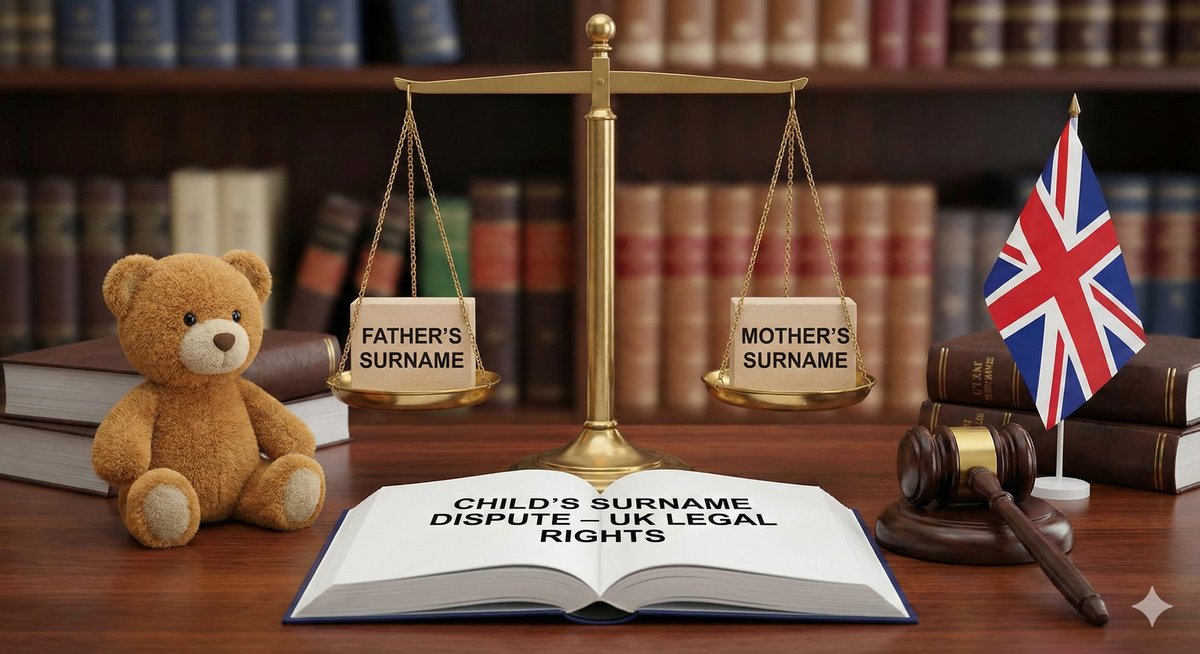
The truth is that UK law does not favour the mother or the father. It favours Parental Responsibility.
Here is a breakdown of who has the legal power in a surname dispute, from the hospital ward to the courtroom.
Round 1: Naming the Baby (Birth Registration)
The rules at the very start of a child's life depend entirely on whether you are married or unmarried.
If You Are Married
You have equal rights. Either parent can register the birth alone, but the law assumes you have agreed on the name.
- The Stalemate: If you both turn up to the Registry Office and tell the registrar you cannot agree on a surname, the registrar cannot register the birth. They will send you away to resolve the dispute.
- The "Race": If one parent goes to the Registry Office alone and registers the child with their choice of surname, that name becomes the legal name. While this is technically legal at the time, the other parent can immediately apply to the court to have it changed, often leading to a costly legal battle.
If You Are Unmarried
The mother holds the cards initially.
- Mother Goes Alone: If the unmarried mother registers the birth alone, she can choose any surname she likes. The father has no legal power to stop her at this stage because he does not yet have Parental Responsibility (unless he is listed on the certificate).
- Father's Rights: An unmarried father generally cannot register the birth (and therefore choose the name) without the mother present or her sworn declaration.
Round 2: Changing the Name (Deed Poll)
Once the name is on the birth certificate, the balance of power shifts. This is where the concept of Parental Responsibility (PR) becomes the "Golden Rule."
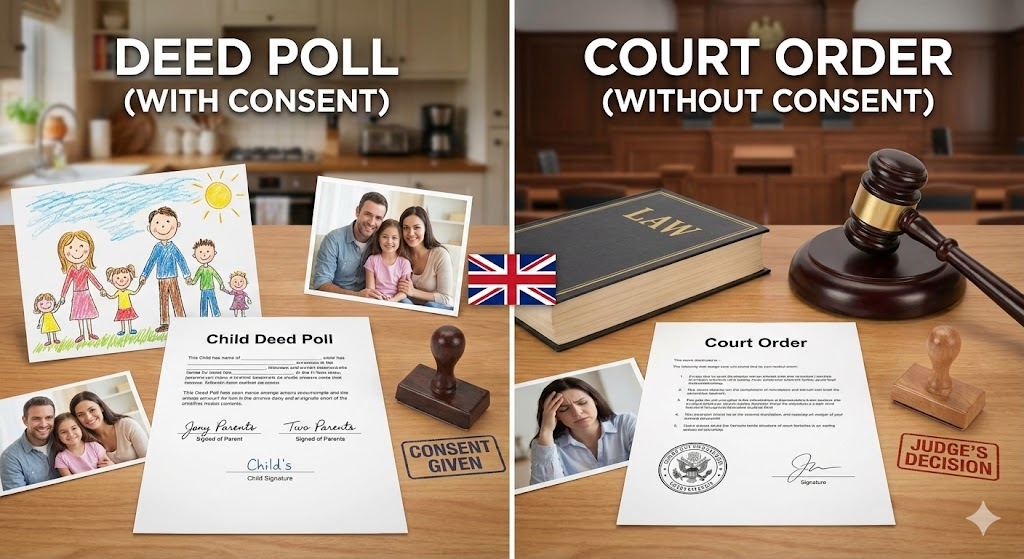
The Rule: You cannot change a child's name without the written consent of everyone with Parental Responsibility.
Does the Mother have the final say?
No. If the father has Parental Responsibility (which he has if he is on the birth certificate or was married to you), the mother cannot change the child's name without his permission.
If she issues a Deed Poll without his signature, it is invalid. If she tries to use it at a school or for a passport, the father can block it or apply for a court order to reverse it.
Does the Father have the final say?
No. A father cannot force a mother to change the child's name to his, nor can he change it himself without her consent. Even if he pays 100% of the child maintenance, he does not buy the right to dictate the surname.
Round 3: The Court Decision (Specific Issue Order)
If you are in a deadlock—where one parent wants to change the name and the other refuses—the only body with a "final say" is the Family Court.
Either parent can apply for a Specific Issue Order. A judge will decide the name for you.
How does the Judge decide?
They do not care about "Father's rights" or "Mother's rights." They care about the Welfare of the Child.
Key factors they consider:
- Registered Name: Courts are generally reluctant to change a name that was properly registered, unless there is a strong reason.
- Maintaining Links: Judges believe it is important for a child to feel part of both families.
- The Compromise: Because of point \#2, courts frequently order double-barrelled surnames (e.g., Smith-Jones) as a solution. This allows both parents to be represented without one "winning" over the other.
Summary
| Scenario | Who has the power? |
|---|---|
| Unmarried Registration (Mother goes alone) | The Mother |
| Married Registration | Equal (Must agree) |
| Changing Name (Both have PR) | Neither (Must agree) |
| Court Decision | The Judge (Focus on welfare) |
Ultimately, neither parent has an absolute veto. The law demands cooperation. If you can agree to compromise—perhaps by double-barrelling—we can help you draft the paperwork to make it legal.
Have you reached an agreement? Contact our team today to order your Child Deed Poll.