For the overwhelming majority of people, changing your name in the UK is quick, legal and complication-free - you sign a deed poll and start using your new name straight away. Genuine legal complications are rare and tend to involve a narrow set of situations: an unresolved name dispute, significant outstanding debts, live court or family proceedings, or a clash between two nationalities. This guide explains those uncommon scenarios, how to spot whether any apply to you, and when it is genuinely worth paying for legal advice rather than going ahead on your own.
First, the reassurance: this almost never applies to ordinary name changes
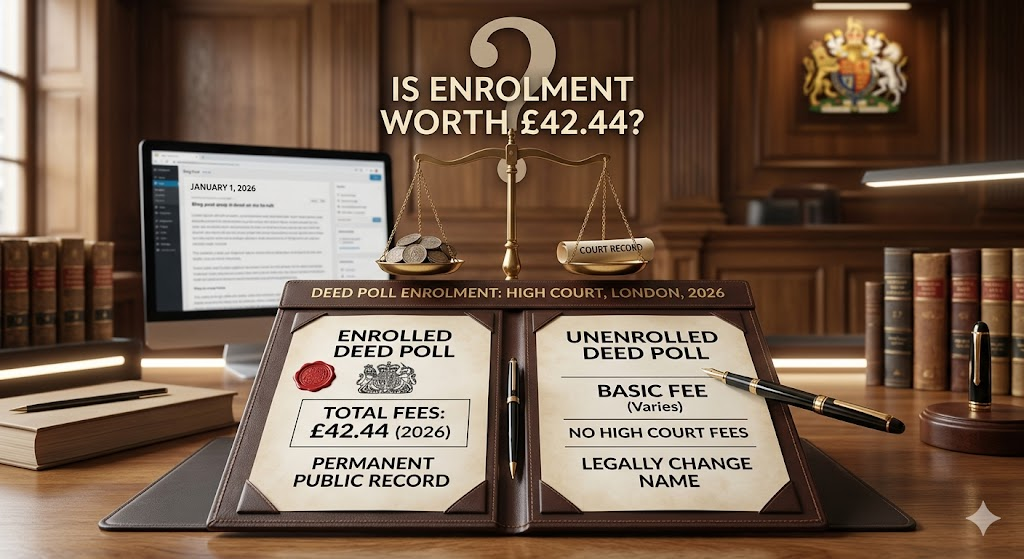
Around 98% of UK name changes are made on an ordinary unenrolled deed poll, with no court involvement and no legal hurdles whatsoever. An unenrolled deed poll is legally valid and is accepted by HM Passport Office, the DVLA, HMRC, the NHS, banks, employers and schools. Anyone aged 16 or over can change their own name and sign their own document. There is no register to clear, no permission to seek and no waiting period before your new name takes effect.
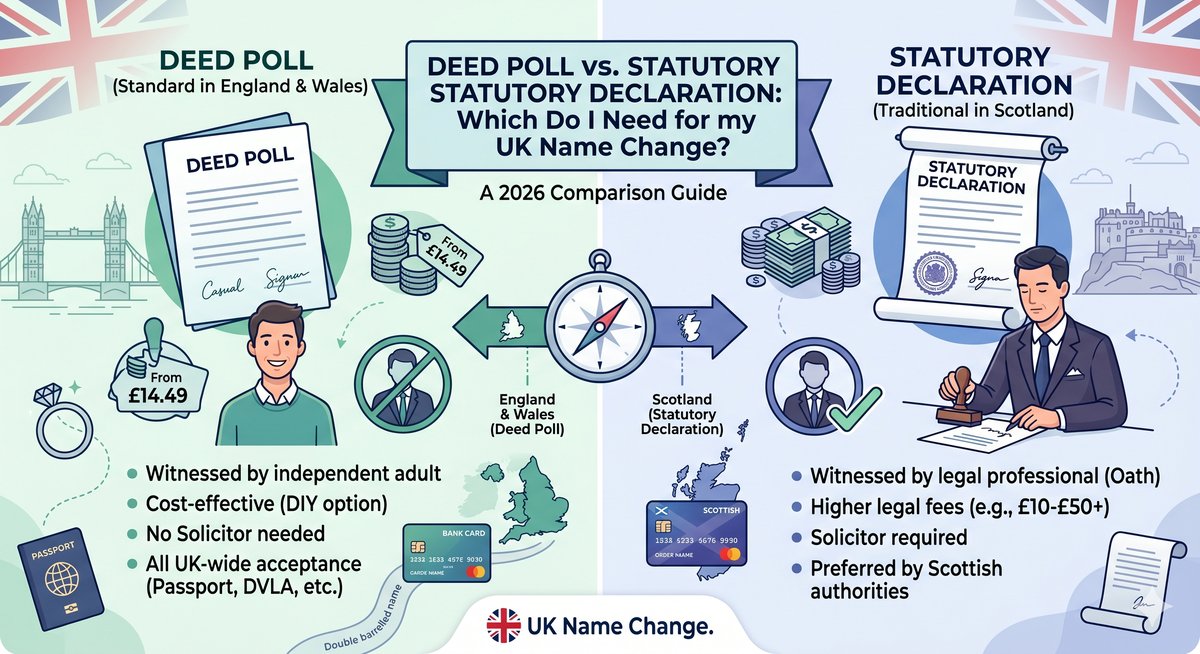
The complications below are exceptions, not the rule. If none of them describe your circumstances - and for most people none will - you can simply order a deed poll and update your records. If one does apply, it usually does not prevent your name change; it just means you have an extra obligation to meet or a question worth checking before you proceed. You can start the straightforward route any time with an adult deed poll from UK Name Change, from £14.49 with same-day dispatch on orders placed before 3pm.
Complication 1: An unresolved name dispute
The most common “complication” people worry about is a dispute - someone objecting to the name they want to take. For adults this is far rarer than people expect. You are free to call yourself almost anything, and no relative, ex-partner or third party has a legal veto over your personal name change.
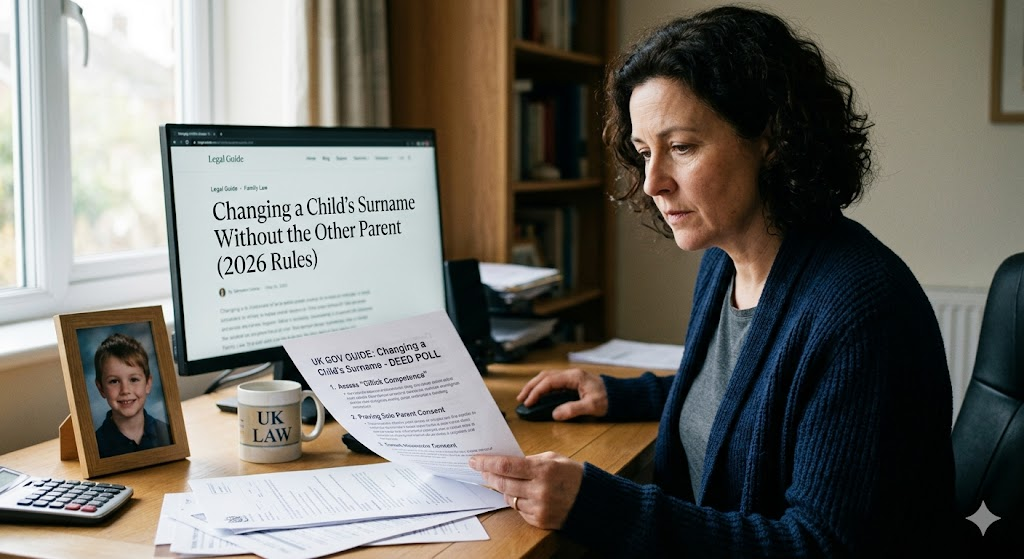
Disputes overwhelmingly arise around children’s surnames, where everyone with parental responsibility must agree. If one parent refuses, you cannot simply override them with a deed poll - the matter may need a court order. Because this is a substantial topic in its own right, we cover it fully in our guide to deed poll versus court order for a child’s name change. If you are an adult and a family member merely disapproves of your choice, that is not a legal obstacle - it is just an opinion.
One narrow exception worth knowing: you cannot adopt a name to impersonate someone, commit fraud, or pass yourself off as a brand or trademark holder. Taking a famous trademarked name can lead to rejection by HM Passport Office or, in extreme cases, civil action by the rights holder. For an ordinary personal name, this never comes up.
Complication 2: Outstanding debts or financial obligations
Changing your name does not erase, hide or reduce any debt you owe. Your credit file and liabilities follow you, not your name, and lenders and creditors are entitled to update their records to reflect the change. Crucially, deliberately changing your name to evade creditors or frustrate enforcement can amount to fraud.
That said, having debts does not stop you legally changing your name - you simply have to do it honestly and tell the organisations you owe. Because the do’s and don’ts here are detailed (and important to get right), we have a dedicated guide on how to change your name with outstanding debts without breaking the law. If money you owe is the only thing on your mind, read that first; for most people it is a matter of notifying creditors, not a barrier.
Complication 3: Ongoing legal proceedings
If you are currently involved in active legal proceedings - a court case, a family matter, an insolvency or bankruptcy process, or a criminal investigation - you can usually still change your name, but you must not use the change to mislead the court or evade obligations.
A few specific points:
Court cases and bankruptcy
If you are a party to live proceedings, inform your solicitor and the court of your new name so the records stay accurate. During bankruptcy or an Individual Voluntary Arrangement, you remain bound by all your obligations regardless of your name; you must disclose the change to the Official Receiver or your insolvency practitioner.
Offender notification requirements
Some people are under a legal duty to report a name change to the police - most notably those subject to sex offender notification requirements (the “register”) or certain court orders, who must notify within three days. Failing to do so is itself a criminal offence. The name change is still legal; the reporting obligation simply runs alongside it.
Probation, bail or licence conditions
If you are on bail, licence or probation, check your conditions and tell your supervising officer. There is rarely an outright ban, but transparency is essential to avoid breaching a condition.
Complication 4: Dual nationality and cross-border conflicts
A UK deed poll changes your name under the law of England and Wales (Scotland and Northern Ireland have their own routes). It does not automatically change your name in another country of which you are a citizen. This is where dual nationals occasionally hit friction.
Some countries do not recognise a UK deed poll, restrict the names you may legally hold, or require a specific national procedure to change your name. The result can be a passport in one name and a foreign document in another - which causes problems at borders and with overseas banks. Before changing your name, dual nationals should check the rules of their other country (usually via that country’s embassy or consulate) and decide whether to update both nationalities’ documents in step. The UK side remains simple; the complication, if any, sits with the second jurisdiction.
When is it worth getting legal advice?
For an ordinary adult name change, paying a solicitor is unnecessary - they would typically charge £150-£300 or more to produce the very same document you can get from us for a fraction of that. Save your money for the rare cases where professional advice genuinely adds value:
Consider legal advice if:
• A child’s name change is disputed and you may need a court order.
• You are in the middle of bankruptcy, an IVA or active litigation and are unsure of your disclosure duties.
• You are subject to notification requirements or court orders and want to confirm your obligations.
• You hold dual nationality and the other country has restrictive name laws.
• A creditor, ex-partner or third party is threatening to challenge your change.
You almost certainly don’t need it if:
You are an adult with no live proceedings, changing your own name for ordinary reasons such as marriage, divorce, gender, religion or simple preference. That is the vast majority of cases, and a standard deed poll is all you need.
Frequently Asked Questions
Can someone stop me from changing my own name?
No. As an adult aged 16 or over, you can change your own name without anyone’s permission. Relatives or ex-partners may disapprove, but they have no legal power to block your personal name change. Disputes only arise with children, where everyone with parental responsibility must consent.
Does changing my name clear my debts?
No. Your debts and credit history follow you, not your name, and you must tell your creditors about the change. Changing your name to avoid paying debts can be fraud. See our guide on changing your name with outstanding debts for how to do it lawfully.
Will a UK deed poll change my name in another country?
Not automatically. A UK deed poll changes your name under the law of England and Wales only. If you hold dual nationality, check whether your other country recognises a UK deed poll or requires its own procedure, ideally through that country’s embassy, before you change your documents.
Do I have to tell the police if I change my name?
Only if you are subject to a legal duty to do so - for example sex offender notification requirements or certain court orders - in which case you must notify within three days. Most people have no such obligation and need only update their everyday records.
Do I need a solicitor for a normal name change?
No. A solicitor would charge £150-£300+ for the same legally valid document. For an ordinary adult name change with no disputes or live proceedings, an unenrolled deed poll is all you need and is accepted by passports, the DVLA, HMRC, banks and the NHS.
Ready to change your name the simple way?
If none of these rare complications apply to you - and for most people none do - there is nothing standing in your way. Get a professionally printed, legally valid adult deed poll from just £14.49, with same-day dispatch on orders placed before 3pm and free Royal Mail Tracked delivery. Trusted by over 160,000 customers, it is the fast, affordable way to make your new name official today.