How to Make Your Own Deed Poll (And the Risks)
We believe in total transparency. The truth is, you do not legally have to pay a company to create a Deed Poll.
There is no "official government paper" you must use. In theory, you could write your name change on the back of a napkin, have two people sign it, and it would be a valid legal document.
However, there is a big difference between what is legal and what actually works in the real world. Here is the guide to making your own, and why most people eventually choose to buy one instead.
The DIY Method: The Exact Wording You Need
If you are determined to do it yourself, you must type up a document that includes specific legal declarations. Here is the standard accepted wording:
“I [Old Name] of [Address] have given up my name [Old Name] and have adopted for all purposes the name [New Name].
“Signed as a deed on [Date] as [Old Name] and [New Name] in the presence of [Witness Name] of [Witness Address].”
You then need to sign it in both your old and new names, and have your witness sign it too.
The Risks: Why "Free" Can Be Expensive
If it’s that simple, why do thousands of people pay us for a Deed Poll every month? The answer is Acceptance.
While a homemade Deed Poll is technically legal, using it is often a nightmare. Here are the 4 main risks you face with a DIY document.
1. The "Official" Look (The Rejection Risk)
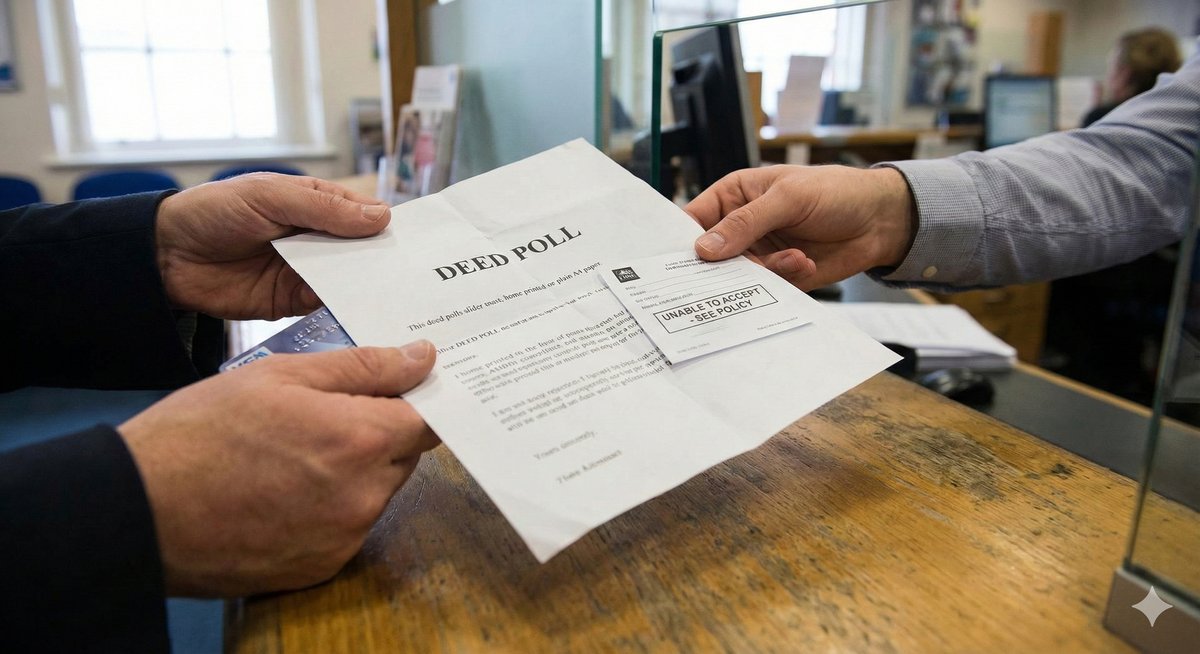
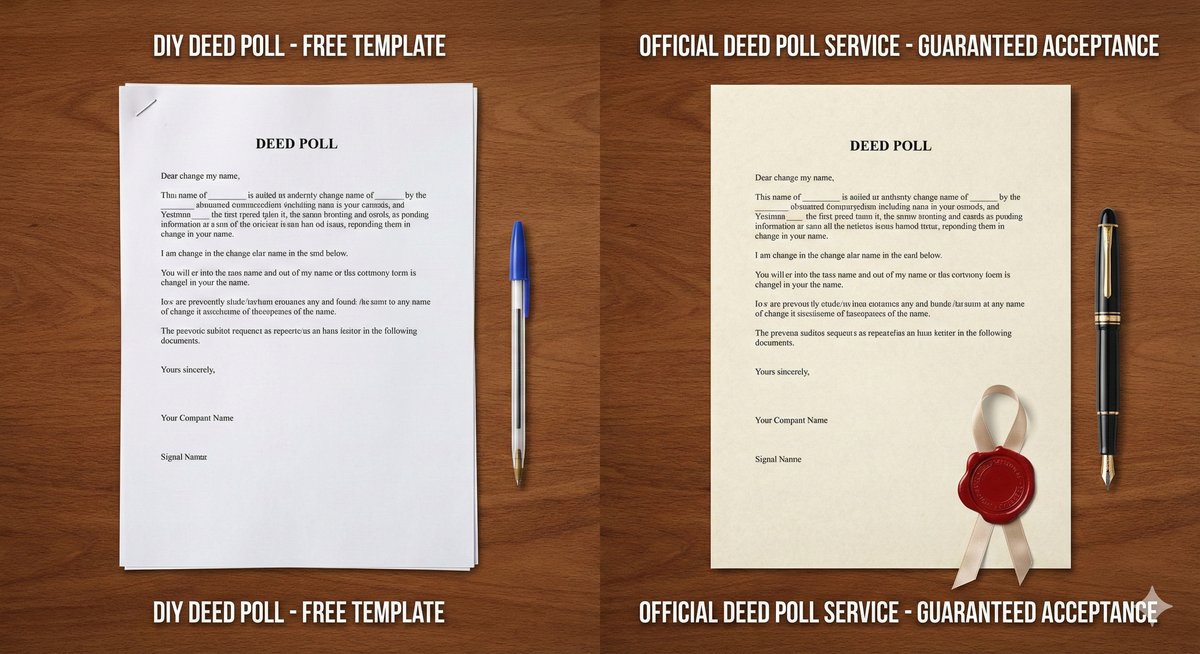
This is the biggest hurdle. Bank clerks and Passport Office staff are not lawyers. They are trained to look for "official" documents with seals, heavy paper, and watermarks.
If you hand them a piece of standard A4 printer paper that you typed up at home, they will often reject it out of caution. You then have to spend hours arguing with managers to prove your document is valid. Is saving £19 worth the stress of being turned away at the bank counter?
2. Formatting Errors
If you make a single typo, miss a required phrase (like "absolutely and entirely renounce"), or fail to date the document correctly, it is invalid.
The Passport Office is incredibly strict. If your DIY document has a mistake, they will reject your passport application, keeping your £88 application fee. Paying for a professional Deed Poll is cheaper than paying for a second passport application.
3. The "Original" Problem
When you make your own, you typically print one copy. If you lose that piece of paper, your proof of ID is gone forever.
Professional services (like ours) allow you to order duplicate originals. This means if you lose one, you have backups. It also allows you to send off applications to the DVLA and Passport Office simultaneously.
4. Data Privacy (Enrolling Risks)
Some DIY guides suggest you "Enrol" your deed poll with the courts to make it "more official." Do not do this unless absolutely necessary.
Enrolling costs over £50 and publishes your name and home address on the permanent public internet record. Our "Unenrolled" Deed Polls are just as legal but keep your data private.
Summary: Is It Worth It?
You can bake your own wedding cake. You can cut your own hair. And you can make your own Deed Poll.
But for a legal document that defines your entire identity, most people prefer the safety, quality, and guarantee of a professional service.
Skip the hassle, the printer ink, and the arguments at the bank. Get a guaranteed document for just £19.49.