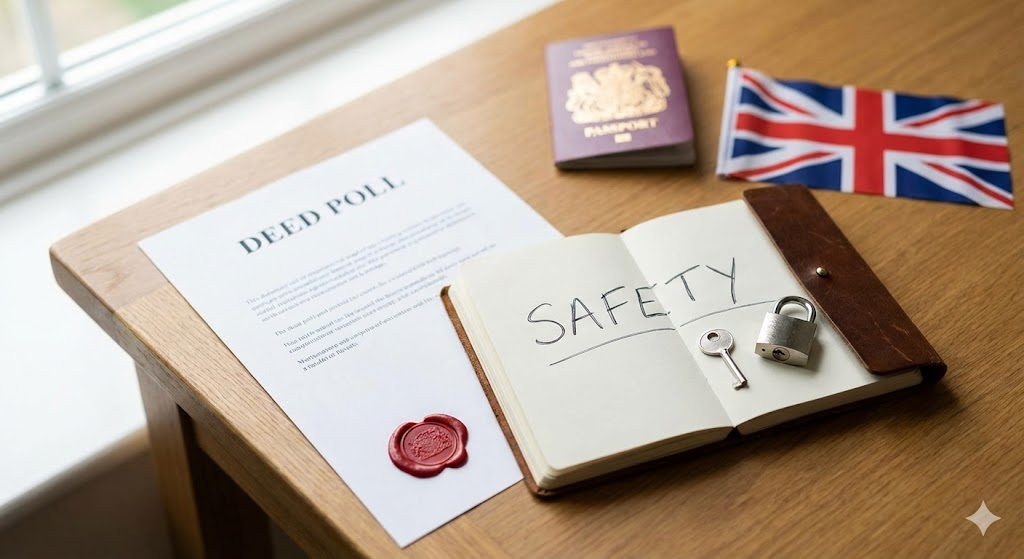
For many individuals in London and across the UK, a name change isn't just about identity—it’s about survival. If you are escaping domestic abuse, a persistent stalker, or targeted harassment, changing your name can provide the "digital and physical break" needed to rebuild your life in peace. However, when your safety is at risk, the way you change your name is just as important as the change itself.
At UK Name Change, we handle these sensitive cases with the utmost discretion. This guide explains how to use the UK legal system to change your name while ensuring your new identity remains invisible to those who wish you harm.
1. The Gold Rule: Never "Enrol" Your Deed Poll
In our other guides, we mention the difference between enrolled and unenrolled deed polls. For someone seeking protection, this choice is critical.
- Enrolled: Your name change is sent to the Royal Courts of Justice and published in The London Gazette. This creates a permanent, searchable public record of your old name, new name, and current home address. Stalking and domestic abuse survivors should avoid this route entirely.
- Unenrolled: This is a private legal document. It is just as valid for updating your passport and bank, but it is not part of any public database. It remains in your possession, ensuring your "Identity Bridge" is only seen by the organisations you choose to notify.
2. Anonymous Electoral Registration
The Electoral Roll is one of the most common tools used by private investigators or harassers to find someone's address. Usually, your name and address are listed for anyone to find.
The Fix: You have the legal right to register to vote anonymously if you can prove that your safety (or the safety of someone in your household) would be at risk. Your name will not appear on the register; instead, you are represented by a code. You will need to provide evidence, such as a relevant court order (e.g., a Non-Molestation Order) or a letter from a senior police officer or refuge manager.
3. "Hardening" Your Personal Accounts
A name change is a perfect opportunity to reset the security of your life. When notifying organisations, don't just change the name—request a security lockdown.
- The NHS: You can request that the NHS creates a completely new NHS number for you and masks your old records. This prevents your past medical history (which may contain old addresses) from being easily linked to your new identity.
- Utilities and Doctors: When updating your name at the dentist, vet, or energy provider, ask them to add a mandatory password to your account. This prevents a harasser from calling up, pretending to be a relative, and social-engineering your new address out of a clerk.
- HMRC: Contact the "HMRC Special Section D." They provide extra security for individuals at high risk, ensuring your tax and National Insurance records are handled with restricted access.
4. Protecting Children in the Transition
If you are changing a child's name to protect them from a dangerous or abusive parent, the legal threshold is high but the protection is robust.
- Court Orders: If an abusive parent has Parental Responsibility and refuses consent, you can apply for a Specific Issue Order. UK courts are increasingly willing to grant these if there is a clear evidence-based risk that maintaining the old name allows the perpetrator to track the child.
- School Records: Once the name is changed, ensure the school "redacts" the old name from all public-facing documents (like sports day programmes or newsletters) to prevent accidental discovery through social media photos.
5. Managing the "Digital Footprint"
A legal name change works best when paired with digital hygiene.
- Digital Noise: Avoid linking your new name to your old social media accounts. Start fresh with a new email address and a new phone number.
- Right to Erasure: Use your UK GDPR "Right to Erasure" (the Right to be Forgotten) to ask search engines and data brokers to remove old records that link your previous name to your current location.
Security Summary Table
| Security Layer | Action to Take | Privacy Level |
|---|---|---|
| Deed Poll Type | Use Unenrolled only. | Private |
| Voter Records | Apply for Anonymous Registration. | Hidden |
| Tax/NI | Contact HMRC Special Section D. | Restricted |
| Medical Records | Request new NHS number/record masking. | Masked |
How UK Name Change Supports Your Safety
We take your privacy seriously. Our systems use advanced encryption to ensure your data is never exposed. When you choose our Complete Package, our dashboard includes a "Privacy & Safety" checklist specifically for those in high-risk situations, providing you with the exact contacts for HMRC Special Section D and guidance on anonymous voting.
We provide professional, discreetly packaged documents that allow you to update your life without drawing unwanted attention. We are here to help you turn the page and start your new chapter with the security you deserve.
Conclusion
Changing your name for safety is a courageous step toward freedom. By choosing an unenrolled deed poll and proactively hardening your records across the government and private sectors, you can significantly reduce the risk of being found. You have the right to live without fear, and your new name is the first shield in that journey.
Ready to take the first step toward a safer future? Apply for your private unenrolled deed poll today. If you are currently in danger, please contact the National Domestic Abuse Helpline (0808 2000 247) or the National Stalking Helpline (0808 802 0300) before starting the process to ensure you have a safe exit plan in place.


