To protect your identity after a name change, keep the link between your old and new name off the public record: use an unenrolled deed poll (never enrol it at the Royal Courts of Justice, which publishes your name change in the London Gazette), opt out of the electoral open register, and tell each organisation privately and individually rather than announcing the change anywhere public. Done properly, the only people who ever learn your former name are the organisations you choose to inform.
This guide covers the privacy side of changing your name-how to minimise the trail that connects your old identity to your new one. If you need broader strategies, see our companion guides on how to legally keep your name off public records in the UK and on identity protection and legal safeguards for high-risk individuals.
What is-and isn’t-on public record
The single biggest privacy decision you make is whether to enrol your deed poll. Most people don’t need to, and shouldn’t.
Enrolment publishes your name in the London Gazette
Enrolling a deed poll at the Royal Courts of Justice costs £53.05, takes two to three weeks, and-crucially-publishes your old and new name together in the London Gazette, a public, permanently searchable government newspaper indexed by search engines. Enrolment adds no legal validity whatsoever. An unenrolled adult deed poll is just as legally binding and is accepted by HM Passport Office, the DVLA, HMRC, the NHS, banks, employers and schools. Around 98% of UK name changes are unenrolled-and for anyone who values their privacy, it is the obvious choice. If you have already enrolled, our guide on keeping your name off public records explains your options.
An unenrolled deed poll is private by default
An unenrolled deed poll is a private legal document. It is not registered with any central body, not searchable, and not published anywhere. Only the organisations you personally hand it to ever see it. That means you control who learns the connection between your old and new name-which is exactly the position you want to be in.
Close the electoral register loophole
The electoral roll is the most overlooked privacy leak after a name change. When you re-register to vote under your new name, you are added to two versions of the register.
The full register vs the open register
The full register is used only for elections, credit checks and preventing fraud-it is not openly sold. The open register (also called the edited register) is a different matter: it can be bought by anyone, including marketing companies, data brokers and people-search websites. By default you are included unless you actively opt out.
How to opt out
When you update your electoral registration with your new name, tick the box to be removed from the open register, or contact your local Electoral Registration Office and ask to opt out. This stops your new name and address being commercially available. Do it as soon as you register under the new name-the longer your details sit on the open register, the more data brokers will have copied them.
Tell organisations privately, one at a time
There is no need-and no legal requirement-to make any public announcement of a name change in the UK. Despite the myth, you do not have to put a notice in a newspaper or the Gazette. Updating your records is free with almost everyone:
- DVLA driving licence: free to update.
- Banks, HMRC, NHS, employers, utilities: free to update.
- Passport: £102 online (the only routine cost; £115.50 by post), and the new passport simply shows your new name.
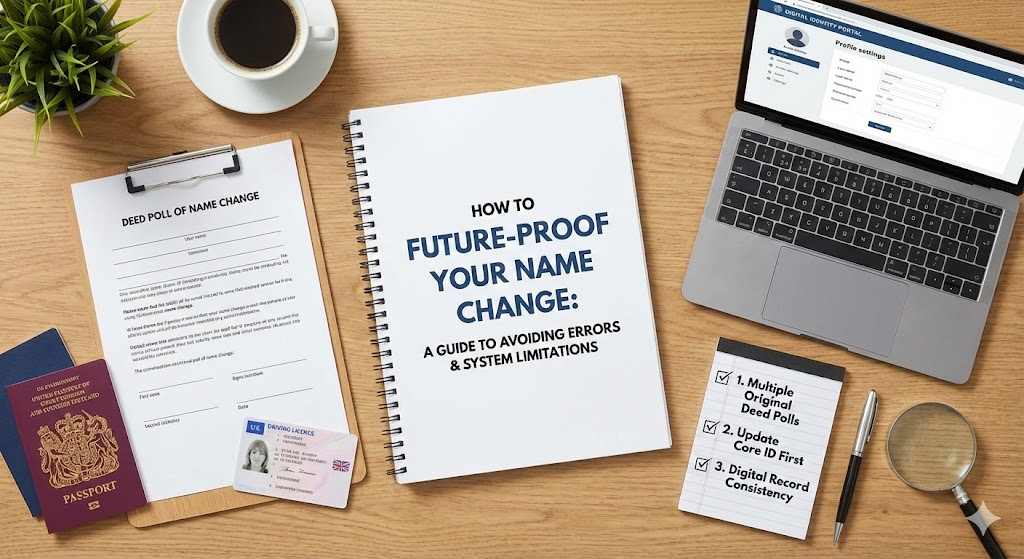
When you contact each organisation, send a clear, copyable instruction and your deed poll-nothing more. Remember that HM Passport Office, the DVLA and banks need the original wet-ink signed deed poll, not a photocopy, so request its return where possible. Ask each organisation to overwrite, rather than merely append, your old name in their records, and to note that the old name should not be disclosed.
Mind your witnesses and your paperwork
Your deed poll must be signed by two independent adult witnesses (18+), neither of whom is a relative, partner or anyone living at your address. Choose someone discreet-a colleague or neighbour you trust-rather than handing a permanent record of your old and new name to someone in your wider social circle.
Lock down your financial and property footprint
Link your records at the credit agencies
After re-registering on the electoral roll under your new name, contact the three UK credit reference agencies-Experian, Equifax and TransUnion-to confirm your new name is linked to your existing credit history. This keeps your credit score intact while ensuring searches return your current identity, not the old one.
Consider Cifas Protective Registration
If you are worried about your old identity being misused, Cifas Protective Registration (around £30 for two years) flags your name and address so that lenders carry out extra identity checks before opening credit in your name. It is a sensible safeguard during the transition period, when your details are changing across many databases at once.
Protect your property title
If you own property, your name appears on the HM Land Registry title, which is publicly accessible for a small fee. You can update the registered proprietor’s name to your new one, and you should sign up for the free HM Land Registry Property Alert service, which notifies you of any activity (such as a mortgage application) against your property-an early-warning system against fraud.
Audit your digital trail
Your old name often lingers online long after your documents are updated. Spend an afternoon on a digital audit:
- Social media: change your display name and username, tighten privacy settings, and remove or archive old posts that tie the two names together.
- Email and logins: update your name on key accounts; consider a fresh email address for sensitive services so your old name isn’t baked into the address itself.
- People-search and data-broker sites: search both your old and new name, then use each site’s removal or opt-out process to take down listings.
- Shred the old paperwork: securely destroy expired documents in your former name rather than binning them whole.
For higher-risk situations-for example where someone is escaping abuse or harassment-the steps above are a starting point, and our guide to high-risk identity protection and legal safeguards goes considerably further.
Get a private, accepted deed poll the right way
Privacy starts with the document itself. A professionally printed unenrolled deed poll from UK Name Change costs from £14.49, with same-day dispatch if you order before 3pm and free Royal Mail Tracked delivery-far cheaper than a solicitor (£150-£300+) and just as valid. We’ve helped more than 160,000 customers. Because it’s unenrolled, nothing is published, nothing is searchable, and you decide who ever sees it.
Frequently Asked Questions
Does changing my name by deed poll appear on any public record?
No-not if you keep it unenrolled. An unenrolled deed poll is a private document that isn’t registered or published anywhere. Only enrolment at the Royal Courts of Justice (£53.05) puts your name change in the public London Gazette, and enrolment adds no legal validity, so most people avoid it.
Will my old name still show up after I change it?
It can, until you clean up the trail. Opt out of the electoral open register, update the credit reference agencies, refresh your social media and logins, request removal from people-search sites, and ask organisations to overwrite rather than keep your old name. The unenrolled deed poll keeps the change itself private; these steps remove the lingering footprint.
Do I have to announce my name change in a newspaper or the Gazette?
No. There is no UK legal requirement to publish a name change anywhere. The Gazette notice only happens if you choose to enrol your deed poll, and even then it serves no legal purpose. You simply notify each organisation privately and individually.
What is the difference between the full and open electoral registers?
The full register is restricted to elections, credit checks and fraud prevention. The open (edited) register can be bought by anyone, including marketers and data brokers. You are on the open register by default, so tick the opt-out box when you re-register under your new name.
Is an unenrolled deed poll really accepted by passport and banks?
Yes. An unenrolled deed poll is legally valid and accepted by HM Passport Office, the DVLA, HMRC, banks, the NHS, employers and schools. They require the original wet-ink signed document, not a photocopy, so keep the original safe and ask for it back where you can.
Ready to change your name privately?
Take control of who knows your old name. Order a professionally printed, legally valid, unenrolled adult deed poll from £14.49 today-nothing published, nothing searchable, dispatched the same day if you order before 3pm with free tracked delivery.