To revert to your maiden name after divorce in the UK, you usually do not need a deed poll at all-your decree absolute (or final order) together with your marriage certificate is legal proof that you are entitled to use your former surname. Most organisations-banks, HM Passport Office, the DVLA, HMRC and the NHS-will update your records from these documents for free. A deed poll only becomes useful when you want a clean, single document that every organisation accepts without question, or when you are changing your name in a way your divorce papers cannot prove.
You already have the legal right to your maiden name
Here is the part many people miss: reverting to your maiden name is not really a “name change” in the legal sense. When you married, you did not legally have to abandon your birth surname-you simply chose, by custom, to use your spouse’s name. Your maiden name has always been a name you are entitled to use. So going back to it is treated as resuming a former name rather than adopting a brand-new one.
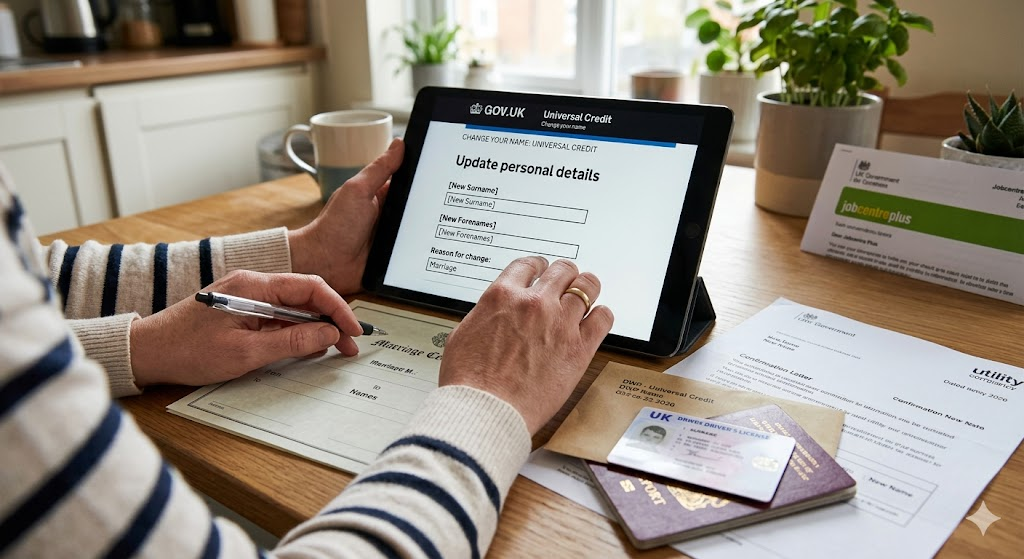
That is why the documents you already hold are normally enough. The combination of your marriage certificate (which shows your maiden name) and your decree absolute or final order of divorce (which proves the marriage has ended) forms a clear paper trail back to your original surname. You do not need a court, a solicitor or any new legal instrument to walk that trail.
When your decree absolute plus marriage certificate is enough
This route works in the vast majority of cases. You can use it to update almost everything:
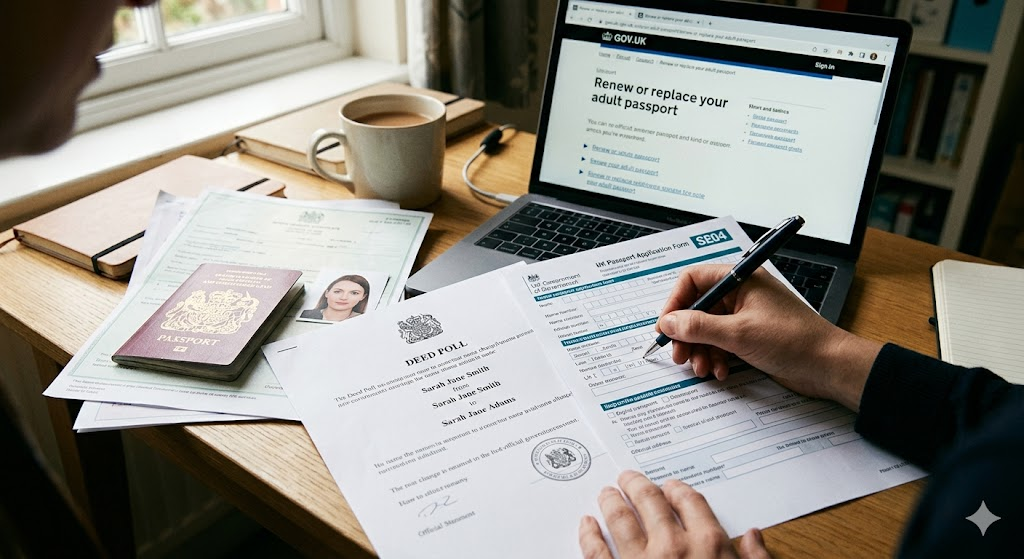
- Your passport-HM Passport Office will issue a passport in your maiden name when you send your decree absolute and marriage certificate (a renewal in your changed name costs £102 online or £115.50 by post; Fast Track is £192 and one-day Premium is £239.50).
- Your bank and building society-free to update; most branches simply photocopy the two certificates.
- The DVLA-updating the name on your driving licence is free.
- HMRC, the NHS, your employer and utilities-all free to update from the same evidence.
One practical point: organisations want to see the original certificates or certified copies, not plain photocopies. If you only have one decree absolute, it is worth ordering extra certified copies from the court so you are not posting your single original around the country.
The catch with the divorce-papers route
The decree-absolute method is free and legitimate, but it has two real-world drawbacks worth knowing before you choose it.
First, not every front-line member of staff is trained to read divorce paperwork. A decree absolute is a court document full of case numbers and legal wording, not an obvious “name change” certificate. Some bank or utility staff-particularly in call centres-will look at it, hesitate, and ask for “something clearer like a deed poll”. That can mean repeated phone calls and re-sent documents.
Second, this route only proves you can revert to the exact surname on your marriage certificate. It cannot help if you want a different spelling, a double-barrelled combination, or a completely new surname-the paper trail simply does not support those.
When you need (or should choose) a deed poll instead
A deed poll is the cleaner option in several common situations:
- You want privacy. A deed poll does not mention your marriage, your ex-partner or the fact you are divorced. Many people prefer not to hand a copy of their divorce judgment to a mobile phone shop or a new employer.
- You have lost your decree absolute or marriage certificate. A deed poll sidesteps the need to track down old documents (though you can also order replacements from the court and the register office).
- You want a name that is not simply your maiden name-a new surname entirely, a different spelling, or your maiden name combined with another. Your divorce papers can’t evidence these; a deed poll can.
- You are separated but not yet divorced. You don’t have to wait for the final order-you can change your name by deed poll at any time. See our guide to changing your name before your divorce is final for how this works and what to watch for.
- You simply want one document every organisation accepts. An unenrolled deed poll is universally recognised-no member of staff is left puzzling over court paperwork.
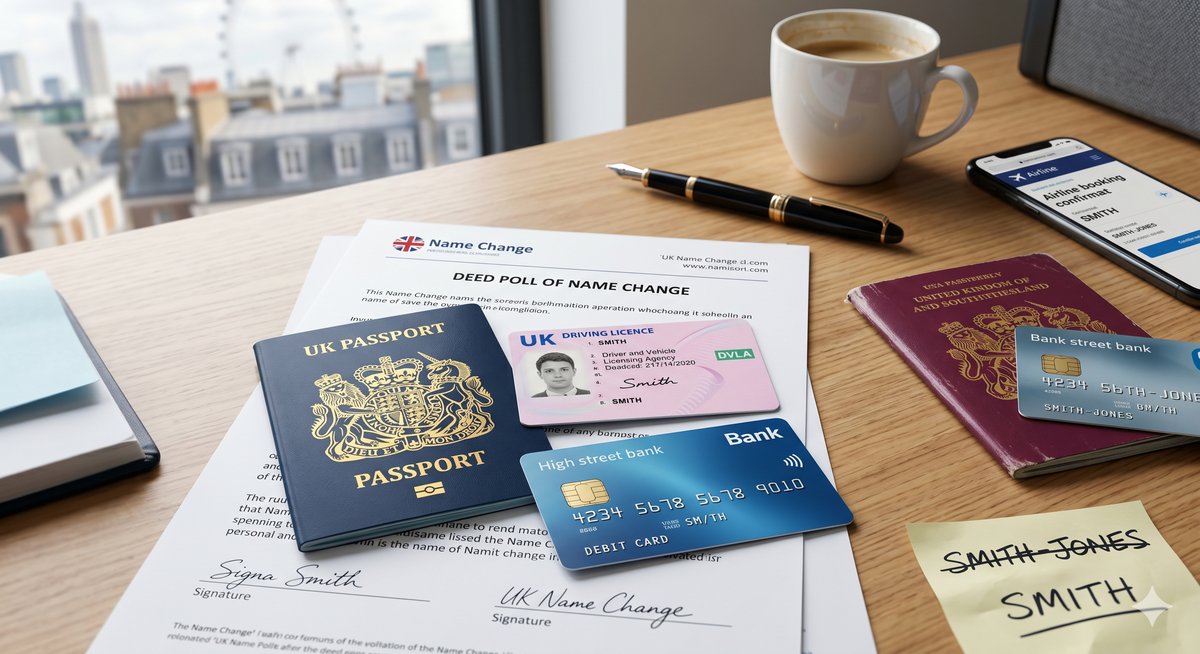
An unenrolled adult deed poll from UK Name Change starts at £14.49, with same-day dispatch on orders placed before 3pm and free Royal Mail Tracked delivery. It is legally valid and accepted by HM Passport Office, the DVLA, HMRC, banks, the NHS, employers and schools-around 98% of all UK name changes are unenrolled. A solicitor would charge £150-£300+ for exactly the same document, so there is no need to pay for one.
Do I need to enrol the deed poll at court?
No. Court enrolment at the Royal Courts of Justice costs £53.05, takes 2-3 weeks, and publishes your name change publicly in The London Gazette. It adds no extra legal validity-an unenrolled deed poll is just as binding. Given that privacy is often the very reason people choose a deed poll after divorce, public enrolment is usually the opposite of what you want.
Signing your deed poll: the witness rule
If you go the deed-poll route, the signing matters. Your deed poll must be signed in wet ink and witnessed by an independent adult aged 18 or over-someone who is not a relative, not a partner, and not living at your address. A neighbour, colleague or friend is ideal. Passport and licence offices want the original, wet-ink signed deed poll, not a photocopy, so keep it safe and consider ordering a spare.
What about your title-Mrs, Ms or Miss?
Your title is entirely your choice and is not legally part of your name, so you never need a deed poll to change it. After divorce you can keep “Mrs”, revert to “Miss”, or use the neutral “Ms” (which gives no clue to marital status-a popular choice). Just tell each organisation which title you prefer; they will update it on request.
What about the children?
Reverting your own surname has no effect on your children’s names. A child’s surname can only be changed with the consent of everyone who holds parental responsibility-usually both parents-or by a court order. If you would like your children to share your maiden name, that is a separate process with its own consent rules, and you should not assume it follows automatically from your divorce.
Still deciding whether to revert at all?
Reverting is not your only option. Some people keep their married name for continuity with their children or their career, and others adopt something new altogether. If you are weighing up the pros and cons, read our guide to keeping or changing your maiden name and the practical implications before you commit one way or the other.
Not sure you even need a deed poll? Start with names and divorce: do you actually need a deed poll? — many divorcees don’t.
Not divorced yet, or widowed? The evidence is different in each case: see changing your name after separation, before the divorce is final and changing your name after your spouse dies.
Frequently Asked Questions
Do I legally need a deed poll to go back to my maiden name?
No. In most cases your decree absolute (final order) plus your marriage certificate is legal proof of your entitlement to your maiden name, and organisations will update your records for free. A deed poll is optional-chosen for privacy, convenience, or when you want a name your divorce papers cannot evidence.
How much does it cost to revert to my maiden name?
Using your divorce papers is free, although a passport renewal in your reverted name costs £102 online. If you prefer a deed poll, an unenrolled one from UK Name Change starts at £14.49. Updating your bank, DVLA licence, HMRC and NHS records is free either way.
Can I revert to my maiden name before the divorce is final?
Yes. You cannot use a decree absolute you don’t yet have, but you can change your name by deed poll at any time, including while separated. See our guide on changing your name before your divorce is final for the details.
Will reverting my name change my children’s surnames?
No. Changing your own surname has no effect on your children. Changing a child’s surname requires the consent of everyone with parental responsibility, or a court order-it is a separate process.
Do I need to enrol my deed poll at the Royal Courts of Justice?
No. Enrolment costs £53.05, takes 2-3 weeks and publishes your name in The London Gazette, but adds no legal validity. An unenrolled deed poll is equally binding and keeps your change private.
Can I use a different surname rather than my exact maiden name?
Yes, but your divorce papers can only prove your exact maiden name. For a new spelling, a double-barrelled name or a completely different surname, you will need a deed poll-that is the only document that can evidence it.
Ready to revert to your maiden name?
If you want one clean, private document that every UK organisation accepts without question, order your unenrolled adult deed poll from UK Name Change today. It’s from £14.49, dispatched the same day if you order before 3pm, with free tracked delivery-trusted by over 160,000 customers. Take back your name with confidence.