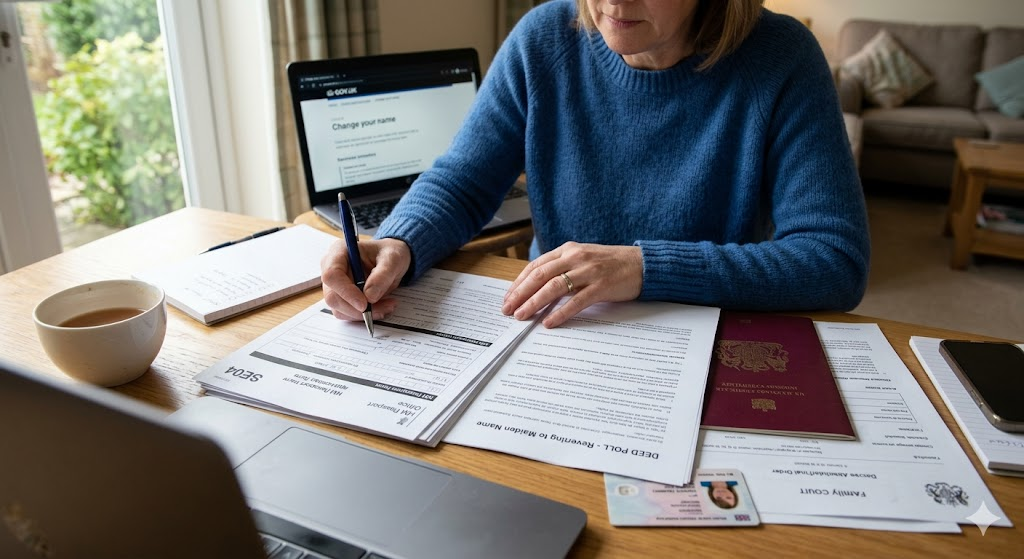
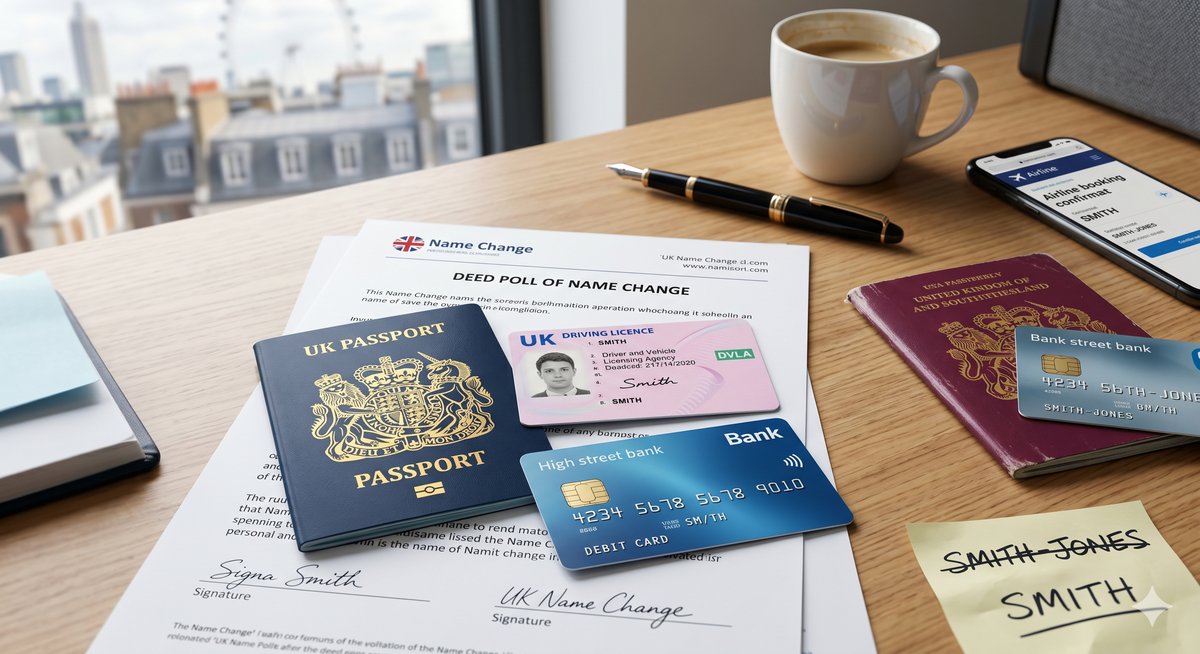
Once your child’s deed poll is signed and witnessed, the next job is updating their records in the right order: start with the passport (the slowest), then update the school register and logins, notify exam awarding bodies, then the GP/NHS, dentist and any clubs or memberships. Every UK organisation on this list accepts a child deed poll, and almost all of them update the name for free. This is the records checklist - not the how-to-change guide - so if you haven’t yet got the deed poll itself, see how to change a child’s surname legally in the UK first.
Before you start: what every organisation will ask for
Updating a child’s records is mostly paperwork, and the paperwork is the same everywhere. Keep these to hand and the whole process is straightforward:
- The original wet-ink child deed poll - signed by everyone with parental responsibility and witnessed by two independent adults. HM Passport Office and other formal bodies need the original, not a photocopy or scan.
- The child’s birth certificate, which links the old name to the new one.
- A few certified or plain photocopies for organisations that only need to see (not keep) the deed poll - schools, GP surgeries and clubs usually fall into this group.
An unenrolled deed poll is all you need. It is legally valid and accepted by HM Passport Office, the NHS, schools and every other body below; you do not need the optional £53.05 Royal Courts of Justice enrolment, which simply publishes the change publicly in the London Gazette over 2-3 weeks and adds no legal weight. Around 98% of UK name changes are unenrolled. Order extra copies up front so you are not waiting on the post when the school office asks for one.
1. Child’s passport - do this first
The passport is the slowest item, so start here. To change the name on a child’s passport, submit a standard renewal application to HM Passport Office and send the original deed poll with it. There is no separate “name change” form - it is a normal renewal that happens to carry the new name.
A passport application carries the standard HM Passport Office fee and typically takes up to three weeks, though it can be longer at busy times. HMPO will return the deed poll with the new passport, so factor that turnaround into any holiday plans. If you have travel booked, faster services such as the 1-week Fast Track are available for a higher fee.
One thing parents often miss: a child’s passport must match the name on their flight bookings exactly. If you have already booked travel in the old name, sort the passport (or the booking) before you fly. If your child is 16 or 17, they apply for an adult passport and can sign their own deed poll. An adult passport costs £102 online or £115.50 by post, with the 1-week Fast Track at £192 and the 1-day Premium service at £239.50. The rules for older children differ slightly, and we cover them in our guide to a deed poll for a child over 16.
2. School register, logins and email
Tell the school office in writing and provide a copy of the deed poll. Schools record pupils in management systems such as SIMS, Arbor or Bromcom, and the office staff update the legal name on the register from there. Ask them specifically to update:
- The statutory school register and your child’s pupil record.
- Class lists, registration marks and any printed paperwork.
- Logins and email - the school Office 365 / Google Workspace account, library card, and platforms like ClassCharts, Seesaw or Show My Homework, which often generate usernames from the pupil’s name.
- School meal and cashless catering accounts (ParentPay, sQuid).
If your child is in Year 11, 12 or 13, raise the change with the exams officer at the same time - this is the bridge to the next, and most important, step.
3. Exam awarding bodies - the deadline that matters most
This is the one parents most often get wrong, so read it carefully. GCSE and A-Level certificates are printed in the name registered with the awarding body at the time of entry - not the name on the deed poll. Awarding bodies including AQA, Pearson Edexcel, OCR and WJEC/Eduqas will only show the new name if the school updates the candidate’s details before the entry deadlines close, which generally fall in the spring (around February to March) of the exam year.
Miss that window and the certificate will carry the old name. After certificates are issued, correcting a name usually means applying for a replacement certificate from the awarding body for a fee, with the deed poll as evidence - slower and more expensive than getting it right first time. The action is simple: as soon as the deed poll is signed, ask the school’s exams officer to update the candidate name with every relevant awarding body well ahead of the entry deadline. If your child has older certificates in the previous name, you do not have to reissue them - keeping the deed poll alongside them is enough to prove the names belong to the same person.
4. GP and NHS records
Updating NHS records is free. Contact your child’s GP surgery, show the deed poll, and the practice will update the name on their medical record and on the NHS Spine. This flows through to hospital letters, vaccination records and prescriptions, and your child keeps the same NHS number - only the name changes. Many surgeries let you do this by handing a copy to reception or uploading it through their online form; ask how they prefer to receive it.
5. Dentist, optician and other health services
Repeat the same step with any provider that holds a separate record. Your NHS or private dentist and your child’s optician each keep their own files, so notify them directly with a copy of the deed poll. If your child sees any therapists, specialists or community health services outside the GP, update those too - the GP record does not automatically change them.
6. Clubs, memberships and everything else
Finish with the everyday accounts that carry your child’s name. None of these are formal, but they are the ones your child will notice day to day:
- Sports clubs and governing bodies - football leagues, swimming (Swim England), gymnastics, martial arts gradings and any registration that appears on team sheets or certificates.
- Music exams (ABRSM, Trinity), Scouts, Guides, Cadets and Duke of Edinburgh records.
- Libraries, leisure centre and swimming memberships.
- Travel and tickets - a child Oyster/Zip card, railcard or season ticket in the old name.
- Online accounts and devices your child uses, where the display name or email is tied to the old name.
Work down the list at a sensible pace. The passport and exam-entry deadlines are the only genuinely time-sensitive items; the rest can be updated as you come across them.
Frequently Asked Questions
What order should I update my child’s records in?
Passport first, because it is the slowest. Then the school register and logins, then exam awarding bodies (before the spring entry deadline), then GP/NHS, dentist and optician, and finally clubs and memberships. Sort anything tied to a deadline - booked travel or upcoming exam entries - before the optional items.
Do I need to update old exam certificates with my child’s new name?
No. GCSE and A-Level certificates already issued in the old name stay valid, and you keep the deed poll with them to prove both names belong to your child. You only need to act before entry deadlines if you want future certificates printed in the new name. To change an existing certificate, you apply to the awarding body (AQA, Pearson Edexcel, OCR or WJEC) for a paid replacement.
Is updating the NHS and school name free?
Yes. The NHS, GP surgeries, schools, dentists and the DVLA all update a name for free - you only pay for the deed poll itself and, separately, the passport fee. The same applies to banks, HMRC and most other organisations.
Does my child keep the same NHS number after a name change?
Yes. Only the name on the record changes; the NHS number stays the same, so medical history, vaccinations and referrals all remain linked.
Will the school change my child’s name without both parents’ consent?
Schools update the legal name based on a valid deed poll, which must already be signed by everyone with parental responsibility. If consent is genuinely in dispute, that is resolved before the deed poll stage - the school is not the place to settle it. Our guide on changing a child’s surname legally explains the consent rules.
Get the deed poll that opens every door
Every organisation above accepts a properly drafted child deed poll - and the right document makes each update painless. UK Name Change provides a professionally printed, legally valid child deed poll from £14.49, with same-day dispatch on orders placed before 3pm and free Royal Mail Tracked delivery, trusted by over 160,000 customers. Start your child’s deed poll here, and order spare copies so the passport, school and exam updates can all run at once. Changing your own name at the same time? See our adult deed poll service.