There was a time when a long, double-barrelled, or complex surname was a mark of distinction. Today, in the era of app forms, 140-character limits, and fast-paced digital communication, it is often just an administrative burden.
We frequently help clients who are simply tired. Tired of spelling their name out phonetically every time they call the bank. Tired of their name being cut off on credit cards. Tired of airline tickets causing errors because the system can't handle a hyphen.
If you are looking to streamline your identity for the 21st century, here is how to legally shorten or modernise your surname in the UK.
1. The "Digital Fit" Problem
Modern IT systems are not kind to long names. If your surname is Featherstonehaugh or Temple-Nugent-Brydges-Chandos-Grenville, you likely face daily annoyances:
- Character Limits: Many online forms cut off surnames at 20 or 30 characters.
- Email Addresses: sebastian.featherstonehaugh@company.com is a recipe for bounced emails due to typos.
- Data Mismatches: If your bank shortens your name to fit the card, but your passport shows the full version, you may fail "exact match" security checks.
2. How Can You Modernise?
You have full legal freedom to reshape your name. Here are the most common strategies we see:
The "Phonetic" Fix
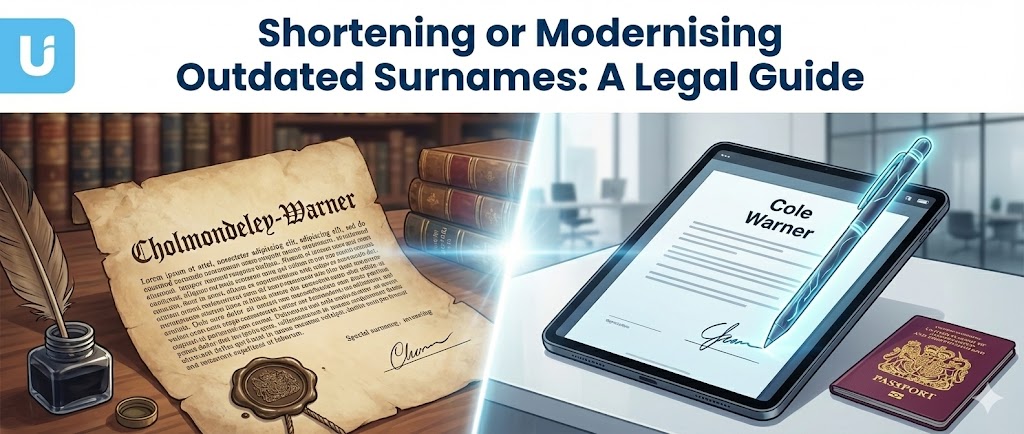
Many traditional British surnames are spelled very differently from how they are pronounced. Example: Changing Cholmondeley to Chumley, or Mainwaring to Mannering. Why do it? It stops the confusion instantly. You get to keep the sound of your heritage while removing the spelling barrier.
The "Truncation"
Simply chopping off the end of a long name. Example: Shortening Richardson to Richards, or MacDonald to Donald. Why do it? It retains the core identity but makes signatures and forms faster to complete.
The "De-Hyphenation"
Removing the hyphen from a double-barrelled name. Example: Changing Smith-Jones to just Smith (or Jones). Why do it? Hyphens often break database systems. Reducing to a single surname simplifies travel and banking significantly.
3. The "Heritage Compromise"
A common hesitation is the fear of "disrespecting" family history or upsetting parents. A popular legal compromise is to move the old surname to a middle name.
How it works: You execute a Deed Poll changing your name from: Alexander Featherstonehaugh to Alexander Featherstonehaugh Stone
The Result: Your legal surname is now the short, snappy "Stone." Your bank card and passport will list you as Mr A. F. Stone. You use "Stone" for everything. However, the history is preserved in your middle names, visible on your passport but not required for daily admin.
4. The Legal Mechanism
There is no special "shortening" form. To change even a single letter of your surname, you must use a Deed Poll.
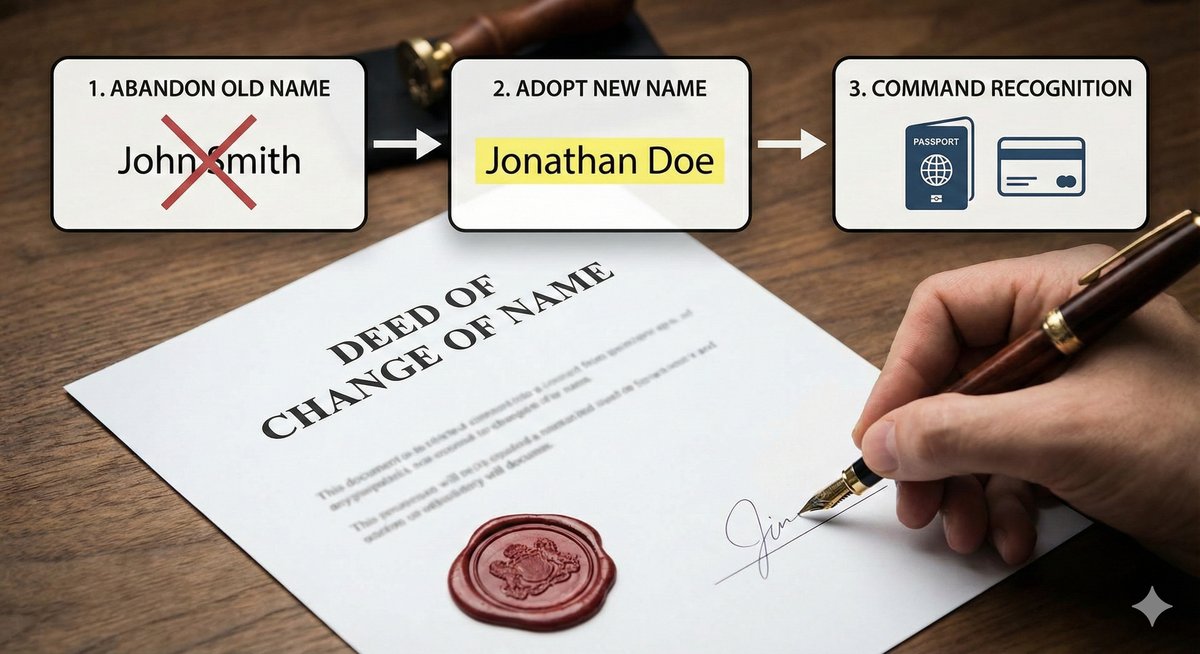
This legal document is the instruction to the government to update your records. It effectively states: "I am abandoning the long name X and adopting the short name Y."
Once you have your Deed Poll, you simply:
- Send it to the Passport Office to get a new passport (in the short name).
- Take the new passport and Deed Poll to your bank.
- Update your email signature and enjoy the simplicity.
5. Can I Just "Use" a Short Name?
You can use a short name socially (e.g., on Facebook), but for official purposes, you cannot simply chop off half your name.
If you book a flight as Mr Richards because you "couldn't be bothered" to type Richardson, but your passport says Richardson, you will likely be denied boarding. In the post-9/11 travel world, your ticket must be an exact match to your ID. A Deed Poll aligns them legally so you never have to worry about this mismatch.
Streamline Your Life
Your name is the most used word in your life. If it feels like a burden, you have the right to change it.
Our Complete Package (£39.99) makes modernising your name easy. We provide the legally recognised Deed Poll you need to update your passport and clear the administrative clutter.
HTML