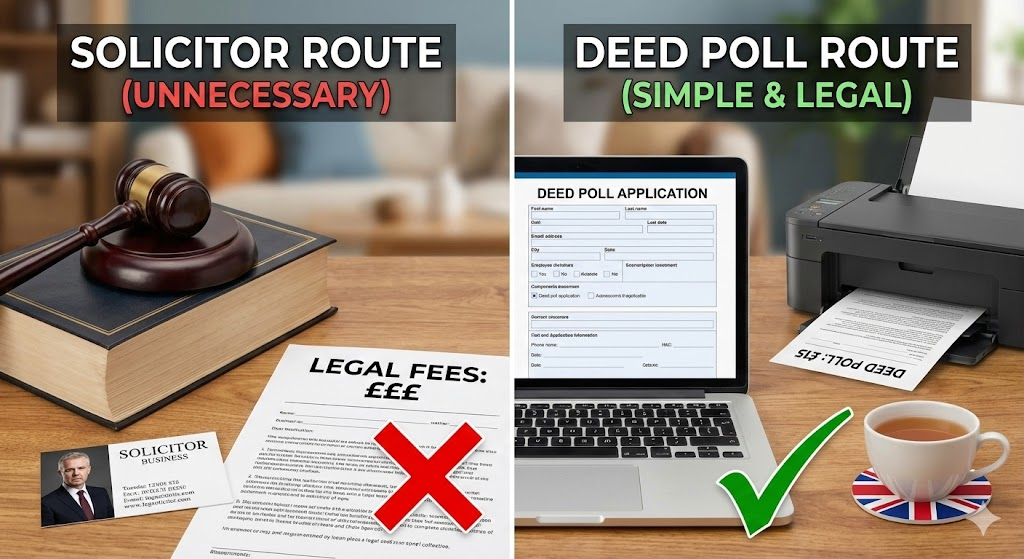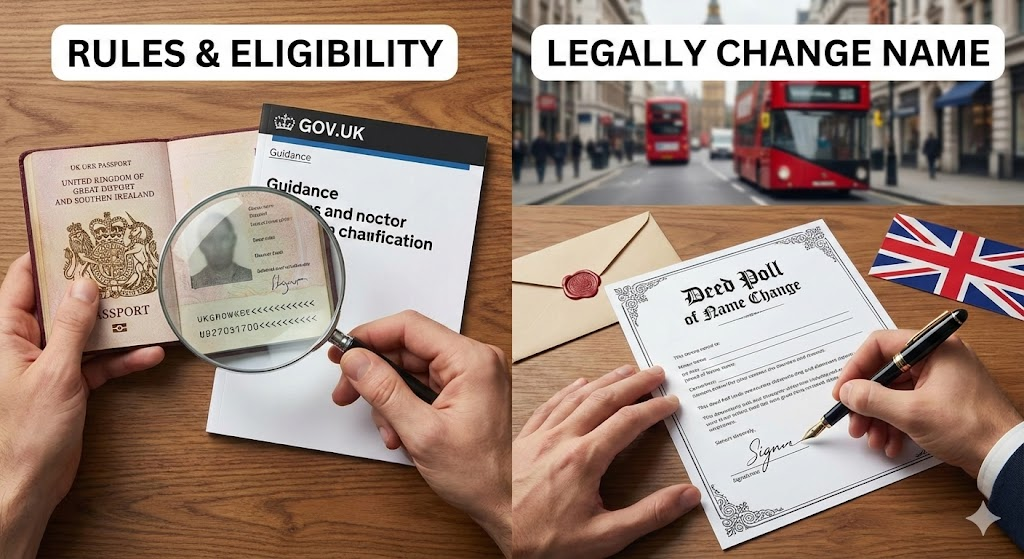
One of the most frequent questions we receive at our London headquarters is: "Am I actually allowed to change my name?" While the UK has some of the most flexible name-change laws in the world, there are still specific legal frameworks you must navigate to ensure your new identity is recognized by government bodies and financial institutions.
In England, Wales, and across the United Kingdom, your "legal name" is effectively the name by which you are generally known. However, to update official documents like your British passport or driving licence, you need a formal deed poll. In this guide, we will explore the eligibility criteria for different groups of people and the few instances where a name change might be restricted.
Age Requirements: When Can You Decide for Yourself?
Age is the primary factor determining how you execute a name change. The law draws a clear line at the age of 16.
Adults and Young People (16 and Over)
In the UK, once you reach the age of 16, you have the legal right to change your name without needing permission from your parents or guardians. You can choose to change your forename, middle names, or surname (or all three). At 16, you are considered to have the "legal capacity" to execute your own unenrolled deed poll.
Children (Under 16)
For those under the age of 16, the process is slightly more complex. A child cannot change their own name; instead, an application must be made by someone with Parental Responsibility (PR). This is typically a parent, but it can also be a legal guardian.
Crucially, if more than one person has Parental Responsibility, everyone with that responsibility must consent to the name change in writing. If one parent disagrees, the other parent must apply for a Specific Issue Order through the courts. At UK Name Change, we provide specialized Child Deed Poll documentation that includes the necessary consent forms to satisfy the requirements of HM Passport Office.
Residency and Nationality
You do not necessarily have to be a British citizen to change your name while living in the UK, but your nationality does impact how your documents will be treated.
British Citizens
If you are a British citizen living in the UK, you have an unrestricted right to change your name via deed poll. If you are a British citizen living abroad, you can still use a UK deed poll, though you may need to have it witnessed by a solicitor or a notary public to ensure it is accepted by the local embassy.
Foreign Nationals Living in the UK
If you are a foreign national (e.g., an EU citizen or someone on a work visa) living in London or elsewhere in the UK, you can legally execute a deed poll. UK-based organizations like your bank, employer, and the DVLA will generally accept the document. However, there is a catch: Your home country may not recognize it.
We always advise foreign nationals to contact their embassy or high commission first. If your home country will not update your passport based on a UK deed poll, you may end up with "dual identities"—a UK driving licence in one name and a passport in another—which can cause significant issues at airport security and border control.
What Names are Restricted?
While you have a great deal of freedom, you cannot simply call yourself anything. There are "common sense" restrictions enforced by the Passport Office and other agencies to prevent the system from being brought into disrepute or used for illegal activity.
- Fraudulent Intent: You cannot change your name to escape debt, avoid criminal prosecution, or deceive others for financial gain.
- Offensive Material: Names that contain profanity, sexually explicit language, or names that promote racial or religious hatred will be rejected.
- Numbers and Symbols: Your name must be composed of letters. You cannot include numbers (e.g., "John5") or symbols, though hyphens and apostrophes are perfectly acceptable.
- Titles and Honours: You cannot include a title such as "Sir," "Lord," "Lady," or "Duke" as part of your name unless you have the legal right to it. Similarly, you cannot change your name to something that implies an academic or professional qualification you don't hold (e.g., "Doctor" or "Professor").
Special Circumstances: Criminal Records and Bankruptcy
Many people worry that their past might prevent them from changing their name. In most cases, it does not, provided you follow the disclosure rules.
Criminal Records
Having a criminal record does not stop you from changing your name. However, you must notify the relevant authorities. If you are currently on probation or have pending criminal proceedings, you must inform your probation officer or the police. Most importantly, if you are on the Sex Offenders Register, you are legally required to notify the police of your name change within 3 days. Failure to do so is a serious criminal offence.
Bankruptcy and Insolvency
If you are an undischarged bankrupt, you are still permitted to change your name. However, you must inform the Official Receiver dealing with your case. Furthermore, if you engage in business under your new name, you are legally required to disclose the name under which you were made bankrupt to all parties you do business with.
Mental Capacity
To sign a deed poll, you must have the mental capacity to understand what you are doing. This means you must understand that you are giving up your old name and adopting a new one for all purposes. If a person lacks the capacity to make this decision due to a medical condition, a name change may still be possible through the Court of Protection, but it cannot be done via a standard deed poll service.
Summary Table: Who Can Change Their Name?
| Category | Requirement |
|---|---|
| Adults (16+) | Can change their own name via deed poll. |
| Children (Under 16) | Requires consent from everyone with Parental Responsibility. |
| Foreign Nationals | Can change in the UK, but embassy recognition varies. |
| Criminal Records | Permitted, but must notify police/probation if applicable. |
Why Use a Professional Service?
While the law allows for a degree of flexibility, the administration of that law is where many people fail. Large organizations—particularly banks and the Passport Office—will reject any document that is not formatted correctly or does not include the specific legal "declarations" required by UK law.
By using the UK Name Change platform, you ensure your document is 100% compliant. Whether you are navigating the complexities of parental consent for a child or simply want the peace of mind that your new identity is legally secure, we are here to help.
Our London-based team has helped over 70,000 people successfully transition to their new names. We provide the tools, the templates, and the step-by-step dashboard to make sure every UK institution accepts your change without question.
Ready to see if you qualify? You can start your application on our home page today. If you have a unique or complex situation, such as changing a name for a child with an absent parent, please contact our support team for expert guidance.