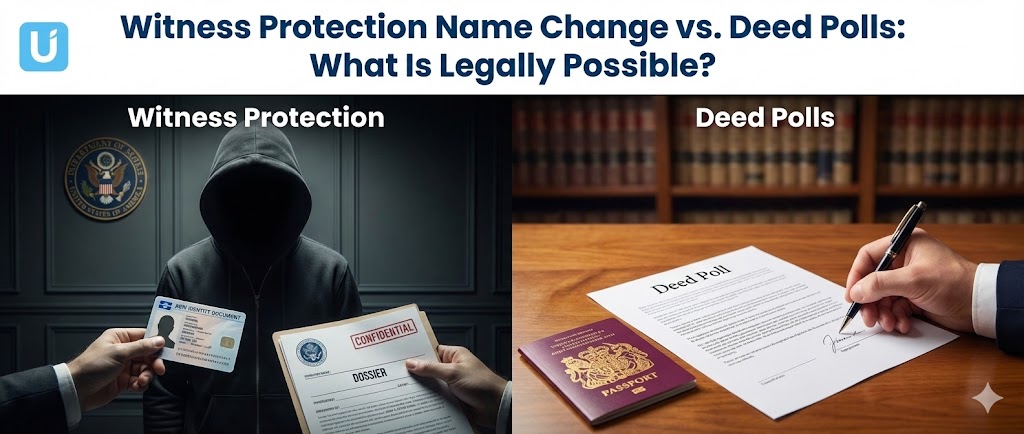
We have all seen it in the movies: a character testifies against a crime boss, and the next day they are handed a file with a new birth certificate, a new passport, and a one-way ticket to a new life. They vanish.
In the real world, "Witness Protection" is an incredibly specific, rare, and extreme legal measure. However, many people who contact us are seeking a similar result—privacy, safety, and a break from their past—without necessarily being involved in a high-profile criminal trial.
At UK Name Change, we believe it is vital to understand the difference between the government’s UK Protected Persons Service and a private Deed Poll. Here is a breakdown of what is legally possible when you want to disappear.
1. The Real "Witness Protection" (Government Level)
In the UK, true identity changes are managed by the UK Protected Persons Service (UKPPS), often in conjunction with the National Crime Agency (NCA). This is reserved for individuals at immediate, severe risk of death or serious harm.
When someone is placed in this program, the government does something that no solicitor or deed poll agency can do: they create a new legal fiction.
- New Birth Certificate: The person is issued a new birth entry, effectively "erasing" their link to their biological family in the eyes of the database.
- New NHS & National Insurance Numbers: Their medical and employment history is disconnected from their old identity.
- Total Isolation: They must often cut all ties with friends and family forever to maintain the cover.
Can you apply for this? No. You cannot "buy" this service. It is strictly for police-verified cases of life-threatening danger.
2. The "Civilian" Alternative: Unenrolled Deed Polls
For the vast majority of people—including survivors of domestic abuse, stalking, or harassment—government witness protection is not an option. However, you can still achieve a high level of privacy and anonymity using the standard legal system.
The tool for this is the Standard (Unenrolled) Deed Poll.
How It Works for Privacy
Unlike the government scheme, a Deed Poll does not "erase" your past. It creates a legal link between your old name and your new name. However, if you use an Unenrolled Deed Poll, that link remains private.
- No Public Register: Your name change is not published in The London Gazette or on the internet.
- Accepted by Authorities: The Passport Office, DVLA, and banks accept it, allowing you to build a life under a new name.
- Harder to Trace: Without a public record of the change, a stalker searching for "John Smith" will not find a link to "Adam Jones."
3. What You Can and Cannot Hide
If you are changing your name for safety without government intervention, you need to be realistic about your digital footprint.
| Item | Witness Protection (Govt) | Private Deed Poll (You) |
|---|---|---|
| Name | New identity created. | Legally changed to new name. |
| Birth Certificate | Replaced/New Entry. | Remains the same. |
| Criminal Record | Wiped/Hidden. | Follows you to the new name. |
| Credit History | Fresh start. | Links to the new name. |
| Public Visibility | Total erasure. | High privacy (if unenrolled). |
4. Steps to Maximum Privacy
If you are looking to replicate the safety of witness protection as closely as possible within the law, follow these steps:
- Execute an Unenrolled Deed Poll: This changes your documents without alerting the public.
- Register Anonymously to Vote: Contact your local council to ensure your name does not appear on the Electoral Roll.
- Data Hygiene: Close old social media accounts completely. Do not simply rename them. Create new email addresses and phone numbers.
Conclusion
While you may not be able to get a new birth certificate like in the movies, you can legally reshape your identity to protect yourself. An Unenrolled Deed Poll gives you the legal power to be known by a new name, ensuring that your ID, your bank cards, and your post all reflect a life that is yours alone.
Take control of your privacy. Start your secure, private Deed Poll application.
HTML