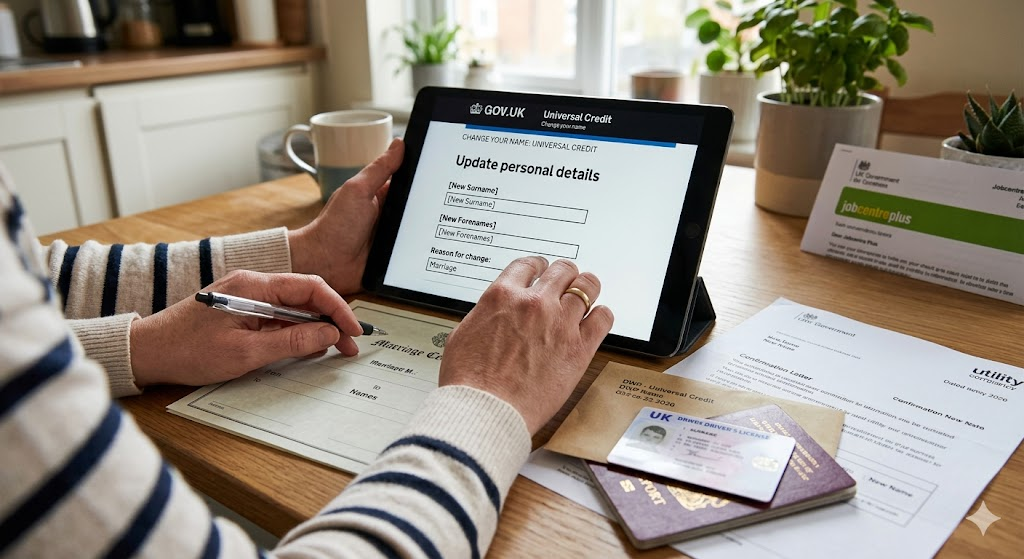
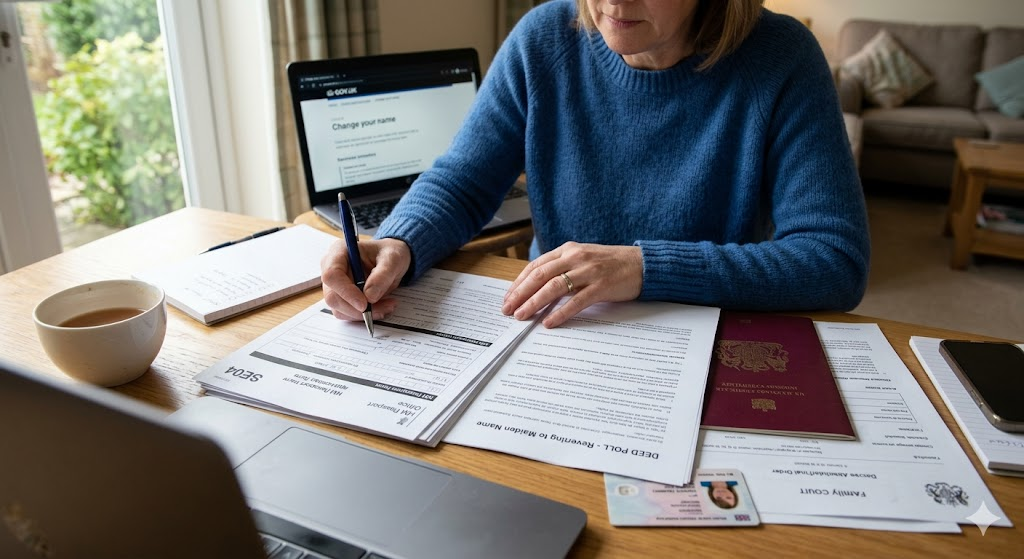
To anglicise your name in the UK, you sign a deed poll declaring that you have given up your former name and will use your new, anglicised name for all purposes - this is the only legal step required, and an unenrolled deed poll from £14.49 is accepted by HM Passport Office, the DVLA, HMRC, banks, the NHS and employers. There is no court hearing, no government permission and no need for a solicitor. The decision itself, however, deserves more thought than the paperwork - so this guide covers both the process and the things worth weighing before you commit.
What “anglicising” a name actually means
Anglicising means adapting a name so it reads, sounds or spells more naturally in an English-language setting. That can take several forms, and it helps to be clear about which one you actually want:
- A direct equivalent - choosing the English form of your existing name (for example Giovanni to John, or Yusuf to Joseph).
- A close-sounding alternative - keeping the feel of the original while making it easier for English speakers (Katarzyna to Kate, or Oluwaseun to Sean).
- A simplified spelling - keeping the same name but adjusting how it is written.
- A complete change - adopting an entirely new English name with no link to the original.
A quick but important distinction: simply correcting an inconsistent spelling that already varies across your documents is a slightly different exercise. If your records simply disagree with one another or your name was transliterated awkwardly when you arrived, our guide to transliterating names and fixing spelling inconsistencies in the UK covers that scenario in detail.
Why people choose to anglicise - and why some don’t
There is no single right answer here, and we won’t pretend otherwise. People anglicise for practical reasons that are entirely valid, and others decide against it for reasons that are equally valid. Both choices deserve respect.
Common reasons people anglicise
- Everyday ease. Constantly spelling out, correcting or repeating your name - at work, on the phone, in shops - is genuinely tiring. A simpler form removes that friction.
- Professional clarity. Many people find an anglicised name reduces mispronunciation in meetings, on calls and in email, and feels more comfortable in client-facing roles.
- Fewer bureaucratic errors. Names that don’t fit standard English forms are more likely to be misspelt, split incorrectly between forename and surname, or mismatched across systems.
- A fresh chapter. Some people simply prefer a name that reflects how they now see themselves and where they have chosen to build their life.
Reasons people decide against it
- Heritage and identity. A name can carry family history, culture, language and faith. Many people feel that anglicising would distance them from something they value deeply.
- It shouldn’t be necessary. Some feel the pressure to anglicise stems from others’ unwillingness to learn a name, and would rather not change to accommodate that.
- Admin across many records. Updating every document and account takes a little time (though it is free almost everywhere).
- Regret risk. A name change is reversible by a further deed poll, but it is not effortless to undo once it has propagated across your records.
If your situation is specifically about settling in the UK and easing day-to-day life as a newcomer, our dedicated guide for immigrants simplifying or anglicising names in the UK speaks more directly to that experience.
You don’t always need a legal change
Before doing anything formal, it is worth knowing that you can use an anglicised name informally - as a “known as” name - without changing it legally at all. Many people introduce themselves as “Sam” or “Lily” in daily life while keeping their birth name on official documents. Nothing stops you doing this.
A legal change by deed poll only becomes necessary when you want your official records - passport, driving licence, bank accounts, HMRC, NHS, employer - to show the new name. If you want consistency on photo ID and across the systems that matter, the deed poll is what makes that happen.
How to legally anglicise your name: the process
The mechanism is the same straightforward deed poll that around 98% of UK name changes rely on. Here is the full picture.
Step 1: Choose your new name and order the deed poll
Decide on your anglicised name, then order a professionally printed deed poll. A document from UK Name Change’s adult deed poll service starts at £14.49, with same-day dispatch on orders placed before 3pm and free Royal Mail Tracked delivery. A solicitor would charge £150-£300+ for the identical document, which is simply unnecessary.
Step 2: Sign it in front of two witnesses
When your deed poll arrives, you sign it in wet ink in front of two witnesses. Each witness must be an independent adult aged 18 or over - not a relative, partner or anyone living at your address. Anyone aged 16 or over can change their own name and sign their own deed poll; for under-16s, everyone with parental responsibility must consent.
Step 3: Update your records
Send the original wet-ink signed deed poll (organisations need the original, not a photocopy) to update your records. Most updates are free: the DVLA driving licence change costs nothing, and banks, HMRC, the NHS, employers and utilities are all free to update. The main paid item is a new passport - £102 online or £115.50 by post, with a 1-week Fast Track at £192 and a 1-day Premium service at £239.50 if you need it quickly.
One small but useful point: a title such as Mr, Mrs, Ms, Mx or Dr is not legally part of your name, so no deed poll is needed to change a title.
Enrolment is optional - and rarely worth it
You may see references to “enrolling” a deed poll at the Royal Courts of Justice for £53.05. This is entirely optional. It publishes your name change publicly in the London Gazette, takes 2-3 weeks, and adds no legal validity whatsoever. An unenrolled deed poll is just as legally valid and is accepted everywhere that matters. For an anglicised name, most people have no reason to pay for or publicise enrolment.
Keeping a documentary link to your original name
This is the step people most often overlook, and it matters. When you anglicise, your old records - overseas qualifications, references, pension contributions, immigration history, property abroad - will still be in your original name. Keeping a clear paper trail prevents headaches later.
- Keep the deed poll forever. It is the official bridge between your old and new names. Store the original safely and keep certified copies.
- Don’t discard old-name documents. Retain your original passport, certificates and qualifications; they evidence achievements earned under that name.
- Consider keeping the original as a middle name. Many people anglicise their first name while moving the original into the middle position - preserving the link to heritage and to past records while gaining everyday ease.
- Tell key bodies the connection. When dealing with immigration, pensions or overseas authorities, your deed poll demonstrates that the two names belong to the same person.
Things to weigh before you decide
Take a moment with these questions: Are you changing for yourself, or to satisfy others? Would a “known as” name achieve what you want without a legal change? Could keeping your original name as a middle name give you both ease and continuity? And have you considered how you’ll feel about the name in ten years, not just today? There is no wrong answer - only the one that genuinely fits your life.
Frequently Asked Questions
Is anglicising my name legal in the UK?
Yes. Any adult is free to change their name to any lawful name, including an anglicised one, provided it is not for fraudulent purposes. A signed deed poll is all the evidence you need.
Will I lose my heritage or culture by anglicising my name?
Changing the name on your documents does not change who you are. Many people keep their original name as a middle name, or continue to use it within their family and community, while using an anglicised form for official and everyday purposes.
Do I need a solicitor to anglicise my name?
No. A solicitor would charge £150-£300+ for exactly the same deed poll you can order for £14.49. The document, not who printed it, is what gives the change effect.
Can I change my name back if I regret it?
Yes. A name change is reversible - you simply complete a new deed poll reverting to your previous name and update your records again. Keeping your original documents makes this far easier.
Will my old qualifications and records still be valid?
Absolutely. Qualifications and records earned under your original name remain valid. Your deed poll links the two names, so you can prove they belong to the same person.
Do I need to enrol my deed poll for the change to count?
No. Enrolment at the Royal Courts of Justice (£53.05) is optional and adds no legal validity. An unenrolled deed poll is fully accepted by passport offices, the DVLA, banks and the rest.
Ready to anglicise your name?
Whether you want a direct equivalent, a simpler spelling or a fresh start, the process is quick, affordable and entirely in your hands. Order your professionally printed deed poll through our adult deed poll service from £14.49, with same-day dispatch before 3pm and free tracked delivery - trusted by over 160,000 customers. Whatever you decide, make it the choice that feels right for you.