If you have moved to the UK and want to simplify or anglicise your name, you can change it legally with an unenrolled deed poll-the same document any UK adult uses-from £14.49, and HM Passport Office, the DVLA, HMRC, banks, the NHS and employers will all accept it. There is no special government form for immigrants, no test, and no need to give up your heritage. This guide explains the common reasons people anglicise, exactly how to do it, how to keep a clear paper trail back to your original-name records, and the immigration points to think through first.
Why people simplify or anglicise a name
There is no single right reason, and you do not owe anyone an explanation. People who move to the UK choose to adjust their names for very practical, very human reasons:
- Everyday ease. A shorter or more phonetic form that colleagues, teachers and call-centre staff can say and spell on the first try.
- Consistency across records. Tidying a name that has been recorded several different ways since you arrived (we cover spelling fixes in the linked guide below).
- Belonging. Choosing a name that reflects the life you are building here, while keeping your identity intact.
- Avoiding repeated friction. Sparing yourself the daily round of corrections, mispronunciations and “could you spell that?”
Equally, many people decide not to change their legal name-and that is a perfectly good outcome too. We have set out the alternatives further down so you can make the decision with your eyes open.
The deed poll is the only document you need
There is no “immigrant” name-change procedure and no government registry of anglicised names. In England, Wales and Northern Ireland, your name is changed by a deed poll-a simple legal document in which you declare that you have abandoned your old name and will use your new one going forward. (Scotland uses a different system through the National Records of Scotland.)
Almost everyone uses an unenrolled deed poll. It is legally valid the moment you and an independent witness sign it, and around 98% of UK name changes are done this way. A solicitor would charge £150-£300 or more to produce the very same document, which is unnecessary-you can order a professionally printed one from our adult deed poll service from £14.49, with same-day dispatch if you order before 3pm and free Royal Mail Tracked delivery.
Enrolment at the Royal Courts of Justice (£53.05) is entirely optional. It publishes your name change publicly in the London Gazette and takes two to three weeks, but it adds no extra legal validity-an unenrolled deed poll is accepted everywhere that matters.
Who can do it
Anyone aged 16 or over can change their own name and sign their own deed poll. For a child under 16, everyone with parental responsibility must consent. Your immigration status does not stop you changing your name-but, as we explain below, the order in which you update your documents matters a great deal if you hold a foreign passport.
How to sign it correctly
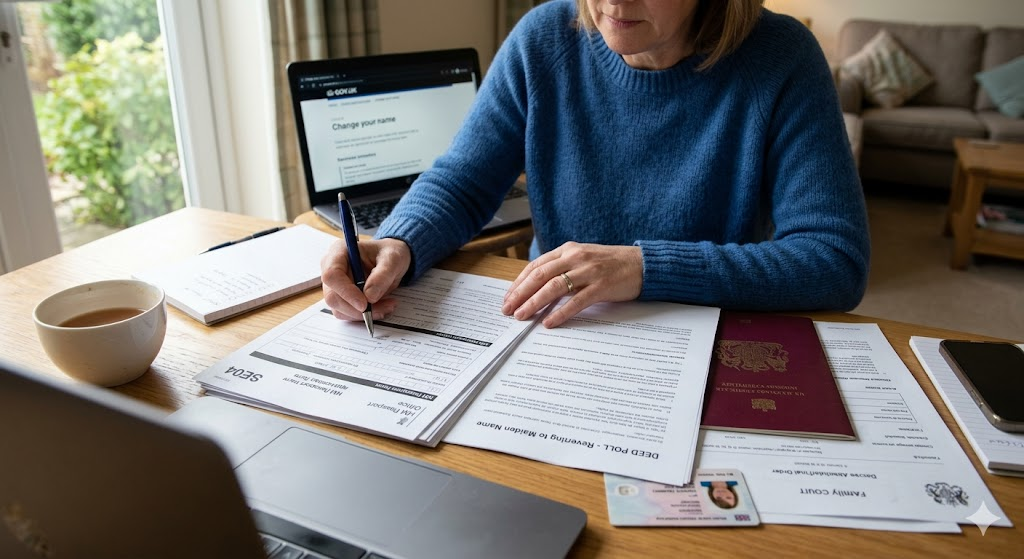
Your deed poll must be signed in wet ink and witnessed by an independent adult (18 or over)-not a relative, your partner, or anyone who lives at your address. A neighbour, colleague or friend is ideal. Keep the original signed document safe: HM Passport Office, the DVLA and banks need the original wet-ink deed poll, not a photocopy, so order more than one copy if several organisations will want to see it at once.
Keep a documentary link to your original-name records
This is the single most important practical step for anyone born or previously documented under another name. Your earlier life-qualifications, work history, immigration records, overseas birth certificate, pension contributions abroad-is all attached to your original name. A deed poll is precisely the bridge that proves “the person formerly known as X is now known as Y”, so protect that chain:
- Never destroy your old documents. Keep your original birth certificate, foreign passport, diplomas and reference letters exactly as issued. You do not amend these; the deed poll sits alongside them.
- Order extra original copies of your deed poll. You will want to present originals to several bodies, and it is wise to keep one filed permanently with your important papers.
- Update institutions, but keep the audit trail. When a university or professional body re-issues a certificate in your new name, ask them to note the change rather than erase the link to the original.
- Store a scan in two places. A secure cloud copy plus a physical copy means you can always prove the connection years from now.
Treated this way, your deed poll becomes a lifelong key that unlocks your pre-change records whenever a bank, employer or immigration caseworker needs to join the dots.
The order of changes if you hold a foreign passport
If you are a dual national or still hold a passport from your country of origin, sequence is everything. HM Passport Office generally expects the name on your British passport to match your other valid travel and identity documents. Changing your UK documents first-before your foreign passport reflects the new name-can create a mismatch that leads to delays or a refused British passport application.
A safe general order is:
- Decide on your new name and consider whether your country of origin will recognise an anglicised name on its documents.
- Update your foreign passport / national records first, where you intend (or are required) to keep them aligned.
- Execute your UK deed poll.
- Then update your UK documents (see below).
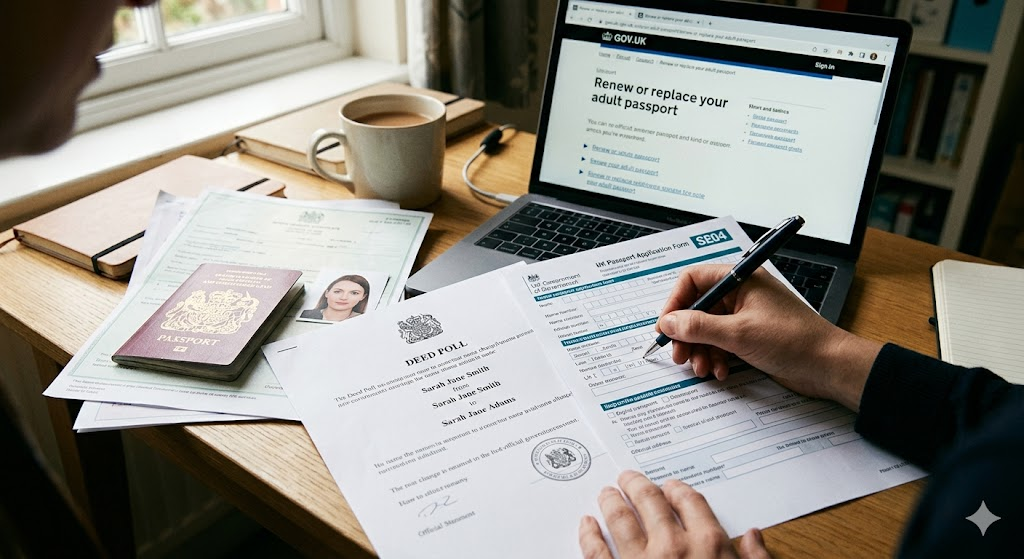
Rules vary by country, so check your home country’s requirements before you start. A British passport costs £102 online or £115.50 by post, with a 1-week Fast Track at £192 and a 1-day Premium service at £239.50-so it is worth getting the sequence right rather than paying to fix a rejected application.
Don’t forget your immigration record
If you are in the UK on a visa, your Home Office / UKVI immigration record and eVisa should reflect your legal name. After your name change, update your UKVI account and any biometric or residence documents promptly so your immigration status and your identity documents stay consistent. Always check the current guidance on GOV.UK for the exact deadlines and method, as immigration processes change.
Updating your UK documents
Once your deed poll is signed and (where relevant) your foreign passport is aligned, updating UK records is usually free:
- DVLA driving licence: free to update.
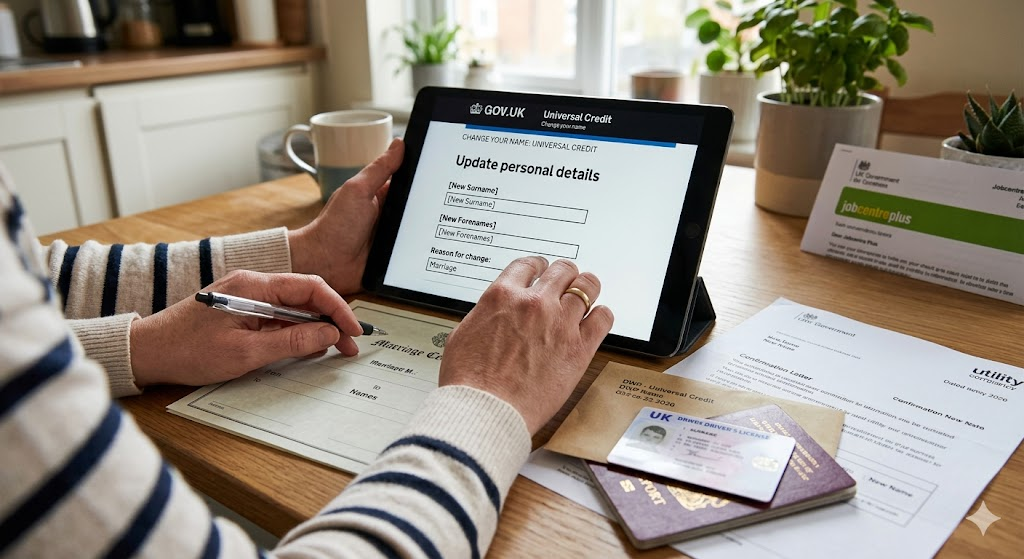
- Banks, HMRC, the NHS, your employer, schools and utilities: free-just present your deed poll.
- UK passport: the fees above apply, as with any passport renewal.
One handy point: a title such as Mr, Mrs, Ms, Mx or Dr is not legally part of your name, so you never need a deed poll just to add or change a title.
Before you decide: alternatives worth considering
Changing your legal name is significant, so weigh these gentler options first:
- Use an informal “everyday” name. You can introduce yourself by an anglicised first name socially and at work without any deed poll-your legal name simply stays as it is.
- Fix spelling rather than replace the name. If your real goal is simply to settle one consistent spelling, see our guide to transliterating names and fixing spelling inconsistencies in the UK.
- Anglicise selectively. You can change one element-say, simplify a long surname-while keeping a meaningful given name. Our broader legal guide to anglicising a name in the UK walks through the wider process and options.
There is no “correct” level of change. Many people land somewhere in the middle, keeping a heritage name as a middle name so it is never lost.
Related reading: the full guide to anglicising your name in the UK, and the reverse journey — restoring an ancestral family surname.
Frequently Asked Questions
Do immigrants need a special form to anglicise their name in the UK?
No. There is no immigrant-specific procedure and no “Ellis Island” style registry. You use the same unenrolled deed poll as any UK adult, and it is accepted by HM Passport Office, the DVLA, HMRC, banks and the NHS.
Will changing my name affect my visa or immigration status?
Changing your name does not change your right to be in the UK, but your immigration and identity documents should match your legal name. Update your UKVI account and eVisa after your deed poll, and follow the current deadlines on GOV.UK. If you hold a foreign passport, align that first to avoid mismatches.
Can I keep my original name as a middle name?
Yes. Many people anglicise a given name or simplify a surname while retaining their heritage name in the middle, so it is always part of their legal identity. Your deed poll can record any combination you choose.
How do I prove my old qualifications and records are mine after changing my name?
Your deed poll is the legal bridge between your old and new names. Keep the original signed document and your original certificates and passports, and present them together whenever an employer, university or bank needs to link your past records to your current name.
Is an unenrolled deed poll really enough, or should I pay for enrolment?
An unenrolled deed poll is legally valid and accepted everywhere that matters-around 98% of UK name changes are unenrolled. Enrolment at the Royal Courts of Justice (£53.05) only publishes your change in the London Gazette and adds no legal validity, so most people skip it.
Ready to change your name with confidence?
Whether you are simplifying a spelling or fully anglicising your name, the legal step is the same straightforward document-and you do not need a solicitor. Order a professionally printed deed poll through our adult deed poll service from £14.49, with same-day dispatch before 3pm and free tracked delivery. Trusted by more than 160,000 customers, it gives you a clear, accepted record of your new name-and a lifelong link back to your original one.