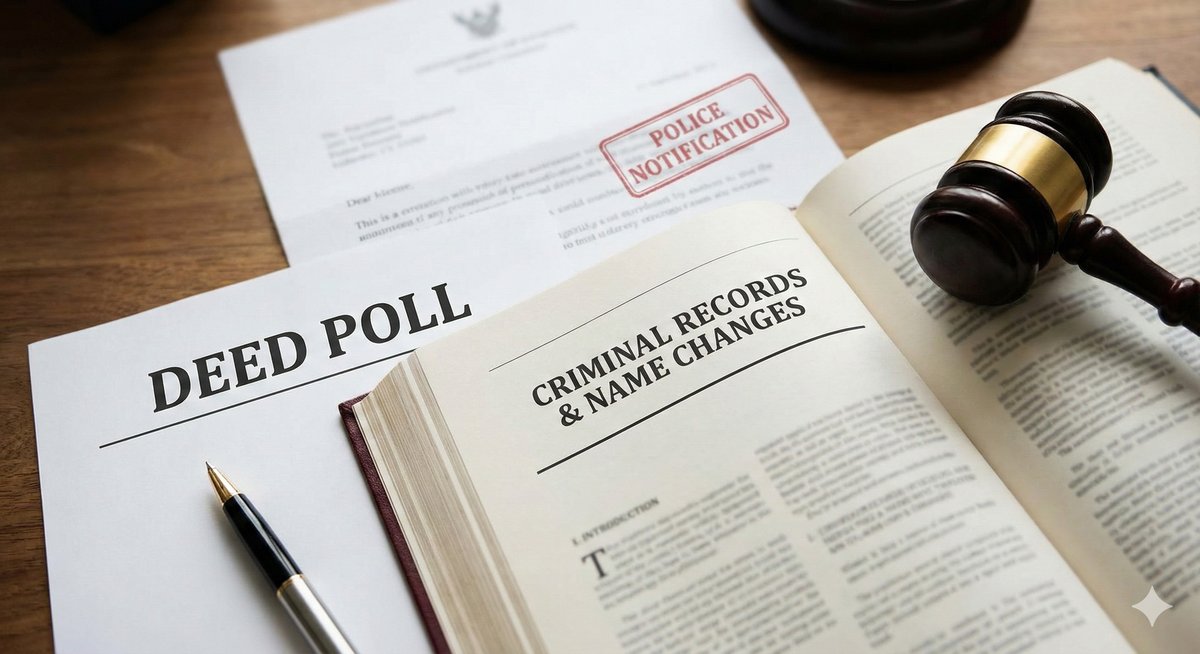
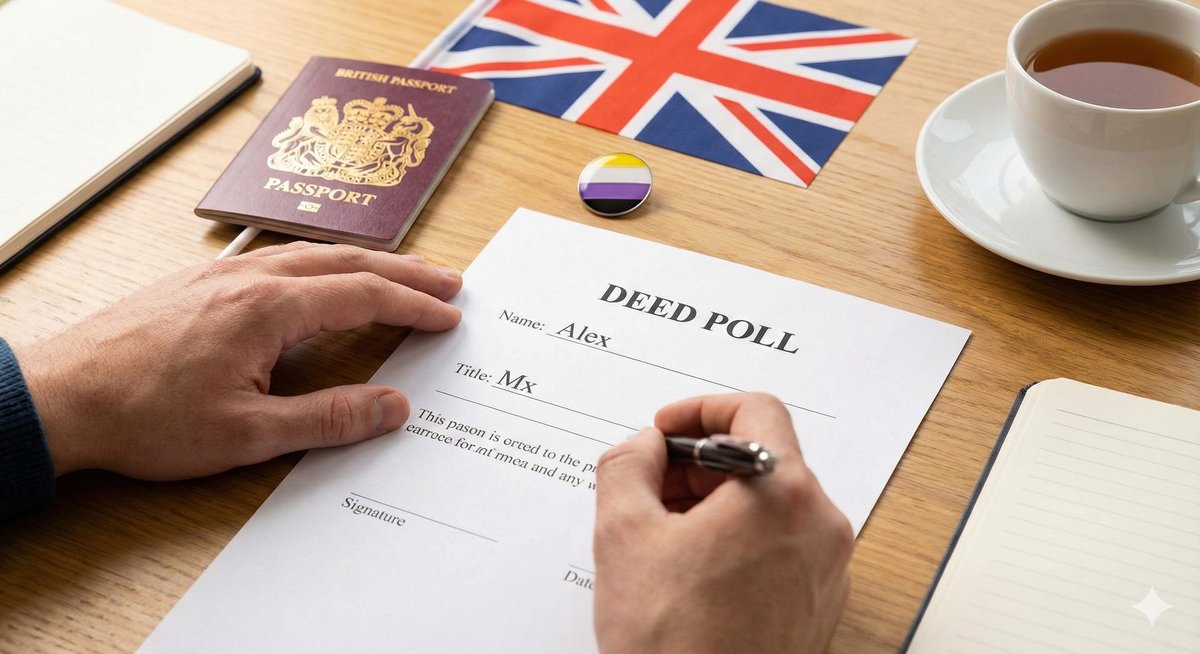
Yes-you can legally change your name while serving a prison sentence in England and Wales, because a sentence does not remove your underlying right to change your name by deed poll. However, prison is the one setting where that right is tightly controlled. Under Prison Service Order (PSO) 4455, the prison Governor is under no legal obligation to acknowledge your new name, and there are strict notification duties-especially for anyone subject to the sex offenders’ register. Getting a valid deed poll is the easy part; getting the prison to recognise it is where the official rules bite.
The legal position: a right you keep, but recognition you must earn
There is no law that stops a prisoner changing their name. Anyone aged 16 or over can sign their own deed poll, and that includes people who are incarcerated. The deed poll itself-a simple legal document in which you renounce your old name and adopt a new one-is just as valid for a prisoner as for anyone else.
The complication is that two things have to happen, and the second one is not automatic:
- You execute a valid deed poll. This is your legal name change. It exists the moment it is correctly signed and witnessed.
- The prison recognises the new name. This is governed by PSO 4455 (“Handling Requests from Prisoners to Change Their Name”), and it is at the Governor’s discretion.
In other words, you can hold a perfectly legal deed poll and still find that prison records, correspondence and the wing officers continue to use your committal name. The document does not force the institution to update its systems-PSO 4455 explicitly states the Prison Service is under no obligation to acknowledge a new name.
What PSO 4455 actually says
PSO 4455 sets out how prisons in England and Wales should handle a name-change request. It does not ban name changes; instead it gives the Governor a structured discretion to accept or refuse acknowledgement. In practice, requests are most likely to be accepted where the reason is genuine and well-evidenced. The Order specifically contemplates:
- A change of marital status-for example, taking a spouse’s surname on marriage.
- Genuine religious grounds-where the chaplain or equivalent faith adviser is consulted and confirms the change is consistent with that faith.
- Psychological grounds-where medical advice indicates that refusing to use the new name could cause real harm to the prisoner. Gender-transition cases are commonly considered under this heading.
The Governor can refuse to acknowledge a name change where there is a compelling reason-for instance, where the change appears designed to evade victims, frustrate licence conditions, harass a person, or otherwise undermine the safe running of the prison or public protection. A refusal does not undo your deed poll; it simply means the prison will keep using your existing name internally.
How a request is made in practice
The exact route varies by establishment, but the realistic sequence is:
- Obtain a deed poll. You (or a trusted person outside) arrange the document. Many families order it and post it in.
- Sign and witness it correctly. The deed poll must be signed in wet ink and witnessed by two independent adults (18 or over), neither of whom is a relative, partner or someone living at your address. Inside prison, an officer, chaplain or other unrelated adult can usually act as the witness-check what your wing or legal-services team will accept.
- Submit a formal request. Apply to the Governor (often via an app/request form or your offender supervisor), enclosing or referencing the deed poll and explaining your grounds. For religious changes, expect the chaplaincy to be consulted; for psychological grounds, expect a medical input.
- Await the decision. If acknowledged, prison records and correspondence are updated. If refused, you keep the deed poll but the prison continues with your committal name.
If you need the underlying document, a straightforward, professionally printed adult deed poll from UK Name Change costs from £14.49 with same-day dispatch on orders placed before 3pm, so a family member can have it posted to the establishment quickly.
The notification rules you cannot ignore
This is the single most important part of changing your name in custody, because getting it wrong is a criminal offence in its own right.
If you are subject to notification requirements under the sex offenders’ register (Part 2 of the Sexual Offences Act 2003), you must notify the police of any change of name-normally within 3 days of the change taking effect. This duty applies whether you are inside or outside prison. Failing to notify, or providing false information, is an offence that can carry a substantial prison sentence (up to five years). Do not assume the prison will do this for you; the obligation is personal to you.
Even where the register does not apply, anyone serving a sentence or under supervision should treat a name change as something that affects their record, not just their identity. If you are managing a name change in the community rather than in custody, the practicalities are slightly different-we cover them in our guide to changing your name on probation.
Your criminal record does not disappear
A new name will not erase a conviction. The Police National Computer links records to the person, and previous names are recorded as aliases. A name change is not a way to pass a clean DBS check or hide your history; that is a common myth, and it is wrong. For a fuller explanation of how disclosure and records work, see our piece on whether you can legally change your name with a criminal history.
Enrolled vs unenrolled: which deed poll for a prisoner?
Around 98% of UK name changes use an unenrolled deed poll, and it is legally valid and accepted by HM Passport Office, the DVLA, HMRC, banks, the NHS, employers and schools. Enrolment at the Royal Courts of Justice (£53.05) is entirely optional, takes 2-3 weeks and adds no legal validity-it simply publishes your name change publicly in the London Gazette. For a serving prisoner, an unenrolled deed poll is almost always the sensible choice: it is faster, cheaper and just as legally effective. A solicitor would charge £150-£300 or more for the very same document, which is unnecessary.
Remember that prisons, the passport office, the DVLA and banks all require the original wet-ink signed deed poll, never a photocopy. Whoever posts the document in should send the original and keep a record of it.
Updating records after release
If your name change is acknowledged, you can begin updating official records. Many updates are free: the DVLA driving licence change, and updates with banks, HMRC, the NHS, employers and utilities cost nothing. A new UK adult passport costs £102 online or £115.50 by post (Fast Track is £192 and one-day Premium is £239.50). Note that titles such as Mr, Mrs, Ms, Mx or Dr are not legally part of your name, so no deed poll is needed to change a title.
Frequently Asked Questions
Can a prison Governor stop me changing my name?
A Governor cannot stop you signing a deed poll-your legal right to change your name remains. What the Governor can do, under PSO 4455, is refuse to acknowledge the new name for prison purposes if there is a compelling reason. Your deed poll is still legally valid even if the prison declines to update its records.
Do I have to tell the police if I change my name in prison?
If you are subject to sex offender notification requirements, yes-you must notify the police, normally within 3 days of the change. This is a legal duty that applies in custody as well as in the community, and failing to comply is a criminal offence.
Will changing my name hide my criminal record?
No. Your record is tied to you as a person, and former names are stored as aliases on police systems. A name change will appear on enhanced DBS checks and does not wipe convictions.
Who can witness a deed poll for a prisoner?
Each witness must be an independent adult aged 18 or over who is not a relative, partner or someone living at your address. Inside an establishment, a prison officer, chaplain or another unrelated adult can usually witness it-confirm with your wing or legal-services team first.
How much does a deed poll cost and how fast can it arrive?
An unenrolled deed poll from UK Name Change starts at £14.49 with free Royal Mail Tracked delivery and same-day dispatch on orders before 3pm, so a family member outside can order it and post the original into the prison quickly.
Ready to get a valid, professionally printed deed poll?
Whether you are arranging it for yourself or for a relative inside, the document itself is simple and inexpensive. Get a legally valid, professionally printed adult deed poll from UK Name Change-from £14.49, with same-day dispatch before 3pm and free tracked delivery. Trusted by 160,000+ customers.