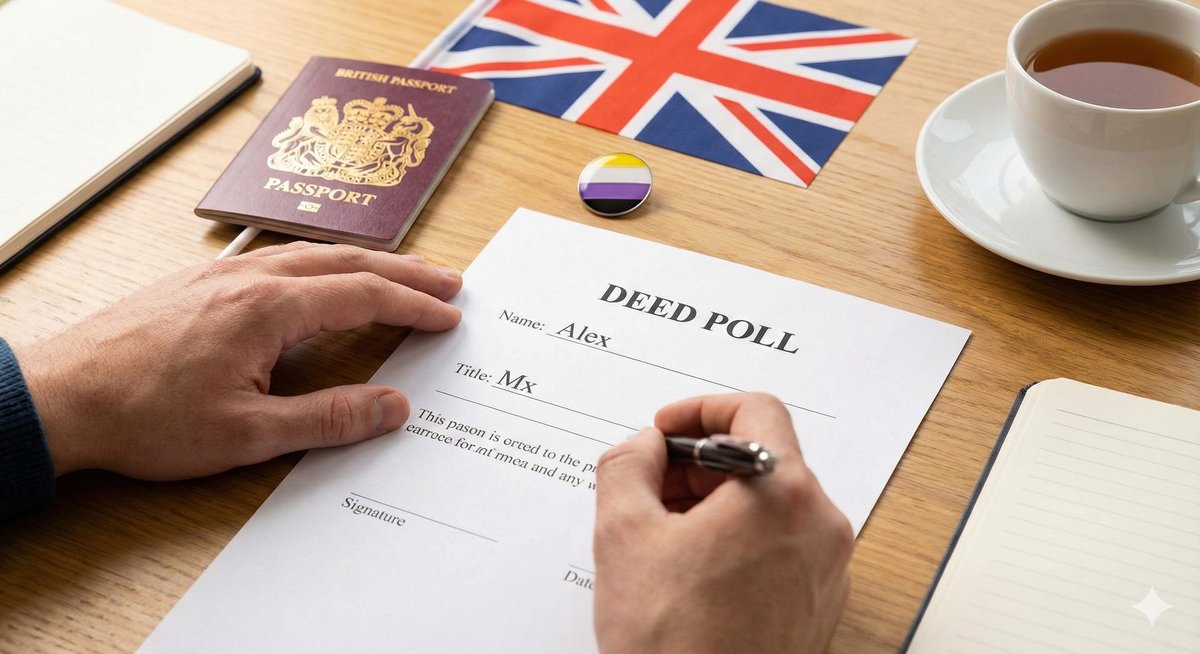
Yes - you can legally change your name while on probation or on licence, and you do not need anyone’s permission to do it. The one rule that matters is notification: you must tell your probation officer (offender manager) about the change, ideally before or on the same day you sign your deed poll. Changing your name is not against the law, and being under supervision does not strip you of that right. What it does add is a duty to be open with the people supervising you - failing to disclose a name change can be treated as a breach of your conditions, even though the name change itself is perfectly lawful.
You are allowed to change your name on probation
In England, Wales and the rest of the UK, any adult is free to change their name at any time by deed poll. There is no rule that suspends this right while you are serving a community order, a suspended sentence, or are out on licence after release from custody. You do not apply for permission, and your probation officer cannot legally refuse to “let” you change your name. The process for you is exactly the same as for anyone else: you complete and sign a deed poll, and then use it to update your records.
The complication is not the name change - it is the disclosure obligation that comes with being under supervision. Probation is built on a relationship of openness. Your licence or community order conditions almost always require you to keep your offender manager informed of significant changes to your circumstances, and a change of legal name clearly counts.
Why notifying your probation officer matters
Think of it this way: the name change is legal, but hiding it is the risk. Your probation officer holds records, makes appointments, liaises with the police and courts, and may need to verify your identity. If your name suddenly changes and they only find out later - or by accident - it can look like you were trying to obscure your identity, which is exactly the kind of behaviour supervision exists to prevent.
Concretely, notifying your officer means:
- You stay compliant. Disclosing a material change is part of your conditions. Doing it promptly keeps you on the right side of them.
- Your records stay accurate. Court orders, appointment letters and any monitoring arrangements can be updated to your new name so nothing falls through the cracks.
- You avoid a breach. A breach is not triggered by changing your name - it can be triggered by failing to disclose it. Being upfront removes that risk entirely.
- You build trust. Transparency with your supervising officer is one of the simplest ways to demonstrate that you are engaging positively with your sentence.
If you are uncertain whether your specific conditions require disclosure, assume they do and tell your officer anyway. There is no downside to being open, and a clear downside to staying quiet.
The Sex Offenders Register: a separate, stricter duty
If you are subject to notification requirements under the Sex Offenders Register, the rules are stricter and legally enforceable in their own right. You must notify the police of any change to your name, normally within three days of the change taking effect. This is a separate legal obligation from your probation conditions, and failing to comply is a criminal offence in itself. Telling your probation officer does not satisfy this duty - you must notify the police directly as well. If this applies to you, treat the police notification as non-negotiable and act on it immediately.
A name change does not erase your record
It is worth being clear about what changing your name does and does not do. A deed poll changes your legal name going forward. It does not delete your criminal record, wipe a DBS (Disclosure and Barring Service) check, or sever the link between you and your past convictions. Your record follows you under your previous name, and you will normally be asked to declare any previous names when applying for jobs, enhanced DBS checks, or certain licences. Changing your name for a genuine fresh start is completely legitimate; expecting it to hide your history is not how the system works. For the full picture, see our guide on whether you can legally change your name with a criminal history under the 2025 rules.
How to change your name on probation: the process
The practical steps are straightforward once you know notification comes first.
1. Tell your probation officer first
Raise it at your next appointment or contact them in advance. Explain the name you intend to take and roughly when you plan to sign. This keeps everything transparent from the outset.
2. Get your deed poll
You need a properly drafted deed poll naming your old and new names. You can order a professionally printed adult deed poll from UK Name Change from £14.49, with same-day dispatch if you order before 3pm and free Royal Mail Tracked delivery. There is no need to pay a solicitor - they would charge £150-£300+ for the same document, and an unenrolled deed poll is fully accepted by HM Passport Office, the DVLA, HMRC, banks and the NHS.
3. Sign it with two independent witnesses
Anyone aged 16 or over can sign their own deed poll. Your witnesses must each be an independent adult (18+) - not a relative, partner, or anyone living at your address. They watch you sign and then sign themselves.
4. Notify the police if you are on the register
If you are subject to sex offender notification requirements, inform the police within three days, as above.
5. Update your official records
Use the original wet-ink signed deed poll (not a photocopy - institutions require the original) to update your passport, driving licence, bank, HMRC and other records. Updating your DVLA licence is free, as is updating your bank, HMRC, the NHS and your employer. A passport in your new name costs £102 online or £115.50 by post.
What about changing your name in prison?
This guide covers probation and licence in the community. If you are still in custody, the rules and the practical process are different - access to documents, witnessing and notification all work differently behind the prison gate. We cover that scenario in our dedicated guide on whether you can change your name while in prison and the official rules.
Frequently Asked Questions
Do I need my probation officer’s permission to change my name?
No. You do not need permission - changing your name is your legal right and your officer cannot refuse it. What you must do is notify them of the change, ideally before or on the day you sign your deed poll, to stay compliant with your supervision conditions.
Can I be breached for changing my name on probation?
Not for changing it. A breach can arise from failing to disclose a name change when your conditions require it. As long as you notify your probation officer promptly, there is no breach risk from the change itself.
When exactly should I tell my probation officer?
As early as possible - ideally before or on the same day you sign the deed poll. Telling them in advance shows transparency and lets them update their records and any court or monitoring arrangements without delay.
Will changing my name remove my conviction or DBS record?
No. A deed poll changes your legal name going forward but does not erase your criminal record or affect DBS checks. Your record stays linked to you, and you will usually have to declare previous names on applications.
I’m on the Sex Offenders Register - what are my obligations?
You must notify the police of your name change, normally within three days. This is a separate legal duty from your probation conditions, and not complying is a criminal offence. Notify the police directly in addition to telling your probation officer.
Is an unenrolled deed poll enough, or do I need to enrol it?
An unenrolled deed poll is legally valid and accepted everywhere that matters - around 98% of UK name changes are unenrolled. Enrolment at the Royal Courts of Justice (£53.05) is optional, publishes your new name publicly in the London Gazette, and adds no legal validity.
Ready to make your fresh start the right way?
Changing your name on probation is entirely possible - the key is doing it openly. Tell your probation officer, notify the police if the register applies to you, and then make it official. Order your professionally printed adult deed poll from £14.49 with same-day dispatch before 3pm and free tracked delivery. Trusted by over 160,000 customers, it is the simple, lawful way to start the next chapter under your new name.