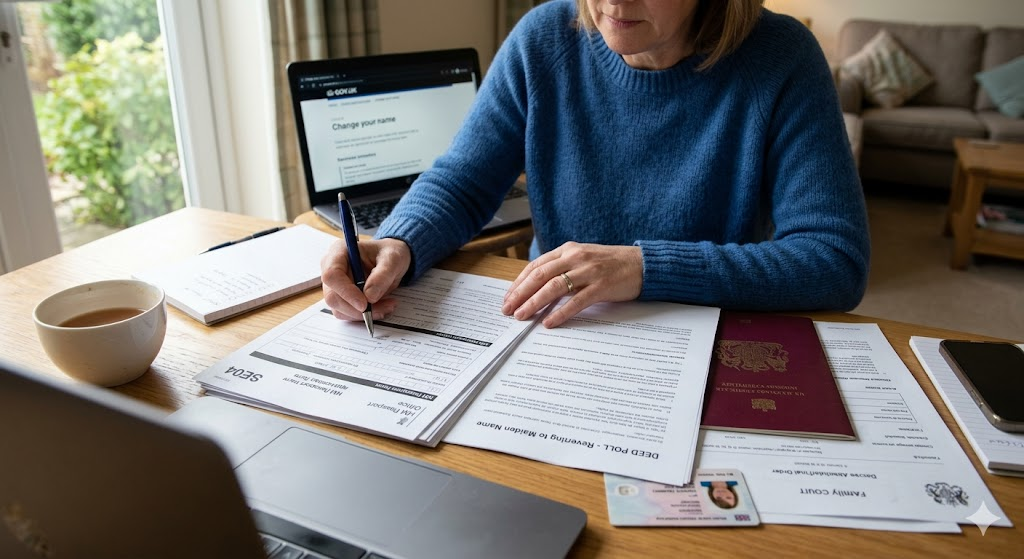
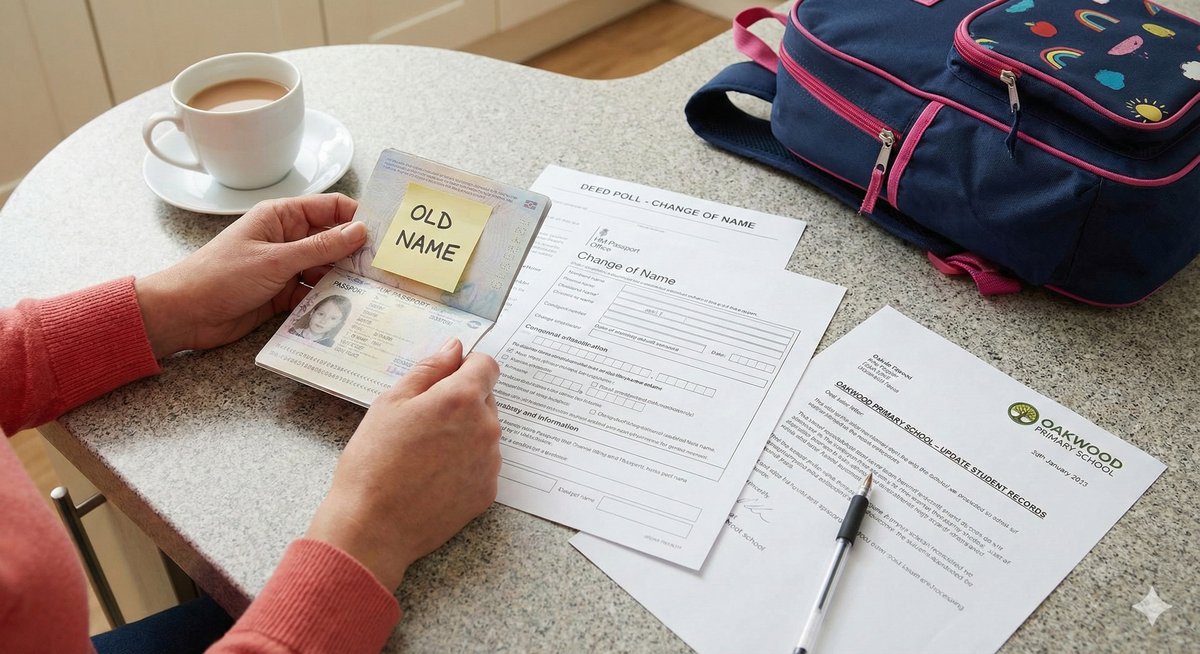
There are two routes to changing a child’s first name in England and Wales, and which one you use depends on a single deadline. Within 12 months of the original birth registration, you can ask the registrar to add or correct a forename on the birth register itself - a one-time window known as the ‘12-month rule’. After that 12-month window closes, the birth certificate can no longer be amended, and the proper way to change a child’s first name is a child deed poll, which works at any age. This guide covers first names (forenames) specifically - what each route involves, what it costs, and who needs to consent.
The ‘12-month rule’: adding or correcting a forename on the birth register
When a baby is registered, the parents often have not finally settled on a name, or they realise within a few months that they want something different. The law makes allowance for this. Under the Births and Deaths Registration Act, a forename entered at registration can be altered or added on the register within 12 months of the date of registration - not the date of birth, though in practice these are usually close together.
This is the only situation in which the original birth record itself can be changed for a name-of-choice reason. It is genuinely a one-time window: once 12 months have passed, the register is closed to forename amendments and you cannot reopen it, however good your reasons.
What the 12-month rule can and cannot do
The window applies only to forenames - first names and middle names. It does not cover the surname. If you want to change a baby’s surname, the 12-month rule will not help; the correct route for that is a child deed poll (covered in our guide to changing a child’s surname legally).
It is also worth knowing that the original entry is never erased. When the registrar makes the amendment, the new forename is added in the margin of the register (historically recorded in “Space 17”), and the original certificate will continue to show that an addition was made. The child’s record reads correctly going forward, but the history remains visible - the register is a permanent legal document, not something that can be quietly overwritten.
How to use the 12-month window
You apply through the register office that handled the original registration (or the General Register Office). The process uses a form called a Certificate of Name Given, and there are two versions depending on the circumstances:
- Certificate of Name Given in Baptism - used where the child has since been baptised or named in a religious ceremony under the new forename, supported by the relevant certificate.
- Certificate of Name Given not in Baptism - used for a straightforward change where there has been no baptism.
Contact your local register office to confirm their procedure, as practice varies slightly between offices. You will typically need to attend in person, complete the certificate, and provide the original birth certificate. A statutory fee of around £40 applies, and a new birth certificate showing the amendment can usually be issued. The exact fee and any certificate costs should be confirmed with the office before you attend.
After 12 months: changing a first name by deed poll
Once the registration is more than 12 months old, the register is settled and the forename amendment route is closed. This is not a problem - it simply means you switch to the standard legal method that applies to everyone in the UK who changes their name: a deed poll. A child deed poll changes a first name (or middle name, or surname) at any age, with no upper time limit.
How a deed poll changes a first name
A deed poll is a formal legal document in which the people with parental responsibility declare, on the child’s behalf, that the child has given up the old name and will use the new one. It does not alter the birth certificate - instead, it sits alongside it as the proof of change. Think of it as a permanent companion document: you keep the original birth certificate and the deed poll together, and you present both when updating records.
An unenrolled deed poll is fully legally valid and is accepted by HM Passport Office, the NHS, schools, banks and every other UK body that needs to record the new name. Around 98% of UK name changes are done this way. From UK Name Change, a professionally printed child deed poll starts at £14.49, with same-day dispatch on orders placed before 3pm and free Royal Mail Tracked delivery.
Updating the records once the name has changed
With the deed poll in hand, you update the child’s official records. A child passport in the new name costs the standard fee - £102 online (or £115.50 by post) - while bodies such as the NHS, the GP surgery and the school will update the name free of charge. Remember that HM Passport Office and most institutions require the original wet-ink signed deed poll, not a photocopy, so keep it safe.
Consent: who has to agree
Both routes require the agreement of everyone who holds parental responsibility for the child - not just the parent making the application. For a child under 16, a deed poll must be signed with the consent of all such people; the same principle applies to a register amendment. A child of 16 or 17 can change their own name and sign their own deed poll.
If one parent will not consent, you cannot proceed unilaterally. In that situation the matter may need a Specific Issue Order from the family court, which can authorise the change without the other parent’s agreement. This is the same consent framework that governs surname changes, so if the situation is contested it is worth reading the surname guide as well.
Newborns: deciding before you ever register
Everything above assumes the birth has already been registered. If your baby has not yet been registered, you are not bound by either route - you simply register the name you want, with no fee and no paperwork beyond the registration itself. If you are at that earlier stage, see our dedicated guide to changing a baby’s name before registration.
Quick comparison
- Forename change, within 12 months of registration: use the Certificate of Name Given at the register office (≈£40); the register is amended.
- Forename change, after 12 months: use a child deed poll (from £14.49); the birth certificate is unchanged but the deed poll proves the new name.
- Surname change, any age: always a child deed poll - the 12-month rule never applies to surnames.
If you are an adult changing your own first name, the time limits above do not apply to you at all - you can use an adult deed poll whenever you like.
Frequently Asked Questions
Is the 12-month rule based on the date of birth or the date of registration?
It runs from the date the birth was registered, not the date of birth. The two are usually within six weeks of each other in England and Wales, but it is the registration date that starts the clock.
Can I change a baby’s surname using the 12-month rule?
No. The register amendment window covers forenames (first and middle names) only. A surname change at any age requires a child deed poll - see our child surname guide.
Does the original first name disappear from the birth certificate?
No. The registrar adds the new forename in the margin of the register without erasing the original entry, so the certificate continues to show that an addition was made. The record reads correctly going forward, but the history stays visible.
My child is 14 months old - have I missed my chance?
You have missed the register amendment window, but not the chance to change the name. A child deed poll changes a first name at any age with no time limit, and it is accepted by the passport office, the NHS and schools.
Do both parents need to agree to change a child’s first name?
Yes. Everyone with parental responsibility must consent, whichever route you use. If a parent refuses, you may need a Specific Issue Order from the family court before you can proceed.
Is an unenrolled child deed poll really enough?
Yes. An unenrolled deed poll is legally valid and accepted across UK government and private bodies. Enrolment at the Royal Courts of Justice (£53.05) is optional, publishes the change in the London Gazette, and adds no legal validity.
Ready to change your child’s first name?
If the 12-month window has closed - or you simply want a clean, permanent legal record - a child deed poll is the straightforward answer. Order a professionally printed child deed poll from £14.49, with same-day dispatch before 3pm and free tracked delivery. Trusted by 160,000+ customers.