Breaking up is rarely simple, and for many, changing a name is an essential part of the healing process. It draws a line under the past and allows you to reclaim your identity. But if your relationship with your ex-partner is strained, or if you are worried about your safety, you might be asking: "Do I have to tell them?"
The answer depends entirely on whose name you are changing.
In the UK, the law treats your own name very differently from your children's names. Here is a breakdown of your rights to privacy, the legal boundaries you cannot cross, and how to stay safe.
Changing YOUR Name: Total Autonomy
If you are an adult (over 16), your name is your own legal property. You do not need anyone's permission to change it.
Do I need my ex-partner's permission?
No. Even if you are still legally married, your spouse has no legal say in what you call yourself. You can change your surname back to your maiden name, or to something entirely new, without their signature or consent.
Do I have to notify them?
Generally, no. There is no legal requirement to send a formal notification to an ex-partner regarding your own name change.
However, there are two exceptions where they will inevitably find out:
- Divorce Proceedings: If you are currently going through a divorce or court proceedings, you cannot hide your identity from the court. You must inform your solicitor of your name change so they can update the legal paperwork. Your ex-partner (and their solicitor) will see your new name on court documents.
- Co-Parenting: If you share children and your ex-partner picks them up from school or communicates with teachers, the school may inadvertently reveal your new name if you have updated your records there.
Safety Warning: Avoid "Enrolled" Deed Polls
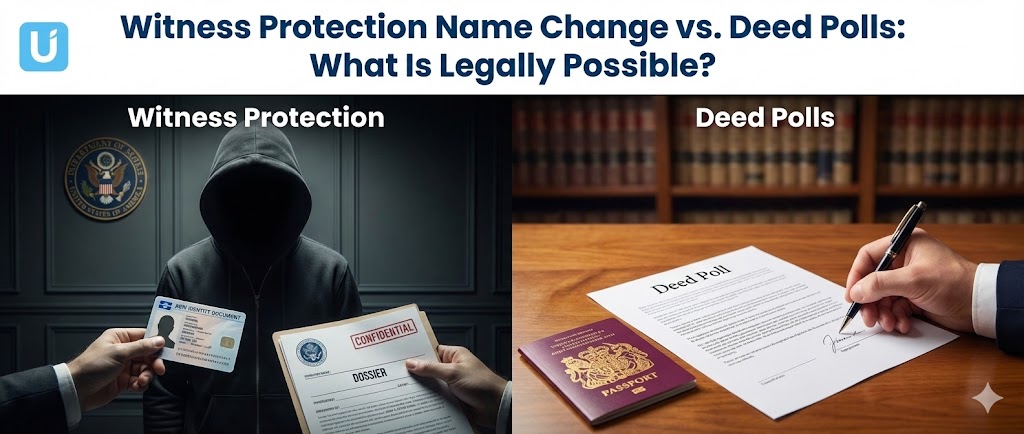
If you are changing your name because you are fleeing domestic abuse or harassment, and you want to keep your location secret, you must use an "Unenrolled" Deed Poll.
- Enrolled Deed Polls: These are registered with the Royal Courts of Justice. By law, they must publish your old name, new name, and your full home address in The London Gazette, which is searchable online. This is dangerous if you are hiding from an ex.
- Unenrolled (Standard) Deed Polls: These are what we provide. They are fully legal and accepted by the Passport Office and DVLA, but they are private. They are not published anywhere, keeping your address safe.
Changing YOUR CHILDREN'S Names: The Red Line
While you have total freedom over your own name, the rules for children are the exact opposite. This is where many parents accidentally break the law.
Do I need my ex-partner's permission?
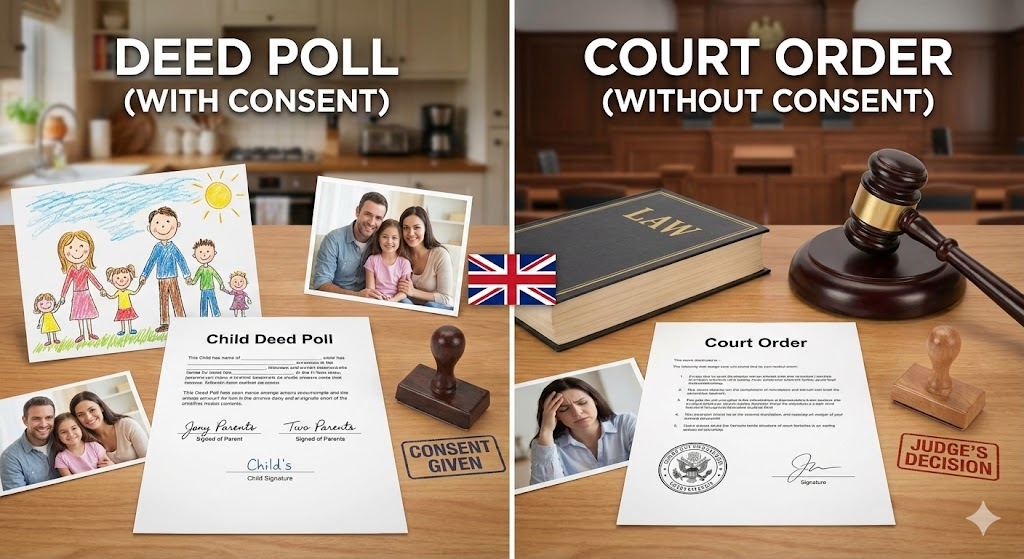
Yes. If your ex-partner has "Parental Responsibility," you legally cannot change your child's surname without their written consent.
Mothers automatically have Parental Responsibility. Fathers usually have it if they are named on the birth certificate (after Dec 2003) or if they were married to the mother.
What happens if I do it without telling them?
If you try to change a child's name secretly:
- Passports: The Passport Office will reject your application if you cannot provide the other parent's written consent (or a court order).
- Schools: Schools are legally required to ensure all holders of Parental Responsibility consent to a name change on the school roll.
- Court Action: If you manage to change the name informally, your ex-partner can apply to the Family Court for a "Specific Issue Order" to force you to reverse it. Courts take a dim view of parents who try to bypass the other parent's rights.
What if they refuse?
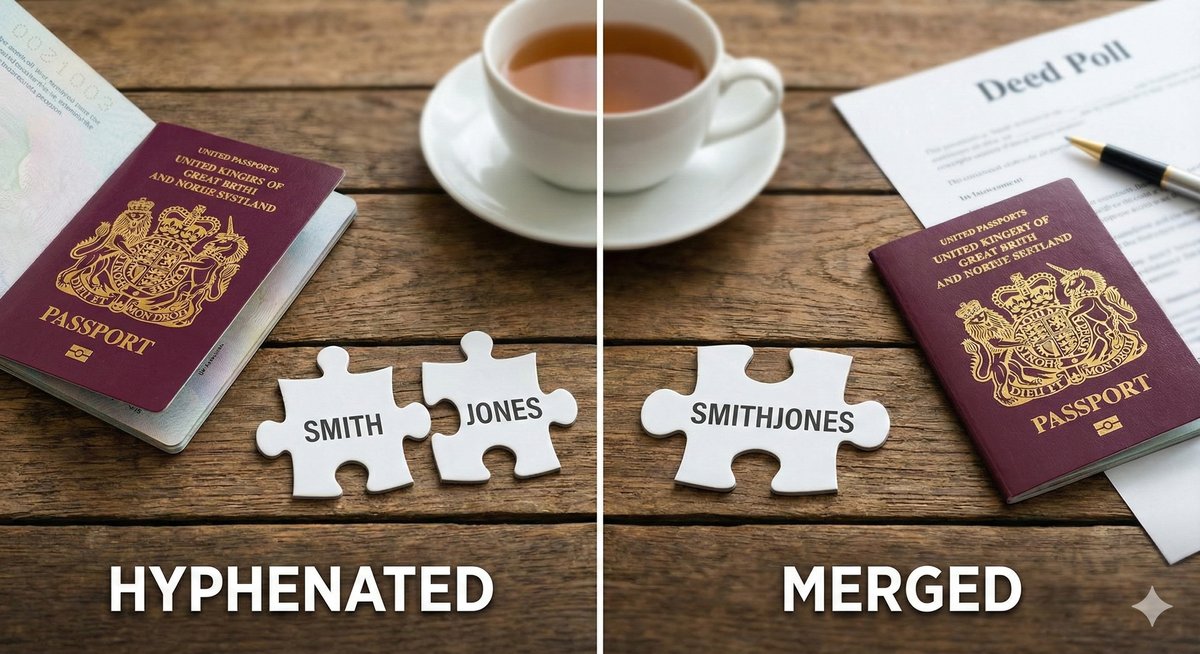
If you want to change the children's names to match yours (e.g. double-barrelling) and your ex refuses, you can apply to the Family Court for permission. A judge will make the decision based on the child's best interests, not the parents' arguments. They will often allow a double-barrelled name to preserve links to both families.
Summary: Your Rights at a Glance
| Action | Do you need Ex's Consent? | Do you need to notify them? |
|---|---|---|
| Changing Your Name | No (Never) | Only if in active court proceedings |
| Changing Child's Name | Yes (If they have PR) | Yes, mandatory |
If you are looking for a fresh start, we can help you change your own name quickly, legally, and privately. If you are hoping to change your children's names, we can advise on how to draft a Child Deed Poll that meets the strict consent requirements.
Ready to reclaim your identity? Contact our team confidentially to order your private Deed Poll today.