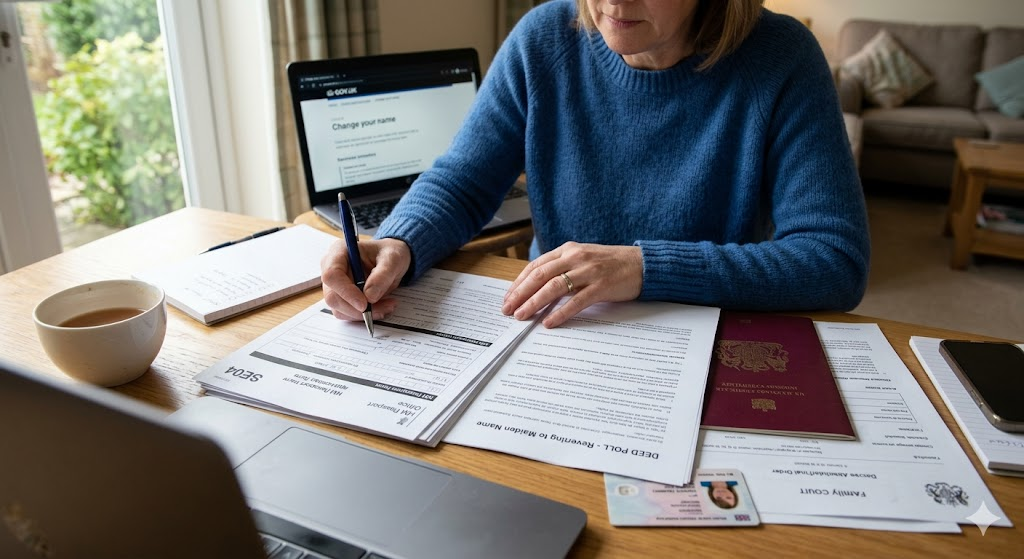
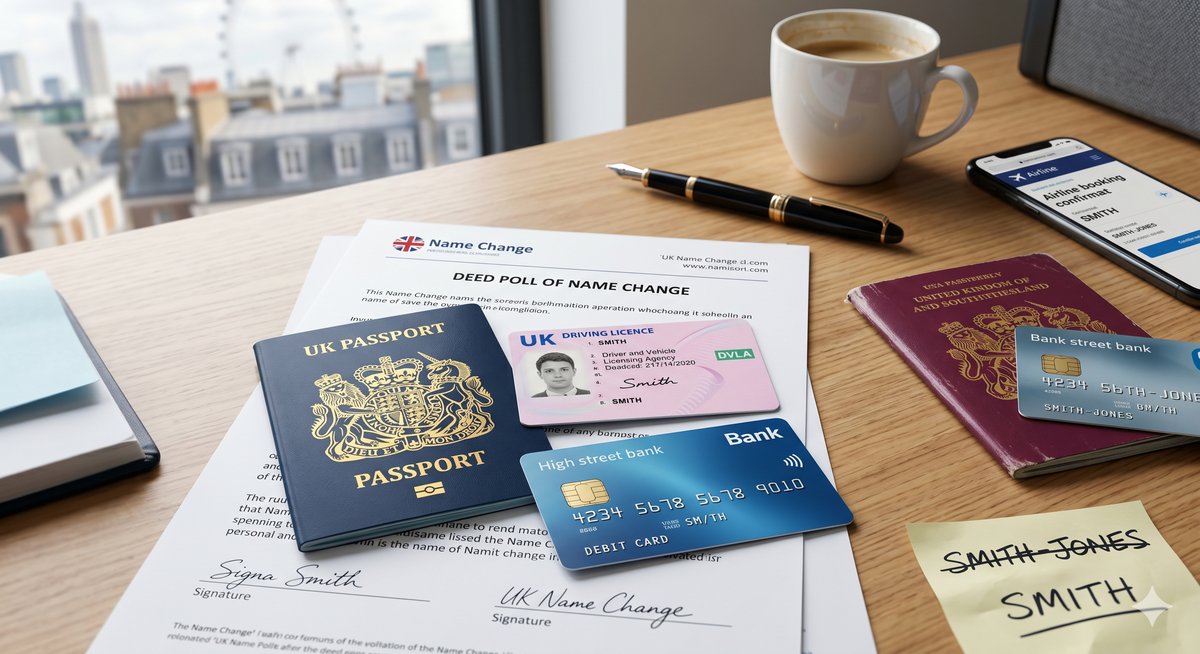
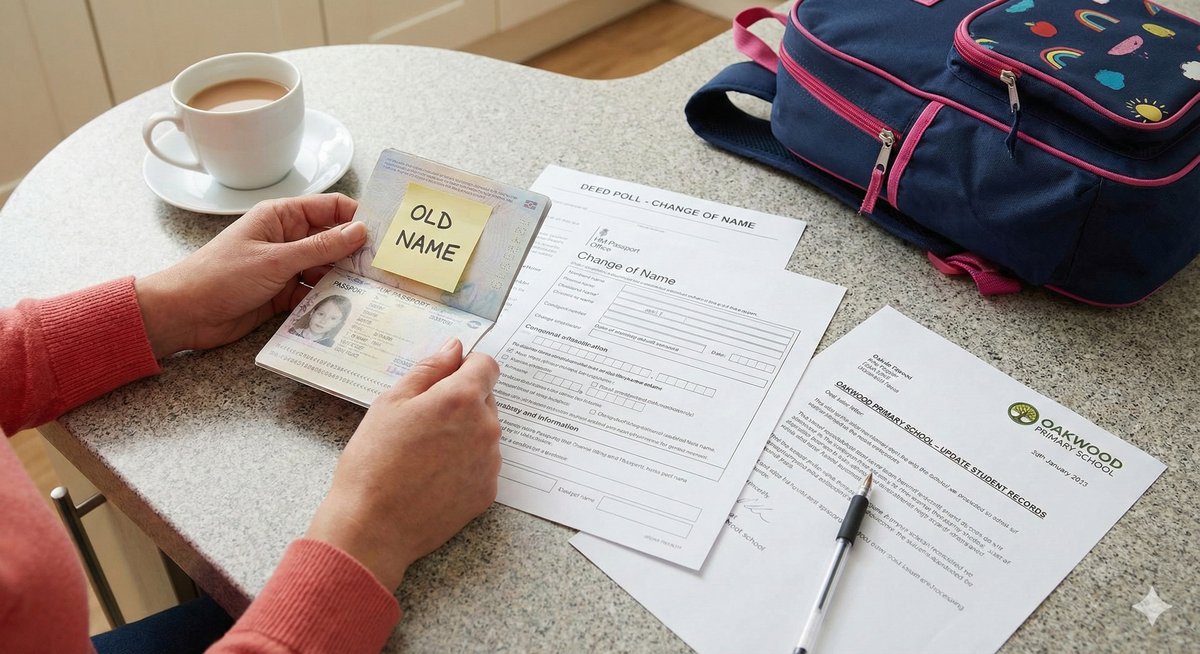
To change a child’s surname legally in the UK, everyone with parental responsibility for that child must consent in writing, and the new name is then recorded on a child deed poll. For a child under 16, the adults with parental responsibility sign the deed poll on the child’s behalf; a young person aged 16 or 17 can change their own name. Once you have a signed deed poll, you update the child’s passport, school and GP records to match. A professionally printed child deed poll from UK Name Change costs from £14.49, with same-day dispatch on orders placed before 3pm and free Royal Mail Tracked delivery.
The golden rule: consent from everyone with parental responsibility
A child’s surname cannot be changed by one parent acting alone. UK law requires the written consent of every person who holds parental responsibility for the child, no matter who the child lives with or who pays for what. This is the single most important rule, and getting it right is what makes the name change legally valid and accepted by the passport office, schools and the NHS.
Parental responsibility is the legal authority to make decisions about a child’s upbringing - and changing a surname is one of those decisions. You usually have parental responsibility if you are:
- The child’s biological mother (this is automatic from birth).
- The child’s father, if you were married to or in a civil partnership with the mother when the child was born.
- The child’s father named on the birth certificate, where the birth was registered (in England and Wales) on or after 1 December 2003.
- An adoptive parent, special guardian, or someone granted parental responsibility by a court order or formal agreement.
If more than one person holds parental responsibility, all of them must agree and sign. A father without parental responsibility does not have to consent in law - but it is good practice (and usually wise) to keep him informed. For the finer points of who counts and how consent is given, see our detailed guide to changing a child’s name: deed poll vs parental consent.
The age rule: under 16 versus 16 and 17
How the deed poll is signed depends on the child’s age, so check this before anything else.
Children under 16
A child under 16 cannot legally change their own name. Instead, the adults with parental responsibility sign a child deed poll on the child’s behalf. Every holder of parental responsibility must sign, and the document is witnessed by an independent adult. Although the consent is the parents’, the child’s own wishes still matter - for older children especially, organisations expect the change to reflect what the child actually wants.
Young people aged 16 and 17
At 16, a young person reaches an important threshold: they can change their own name and sign their own deed poll, without needing parental consent. A 16- or 17-year-old changing their surname uses an adult deed poll rather than a child deed poll, signs it themselves, and has it witnessed. Parental agreement is no longer legally required, although a supportive family makes updating records far smoother.
Step by step: changing your child’s surname
Once everyone with parental responsibility is in agreement, the process itself is quick and straightforward.
- Confirm consent. Make sure every person with parental responsibility agrees to the new surname. Forging another person’s signature is fraud and will invalidate the document, so never proceed without genuine, willing consent.
- Choose the new name. You can change the surname entirely, add a parent’s surname, double-barrel two surnames, or adjust the spelling. The name must not be offensive, impossible to pronounce, or chosen for fraudulent reasons.
- Order the child deed poll. Provide the child’s current full name, the new name, and the details of each adult with parental responsibility. UK Name Change prints a professional child deed poll from £14.49, dispatched the same day if you order before 3pm, with free Royal Mail Tracked delivery.
- Sign and witness it. Each adult with parental responsibility signs in wet ink, and an independent adult aged 18 or over witnesses the signatures. The witness must not be a relative, partner, or anyone who lives at your address.
- Update the child’s records. Use the original signed deed poll to change the child’s name everywhere it appears (see below).
Most UK name changes - around 98% - use an unenrolled deed poll like this. It is legally valid and accepted by HM Passport Office, the DVLA, the NHS, banks and schools. Enrolment at the Royal Courts of Justice (£53.05) is entirely optional, publishes the change in the London Gazette, takes two to three weeks, and adds no extra legal validity. A solicitor would charge £150-£300 or more for the very same document, which is unnecessary.
Updating your child’s passport, school and GP records
A deed poll is the legal foundation, but the name only becomes real in everyday life once you have updated the organisations that hold your child’s records. Keep the original wet-ink deed poll safe - HM Passport Office, the DVLA and banks require the original, not a photocopy.
Passport
Apply to HM Passport Office for a new child passport in the new name, enclosing the original deed poll. A child passport renewal is needed because the name on the document is changing. For reference, adult passport fees are £102 online and £115.50 by post, with 1-week Fast Track at £192 and 1-day Premium at £239.50; child passport fees are lower, and the passport office publishes the current rates.
School
Notify the school office in writing and provide a copy of the deed poll. The school will update the register, records, login systems and exam entries. Doing this early in a term avoids confusion with attendance and reports.
GP and NHS
Contact your child’s GP surgery to update their medical records and NHS details. This keeps prescriptions, referrals and appointment letters in the correct name. Updating NHS records is free.
Everything else
Don’t forget the dentist, any clubs or activities, savings or child accounts at the bank, and - for older teenagers - the DVLA for a provisional licence. Updating the bank and the DVLA is free. Most organisations accept a clear copy of the deed poll, but always lead with the passport, where the original is essential.
When the other parent disagrees
If someone with parental responsibility refuses to consent, you cannot simply proceed - doing so would make the deed poll invalid. Your options then depend on the situation: a parent may be absent or untraceable, or actively opposed. Because these scenarios have their own rules and routes, we cover them in dedicated guides rather than here. Start with deed poll versus court order for a child’s name change to understand when a Specific Issue Order from the family court is needed, and read our guide on changing a child’s surname without the other parent in 2026 if consent is missing or refused.
Frequently Asked Questions
Can I change my child’s surname without the other parent’s consent?
Not if the other parent holds parental responsibility - their written consent is required. The only ways forward without it are if the other parent has no parental responsibility, or by applying to the family court for permission. See our guide on changing a child’s surname without the other parent.
How much does it cost to change a child’s surname?
A professionally printed child deed poll from UK Name Change starts at £14.49 with free Royal Mail Tracked delivery. There are no court fees for an unenrolled deed poll. Optional enrolment at the Royal Courts of Justice costs £53.05 but is not required.
At what age can a child change their own surname?
From the age of 16. A 16- or 17-year-old can sign their own deed poll without parental consent, using an adult deed poll. Under-16s need the consent of everyone with parental responsibility.
Do I need a solicitor to change my child’s surname?
No. A solicitor would charge £150-£300+ for the same document. A correctly drafted, signed and witnessed deed poll is all you need, and it is accepted by the passport office, schools, the NHS and banks.
Is an unenrolled child deed poll legally valid?
Yes. An unenrolled deed poll is legally valid and accepted by HM Passport Office, the DVLA, HMRC, banks, the NHS, employers and schools. Around 98% of UK name changes are unenrolled.
Will the child need a new passport straight away?
Not immediately, but the passport will need to be reissued in the new name before any travel. Until then, the existing passport remains valid for travel under the old name - just ensure tickets match the passport, not the deed poll.
Ready to change your child’s surname?
Once everyone with parental responsibility agrees, the rest is simple. Order a professionally printed child deed poll from UK Name Change for £14.49 - trusted by more than 160,000 customers, with same-day dispatch before 3pm and free tracked delivery. Get the legal document right today, then update your child’s passport, school and GP records with confidence.