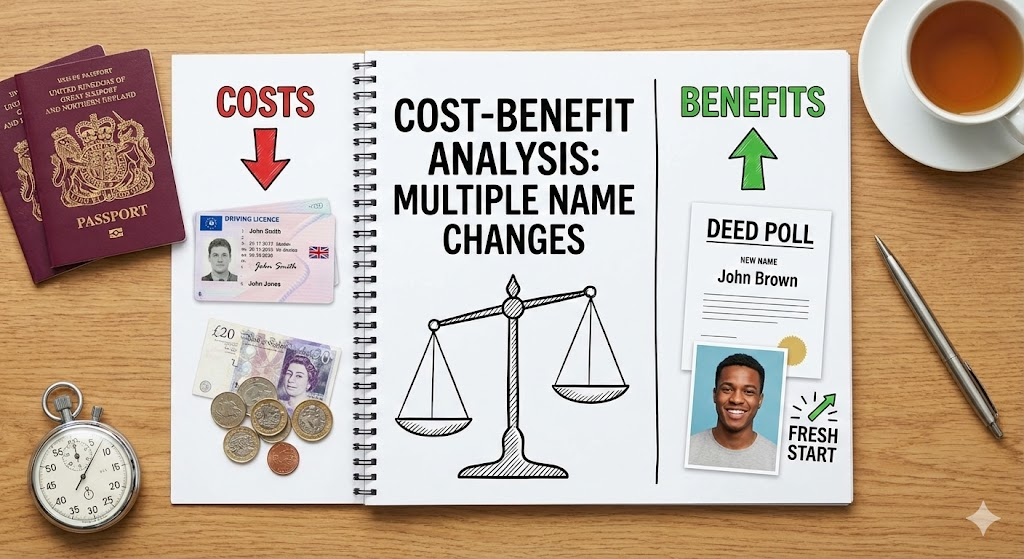
For most people, a name change is a matter of preference or family tradition. But for a small, significant number of individuals, it is a matter of life and death. If you are at high risk—whether from organised crime, severe domestic violence, or other threats—you need to understand exactly what the UK legal system can and cannot do to protect you.
There is often a dangerous gap between what people think is possible (based on movies) and what is legally possible. At UK Name Change, we believe in giving you the unvarnished truth so you can make safe decisions. Here is a guide to the legal safeguards and limitations of high-risk identity protection.
1. The "Witness Protection" Myth vs. Reality
The concept of being given a "new life" with a brand-new birth certificate and erased history is known in the UK as the UK Protected Persons Service (UKPPS). It is critical to understand that this is an extreme measure reserved for a tiny fraction of cases involving immediate threats to life.
- You cannot apply for this commercially. No solicitor or deed poll service can grant you a new birth certificate or a new National Insurance number.
- It is police-led. It is strictly managed by the police and the National Crime Agency (NCA).
- It requires total severance. To qualify, individuals often have to cut all contact with their previous family and friends forever.
For 99% of people at risk, this level of protection is not available. Instead, you must rely on civil privacy measures to protect your identity.
2. Civil Identity Protection: The Deed Poll Route
If you do not qualify for government witness protection, your best legal tool is a Standard (Unenrolled) Deed Poll. Unlike the UKPPS, this does not "erase" your past, but it creates a legal wall between your old and new identities—if used correctly.
The Safeguard: An Unenrolled Deed Poll allows you to change your name legally without any public record. By not enrolling it, you avoid The London Gazette and keep your new name off Google. This is the service we provide to ensuring your safety.
The Limitation: A Deed Poll does not delete your history. Your birth certificate remains the same. Your criminal record and credit history will eventually link to your new name once you notify authorities. The goal is not to erase the past, but to make your current location and new identity impossible for the public to find.
3. Locking Down Public Records
Changing your name is step one. Step two is sealing the cracks where your new name might leak out.
The Electoral Roll (Anonymous Registration)
This is your most important legal right. If your safety is at risk, you can apply for Anonymous Registration.
- Safeguard: Your name and address will not appear on any version of the electoral register. You can still vote, but you are invisible to data scrapers.
- Requirement: You need evidence, such as a court order (e.g., a Non-Molestation Order) or an attestation from a senior police officer or social worker.
Companies House
If you are a company director, you are vulnerable.
- Safeguard: You can apply to have your home address suppressed from public view and use a service address instead.
- High-Risk Provision: In severe cases (proven violence risk), you can apply (under Section 243 of the Companies Act) to restrict disclosure of your usual residential address entirely to credit reference agencies.
Land Registry
Owning property makes you searchable.
- Safeguard: You can submit a Form RQ (Request for Restriction) to the Land Registry if you are not living at the property but own it.
- Limitation: It is very difficult to completely hide ownership of a property you live in. Many high-risk individuals choose to rent or hold property in a trust to avoid their name appearing on the title deeds.
4. Financial Protection (CIFAS)
Identity theft is a common tool used by abusers to track victims. If a perpetrator tries to open credit in your name to find your address, CIFAS Protective Registration is a vital safeguard.
- How it works: For a small fee (£30 for two years), a flag is placed on your credit file. Any application for credit in your name will trigger extra security checks to verify it is actually you.
- Why do it: It stops someone from using your financial footprint to locate you.
Conclusion: Privacy is a Process
While you may not be able to get a new birth certificate, you can build a secure, private life. By combining an Unenrolled Deed Poll with Anonymous Voter Registration and CIFAS protection, you create a robust shield against tracking.
Our Complete Package (£39.99) is designed to support this process. We provide the private Deed Poll you need, along with the guidance to update your records securely, ensuring you don't accidentally leave a door open to your past.
Take the first step towards a secure future. Start your private application today.
HTML