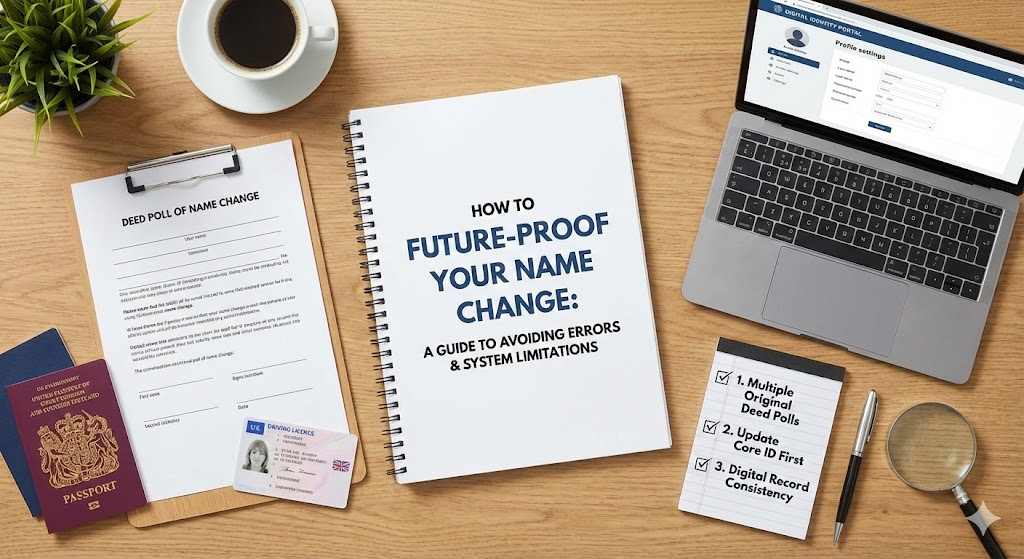
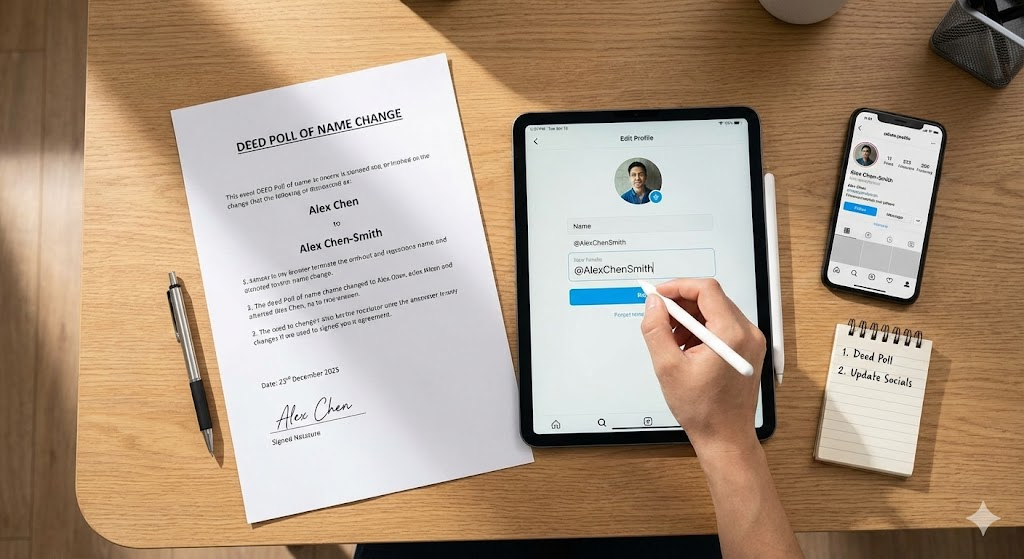
Yes - in the UK you can change your name privately and keep that change off the most visible public records, but you cannot make yourself completely invisible. The single biggest decision is choosing an unenrolled deed poll so your name change is never published in the London Gazette, then opting out of the electoral open register and limiting data brokers. Everything beyond that has firm legal limits, and any service promising to ‘erase’ you entirely is overselling what is possible.
This guide gives you the honest version: what you can realistically keep out of public view, the practical steps that actually work, and the records that will always remain searchable no matter what you do.
The deed poll itself: the one record most people get wrong
The most common privacy mistake happens before you change anything else - choosing the wrong type of deed poll. There are two, and only one of them publishes your name change for the world to see.
Unenrolled deed poll - private by default
An unenrolled deed poll is the private option, and it is what roughly 98% of people use. It is a legally binding document that you sign in front of two independent witnesses. Nothing is filed with any court, nothing is published, and no central register of your name change exists. It is accepted by HM Passport Office, the DVLA, HMRC, the NHS, banks, employers and schools - exactly the same as the ‘official’-sounding alternative. A professionally printed unenrolled deed poll from UK Name Change costs from £14.49 with same-day dispatch if you order before 3pm.
Enrolled deed poll - permanently public
Enrolling your deed poll at the Royal Courts of Justice costs £53.05 and publishes your old and new name in the London Gazette - a permanent, searchable public record. It takes two to three weeks and, crucially, adds no extra legal validity. If your goal is privacy, enrolment is the opposite of what you want. We cover the full comparison in our guide to enrolled vs unenrolled deed polls and how to avoid the Gazette.
The takeaway: if you want your name change to stay private, you simply choose unenrolled. There is no extra step and no extra cost - the private route is also the cheaper, faster one.
The electoral roll: opt out of the open register
The electoral register is split into two versions, and understanding the difference is the single most effective privacy move after your name change.
- The full register is used for elections, jury service, detecting fraud and credit checks. You cannot opt out of this, and you must stay on it to vote. It is not openly searchable by the public.
- The open register (sometimes called the edited register) is a published version that anyone can buy - including marketing firms, data brokers and people-search websites. This is where your name and address quietly leak into the searchable internet.
You have a legal right to remove yourself from the open register at any time. Contact your local council’s electoral services team and ask to be removed from the open/edited register - it is free, it does not affect your right to vote, and it does not affect your credit file. Do this whenever you re-register at a new address or update your name, because moving home can silently re-add you. This one action cuts off a major supply line that data brokers rely on.
Data brokers and people-search sites: limit, don’t expect to erase
People-search and ‘trace’ websites compile names, ages, addresses and relatives from sources such as the open register, the edited electoral roll, company filings and old online directories. After a name change you can reduce your footprint, but you cannot force every site worldwide to forget you.
What realistically works:
- Remove the source first. Opt out of the open register (above) so brokers stop receiving fresh data under your new name.
- Use each site’s opt-out form. Most UK-facing people-search sites have a ‘remove my details’ or ‘suppression’ request page. Submit one per site - it is tedious but effective.
- Exercise your GDPR rights. Under UK GDPR you can ask any organisation to erase your personal data (the ‘right to be forgotten’). It is not absolute - they can refuse where there is a legal obligation to keep records - but for marketing databases and brokers it usually applies.
- Stay consistent. Once your old name stops appearing in feeds, old entries gradually age out of many databases.
The honest limit: this is ongoing maintenance, not a one-off fix, and no service can guarantee deletion from every database on earth. Treat anyone who promises total erasure with suspicion.
The records you genuinely cannot hide
Privacy is about minimising exposure, not disappearing. These records will remain - and that is by design.
Companies House
If you are a company director, your name (current and former), month and year of birth and a service address are on the public register. Changing your name means filing an update at Companies House, where it remains publicly searchable. You can use a service address rather than your home address, but you cannot hide your directorship.
Land Registry
If you own property, the title shows the registered owner’s name. Anyone can buy a copy of the register for a small fee. You should update the title to your new name, and it stays public.
Court, official and historic records
Court judgments, insolvency entries and any record already published - including an enrolled deed poll already in the London Gazette - cannot be retrospectively erased. This is exactly why choosing unenrolled from the start matters so much.
Your past does not vanish
A name change links your old and new identity legally. It is not a way to escape debts, a criminal record, a CCJ or legal obligations - and attempting to use it for that is fraud. A lawful name change simply updates what you are called; it does not sever your history.
Your realistic privacy checklist
- Choose an unenrolled deed poll so your change is never published in the Gazette.
- Update your records (passport, DVLA, bank, HMRC, NHS, employer) directly - the DVLA driving licence update is free, and updating your bank, HMRC, the NHS and your employer is free too.
- Opt out of the open electoral register with your council.
- Submit opt-out and GDPR erasure requests to data brokers and people-search sites.
- Use a service address for any Companies House filings.
- Tighten your online accounts and social profiles under the new name.
For the full step-by-step approach, see our companion guide on how to protect your identity after a name change.
Frequently Asked Questions
Does an unenrolled deed poll appear on any public register?
No. An unenrolled deed poll is not filed with any court and is not published anywhere. There is no central, searchable register of unenrolled name changes - which is precisely why it is the private choice for around 98% of people.
Will changing my name remove me from people-search websites?
Not automatically. Old entries under your former name may persist until you submit opt-out or GDPR erasure requests, and the sites refresh their data. Opting out of the open electoral register first stops new entries appearing under your new name.
Can I keep my name change secret from family or an ex-partner?
Largely, yes. With an unenrolled deed poll there is nothing published, and once you opt out of the open register your details are far harder to find. Remember your witnesses must each be an independent adult (18+) - not a relative, partner or anyone living with you - so choose carefully if discretion matters.
Is hiding my name from public records legal?
Yes, when done for legitimate privacy reasons. Choosing an unenrolled deed poll, opting out of the open register and exercising your GDPR rights are all entirely lawful. What is illegal is using a name change to evade debts, criminal records or legal obligations - that is fraud, not privacy.
Do I need an enrolled deed poll for anything?
For everyday name changes, no. HM Passport Office, the DVLA, HMRC, banks, the NHS, employers and schools all accept an unenrolled deed poll. Enrolment costs £53.05, takes two to three weeks, publishes you in the Gazette and adds no legal validity.
Change your name privately, the right way
The private route is also the simplest and cheapest. Order a professionally printed, legally valid unenrolled deed poll from just £14.49 - same-day dispatch before 3pm, free Royal Mail Tracked delivery, and trusted by over 160,000 customers. No Gazette, no court, no fuss. Start your name change today and keep it as private as it should be.