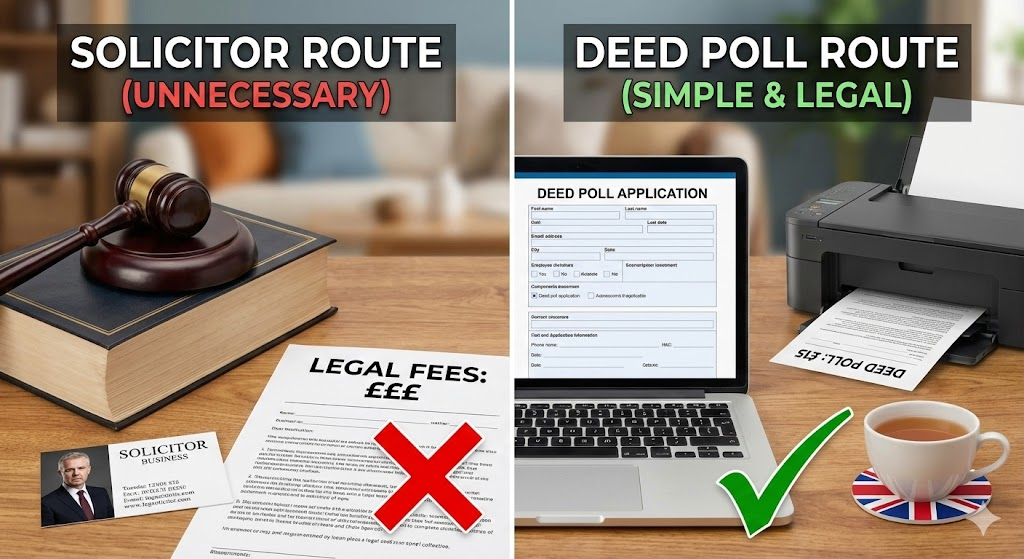
In the United Kingdom, a deed poll is often described as a "declaratory" document. It doesn't grant you a new name (you already have the common law right to use any name you choose), but it provides the essential legal evidence required to unlock your rights across every area of society. Once that document is signed and witnessed, you are no longer just "using" a name; you are legally establishing it.
At UK Name Change, we believe that understanding your rights is the key to a confident transition. If a bank, employer, or government official hesitates to update your records, knowing the law allows you to stand your ground. This guide explores the specific legal rights you hold once your deed poll is executed in 2026.
1. The Right to Official Recognition
The primary right granted by a valid deed poll is the right to have your new identity recognised by the state. This includes:
- The Right to a New Passport: Under Home Office policy, a correctly executed deed poll is sufficient evidence to change the name on your British Passport.
- The Right to a New Driving Licence: The DVLA must update your photocard and vehicle records when presented with your deed poll.
- Tax and National Insurance: HMRC is legally obligated to maintain accurate records, meaning they must update your tax codes and NI contributions to reflect your legal name.
2. The "Right to Rectification" (Your GDPR Leverage)
One of the most powerful rights you have in 2026 comes from the Data Protection Act 2018 and UK GDPR. Under Article 16, every individual has the "Right to Rectification."
This means that if an organisation (like a bank, energy provider, or former school) holds "inaccurate" personal data about you—which includes an old name that you have legally abandoned—they are legally required to correct it without undue delay. If an organisation refuses to accept your deed poll, reminding them of their obligations under the Right to Rectification is often the fastest way to resolve the issue.
3. Employment Rights and Recognition
Once you provide your employer with a deed poll, you have the right to be known by that name in the workplace. This extends beyond just your payslip; it includes:
- Updating your work email address and internal directories.
- Changing your name on your security badge and office signage.
- Ensuring all internal correspondence uses your correct name.
Refusing to use an employee's legal name without a valid business or regulatory reason can, in some cases, lead to a claim for harassment or constructive dismissal.
4. Equality Act 2010 Protections
If your name change is related to gender reassignment, you have additional protections under the Equality Act 2010. Failing to recognise a person's new name after a deed poll in this context may be considered direct discrimination or harassment. You have the right to be treated with dignity and for your gender identity to be respected across all public and private services.
5. The Right to Stop Using Your Old Name
The deed poll itself contains a specific legal declaration: that you "abandon" your former name. You have the legal right to cease all use of that name immediately. No organisation can force you to continue using a "deadname" once you have provided legal proof of the change, provided it does not interfere with historical records (like past exam certificates) which are considered "matter of fact" documents.
Summary of Your Rights
| Your Right | The Legal Basis |
|---|---|
| Update Government ID | Home Office & DVLA Policy |
| Correct Bank/Utility Records | UK GDPR Right to Rectification |
| Workplace Recognition | Employment Law / Data Protection |
| Respect for Identity | Equality Act 2010 |
What a Deed Poll Doesn't Do (The Responsibility Side)
It is important to remember that a deed poll grants you rights, but it does not erase your responsibilities. You do not have the right to:
- Escape Debt: Your financial obligations remain tied to you, not just your name. Creditors can (and will) link your identities.
- Hide a Criminal Record: You must still declare all former names during background (DBS) checks.
- Avoid Legal Duty: If you are a registered offender, you must notify the police of your change within 3 days.
Claiming Your Rights with Confidence
Most issues with "rights" occur when an organisation is presented with a poorly drafted or "DIY" document. When you use UK Name Change, we provide a solicitor-approved deed poll that commands respect. Because our documents meet the highest legal standards of the 2026 UK system, they leave no room for organisations to question your rights.
Our Complete Package also includes a "Rights & Leverage" guide, providing you with the exact wording to use if a clerk or manager tries to refuse your update. We empower you to ensure your new identity is not just a preference, but a legally enforced reality.
Ready to claim your rights? Complete our 5-minute application today and get the legal evidence you need. If you're currently being refused service by an organisation after your name change, contact our expert support team for guidance on how to exercise your legal rights.