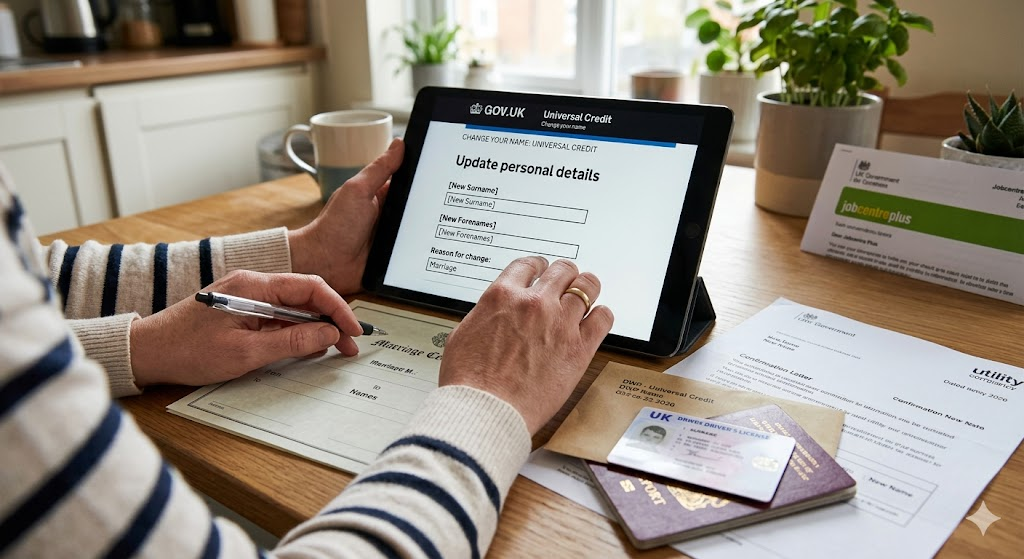
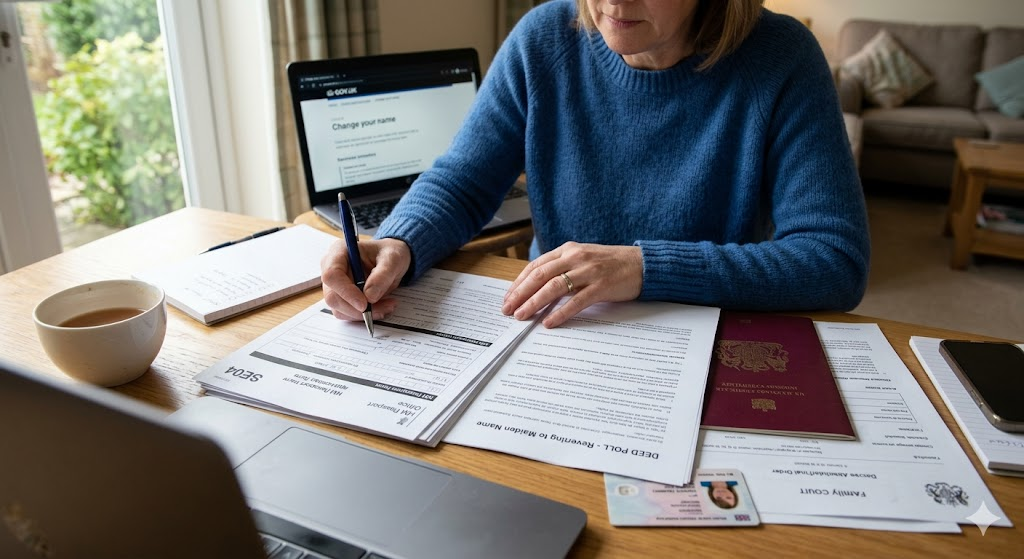
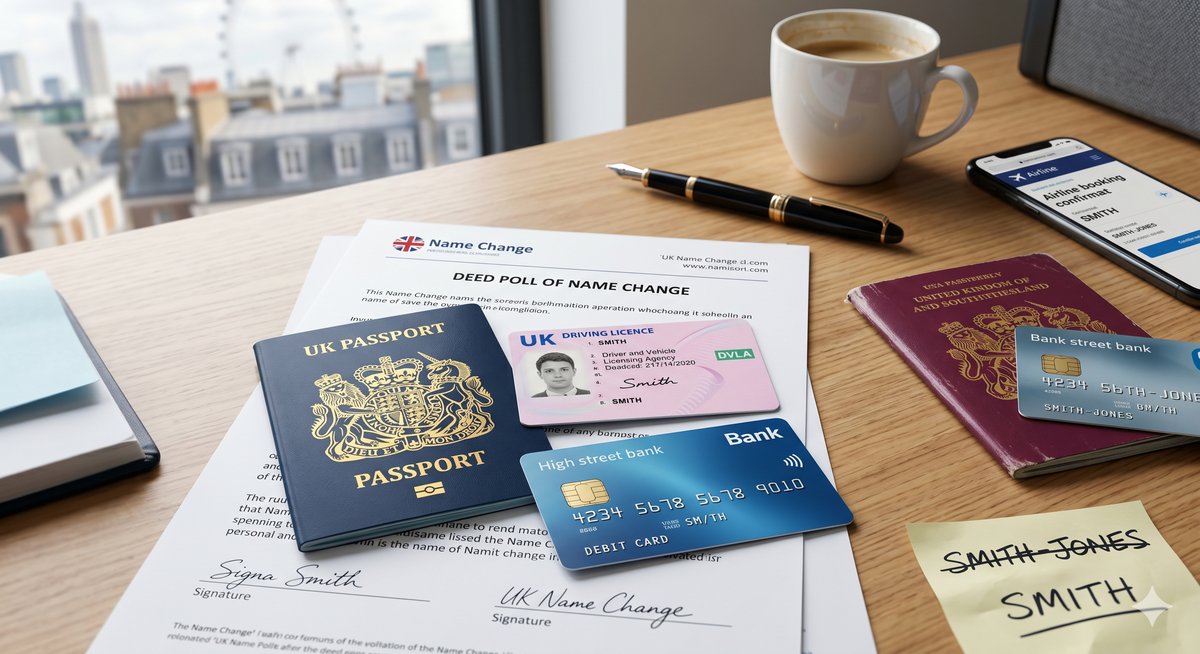
Yes - you can change your name before your divorce is final. You do not have to wait for the decree absolute (now called the final order). At any point during separation or divorce proceedings, you can revert to your maiden name or adopt an entirely new surname using a deed poll, which takes effect immediately. A deed poll is completely separate from your divorce and does not affect, delay or restart the legal process in any way.
This is one of the most common worries we hear from people going through a separation: the belief that you are somehow ‘stuck’ with your married name until a judge signs the paperwork. You are not. Below we explain exactly why, the timing considerations, and the practical implications of changing your name mid-divorce.
Why you don’t have to wait for the decree absolute
In England and Wales there is no law that ties your name to your marital status. You are free to call yourself whatever you wish, whenever you wish, provided it is not for fraudulent or deceptive purposes. Marriage never legally changed your name in the first place - it simply gave you the social right to adopt your spouse’s surname, which most people did using their marriage certificate as evidence.
The same principle works in reverse. You can stop using your married name and revert to your maiden name (or choose a brand-new name) at any stage of a divorce. The difference is the evidence you use. Once your divorce is final, you can revert to your maiden name using your marriage certificate and final order. But while the divorce is still ongoing - and you don’t have those documents yet - a deed poll is the cleanest and most widely accepted way to make the change official.
The divorce timeline, briefly
Under the no-fault divorce rules, there is a mandatory minimum reflection period of around six months between the start of proceedings and the final order. In practice many divorces take considerably longer. That is a long time to wait if you no longer wish to carry your married name - and a deed poll means you simply don’t have to.
A deed poll is separate from your divorce
This is the key point that puts most people’s minds at rest. A deed poll is a personal legal document declaring your new name. It does the following:
- Takes effect on the day you sign it - no court hearing, no judge, no waiting period.
- Has no bearing whatsoever on your divorce proceedings. It will not pause, complicate or invalidate your case.
- Lets you update your passport, driving licence, bank, HMRC, NHS, employer and utilities straight away.
You remain legally married until the final order is granted - changing your name does not end your marriage. The two things are entirely independent. If you have already filed your divorce application, it is courteous (and sensible) to let your solicitor and the court know of your new name so that all paperwork remains consistent, but this is a simple notification, not a request for permission.
Implications of changing your name mid-divorce
While there is no legal barrier, there are a few practical points worth weighing before you sign.
1. Document consistency
If your divorce is well underway, having a name change land in the middle of it can create a little extra admin. Court documents, financial disclosures and any consent order may be issued in your married name. Notify your solicitor early so they can reference both names where needed. A good solicitor handles this routinely and it rarely causes any difficulty.
2. Financial and property matters
If you are dividing assets, refinancing a mortgage or dealing with pensions, lenders and conveyancers will want your name on the relevant documents to match your ID. Changing your name partway through can mean re-doing some paperwork. Many people prefer to wait until the financial settlement is finalised before updating everything - but that is a personal convenience choice, not a legal requirement.
3. Your children’s surnames are different
Changing your own name is entirely your decision. Changing a child’s surname is not. If you share parental responsibility with your ex-partner, you need the written consent of everyone with parental responsibility (or a court order) before you can change a child’s name. Reverting your own surname does not automatically change your children’s names, and you cannot change theirs unilaterally.
How to change your name before the divorce is final
The process is straightforward and takes minutes:
- Decide on your name. You can revert to your maiden name, keep your married name, hyphenate, or choose something completely new. (For a deeper look at your options, see our guide on reverting to your maiden name after divorce.)
- Order your deed poll. A professionally printed, legally valid unenrolled deed poll from UK Name Change costs from £14.49, with same-day dispatch if you order before 3pm and free Royal Mail Tracked delivery.
- Sign it with two witnesses. Your witnesses must each be an independent adult aged 18 or over - not a relative, partner, or anyone living at your address.
- Update your records. Send the original wet-ink signed deed poll (not a photocopy) to HM Passport Office, the DVLA, your bank and so on. Most updates - DVLA, HMRC, NHS, banks, employers, utilities - are free.
An unenrolled deed poll is legally valid and accepted by HM Passport Office, the DVLA, HMRC, banks, the NHS, employers and schools. Around 98% of UK name changes are unenrolled, and a solicitor would charge £150-£300 or more to produce exactly the same document. You can start your adult deed poll here in a few minutes.
Do you need to enrol it?
No. Enrolment at the Royal Courts of Justice (£53.05) is entirely optional and adds no legal validity. It simply publishes your name change publicly in the London Gazette and takes 2-3 weeks. The vast majority of people changing their name around a divorce have no need for it.
Frequently Asked Questions
Can I revert to my maiden name before my divorce is finalised?
Yes. You do not need to wait for the final order. A deed poll lets you revert to your maiden name immediately and use it to update your passport, driving licence, bank and other records. For the full picture, read our guide to reverting to your maiden name after divorce in the UK.
Will changing my name affect or delay my divorce?
No. A deed poll is a personal document that is completely separate from your divorce proceedings. It will not pause, restart or complicate your case. You simply remain legally married under your new name until the final order is granted.
Do I have to tell the court or my solicitor?
If you have already filed your divorce application, you should notify your solicitor and the court so all paperwork stays consistent. This is a courtesy notification, not a request for permission - you do not need anyone’s approval to change your own name.
Can I change my children’s names at the same time?
Not on your own. Changing a child’s surname requires the written consent of everyone with parental responsibility, or a court order. Reverting your own name does not change your children’s names automatically.
What if I’m not sure which surname to choose?
That’s very common. You can revert to your maiden name, keep your married name, combine the two, or pick something new entirely. Our article on surname options after divorce walks through each route and its implications.
Do I need a solicitor to do this?
No. A solicitor would charge £150-£300+ for the same unenrolled deed poll you can order from UK Name Change from £14.49. The document is identical in legal effect - you are simply paying for the paperwork, not the wording.
Ready to make your new name official?
You don’t have to wait for the decree absolute to move on with your name. Trusted by over 160,000 customers, UK Name Change can have your professionally printed deed poll dispatched the same day. Start your adult deed poll now - from £14.49, with free tracked delivery.