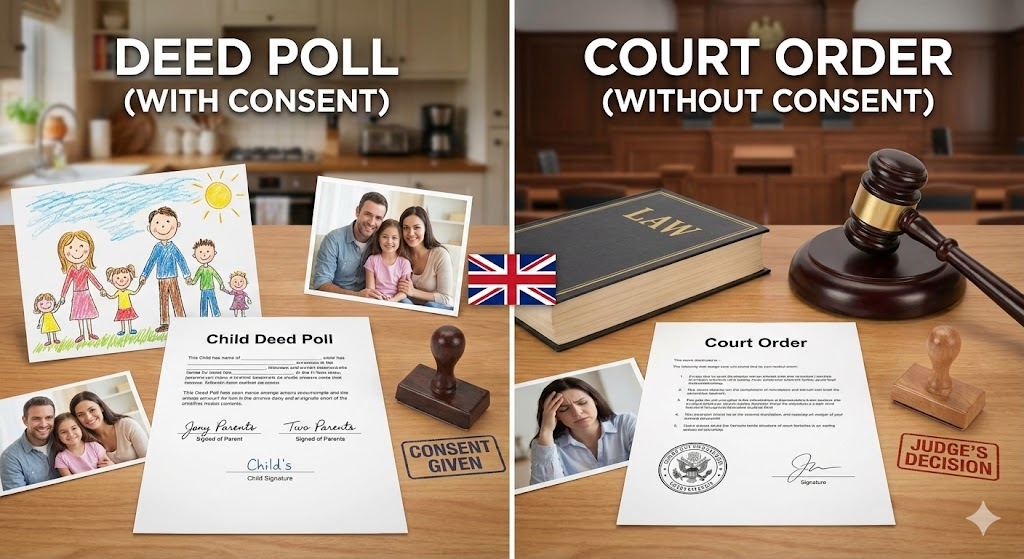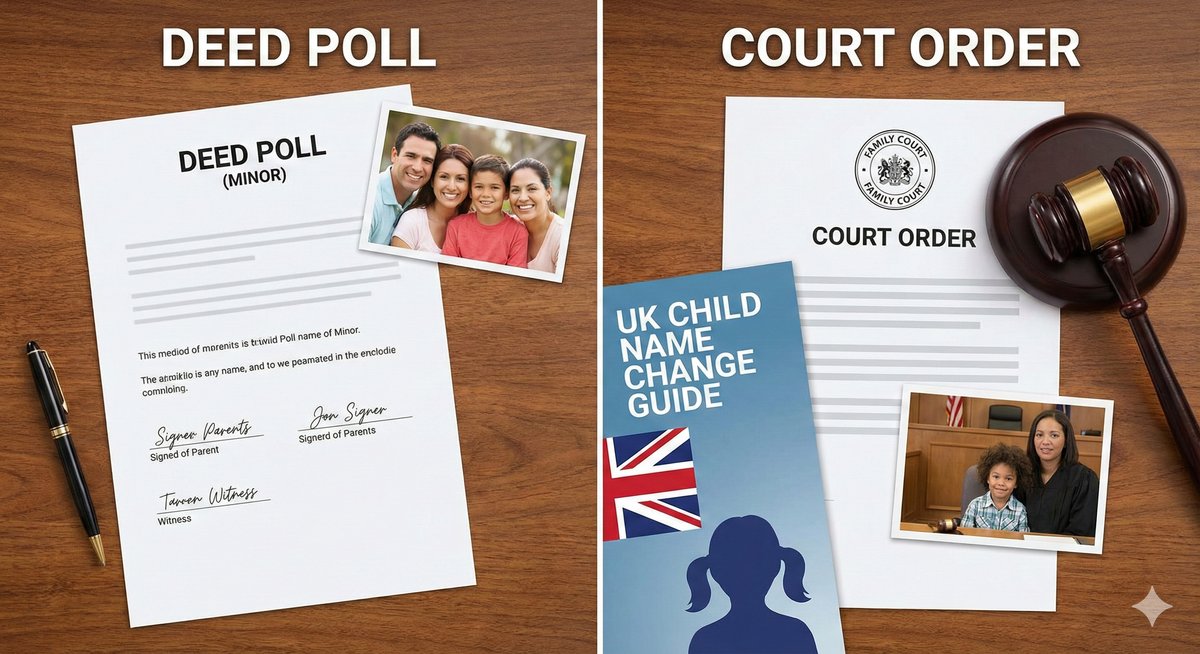
If you are researching how to change your child's name, you have probably encountered two very different terms: Child Deed Poll and Court Order.
One takes ten minutes to order and costs very little. The other can take months and involves a judge. Naturally, every parent hopes the first option will be enough. But in the eyes of UK law, you do not get to pick and choose based on convenience.
Which route you take depends entirely on your relationship with the other parent. Here is the definitive guide to understanding which legal instrument applies to your situation.
The Standard Route: The Child Deed Poll
A Child Deed Poll is the most common way to change a name. It is a legal document that proves a new name has been adopted. However, its power is conditional.
When to use it:
- Everyone agrees: If both parents (and anyone else with Parental Responsibility) agree to the name change, a Deed Poll is all you need. You simply both sign the document to formalise your consent.
- You have sole Parental Responsibility: If you are the only person with Parental Responsibility (e.g., the father is not on the birth certificate and you were never married), you can generally use a Deed Poll signed only by yourself.
The Trap:
Many parents mistakenly believe that a Deed Poll "grants" them the right to change a name. It does not. It merely evidences that a change has been made. If you issue a Deed Poll without the necessary consent from the other parent, the document is technically invalid. Official bodies like the Passport Office will reject it, and you could face legal challenges.
The Dispute Route: The Court Order (Specific Issue Order)
If you cannot get the consent of the other parent, a Deed Poll is useless. You cannot "override" a refusal with a Deed Poll. Instead, you need a higher authority to intervene.
This is where the Specific Issue Order comes in. This is a formal order from the Family Court that grants permission for a specific action (in this case, changing a surname) to be taken without the other parent's consent.
When to use it:
- The other parent refuses: If they say "no," you must apply to the court. The judge will listen to both sides and make a binding decision based on the child's welfare.
- The other parent is absent: If the father has Parental Responsibility but has disappeared, the Passport Office will often refuse a single-signature Deed Poll. A Court Order provides the legal certainty they need to issue a passport.
The Cost Difference:
While a Deed Poll costs very little (usually under £20-£40), applying for a Specific Issue Order currently costs £232 in court fees, plus potential legal costs if you hire a solicitor. It is a significant step that should be a last resort.
The "Grey Area": Changing a Name for Protection
In cases involving domestic abuse or child protection, you might want to change a child's name to hide their identity from a dangerous ex-partner.
In this scenario, do not use an "Enrolled" Deed Poll. Enrolling a Deed Poll publishes your name and address in The London Gazette, which destroys your anonymity. Instead, you should seek a Court Order that specifically restricts the disclosure of your address while authorising the name change.
Comparison: Which Path is Yours?
| Scenario | Document Required |
|---|---|
| Both parents agree | Child Deed Poll (Both sign) |
| Only one parent has Parental Responsibility | Child Deed Poll (One signs) |
| Parents disagree (Deadlock) | Specific Issue Order (Court) |
| Parent absent (Cannot be found) | Specific Issue Order (Usually required for Passport) |
Summary
If you have consent, the Deed Poll is your fast-track ticket. It is cheap, legally binding, and widely accepted. If you have conflict, the Court Order is your safety net. It takes longer and costs more, but it provides the absolute legal authority that no bank or passport office can question.
If you have secured agreement from the other parent and are ready to proceed, we can help you draft your Child Deed Poll today.
Ready to make it official? Contact our team to start your application.